Quote of the Month

When love and skill work together, expect a miracle. John Ruskin


Showing posts with label Penguins-Fiction. Show all posts

Wednesday, October 20, 2021

Seasonal Sensations

Books centering on pumpkins, jack-o'-lanterns, vampires, ghosts, witches, goblins, and things that go bump in the night can be read and enjoyed any month of the year but when the last stroke of midnight echoes on October first, something happens.  Readers' desire to enter and explore the season increases tenfold.  Whether it is fact or fiction, funny or frightening; they want it all.

By definition, vampires, alive or back from the dead, tend to be most active during darkness.  We never expect to see them during daylight hours.  This is why, before we have even opened the cover of Vampenguin (Atheneum Books for Young Readers, July 20, 2021) written and illustrated by Lucy Ruth Cummins, we are already smiling.

On Saturday, the Dracula family woke up extra early
so they could beat the weekend crowds to the zoo.

Once at the zoo, they were inside quickly, or were they?  As per their custom, they went to the Penguin House first.  They were not the only people enjoying this area.  Before long, they had viewed the several different species living there.  As they left, it was time for the penguins' breakfast.

(Unbeknown to the Dracula family, their tiny tot traveling in the stroller had switched places with one of the penguins.  This was never part of the written narrative but fully disclosed in the pictorial story.  Their ignorance is bliss for readers.)

As the family moved to the enclosures of the tiger, elephants, monkeys, and the lion, something strange was happening.  At the bear exhibit they were completely unaware of the bear's hand signals.  A nearby vendor had his snow cones entirely consumed to their puzzlement.  The parents and older son, Junior, were oblivious to the birds' curious chorus in the aviary and the sea lions' splashing at the demonstration.

In the Penguin House, as you might imagine, normalcy was gone.  Disrespectful visitors got a fright.  So intent on finishing their stroll through the zoo, the Dracula family failed to see nonverbal communications of the animals, even when they paused for a picture and a balloon.  It is safe to say this trip to the zoo was a memorable one for all.


Every sentence written by author Lucy Ruth Cummins is a study in contrast.  What is distinctively said and what we observe in the pictures supply us with comedy at nearly every page turn.  These carefully chosen words are also leading us to a conclusion certain to promote outbursts of laughter more than once.  Here is a passage and image explanation.

Back outside, the entire Dracula family was absolutely delighted
by the sea lion behavior demonstration.

The parents and Junior, seated on the stands, were not happy with being splashed.  Their hands were up, and their eyes were closed at the sudden watery episode.  The penguin in the stroller was thrilled.


The washed-teal background is used on both the front, right, and back, left, of the open dust jacket.  On the back a penguin is standing on the ISBN.  On the front, we see what the Dracula family does not.  A penguin in the stroller is making the SHH sign with its flipper wing.  This is an indication to readers this book has the unexpected ready to envelope us.

On the book case a darker teal spreads to either side of the wide black spine.  In the far lower, left corner on the back is the toddler sucking on his yellow teething ring.  In the far lower, right corner on the front is the penguin.  We are only shown their upper bodies.

On the opening and closing endpapers a pattern of black and white stripes, like the mother's shirt, creates a visually alluring effect.  On the title page illustrator Lucy Ruth Cummins shows us the zoo entrance at dawn.  The clock there shows it is 6 am. 

On the heavier, matte-finished paper, these illustrations 

rendered in gouache and colored pencil, and finished with digital line

are full-page pictures, double-page visuals or smaller images grouped by two to a page.  The limited color palette adds to the comedic impressions.  We are supplied with varying perspectives; close to characters and fading in the distance, a birds-eye view, realistic overview of scenes, and close-ups.  The facial features and body postures extend the impact of each illustration.  The smallest of details elevate the humor such as the single penguin looking directly at readers after the toddler has contributed a new odor to the Penguin House. 

One of my many favorite pictures is a double-page image.  We are brought close to the Dracula family as they swiftly move through the aviary.  Here, on the left side and along the top half of the right side, a variety of birds among branches and vines are not at rest.  They are vocalizing the fact a penguin is riding in the stroller.  Father is pointing at some birds.  Mother has her head buried in a map.  And Junior is looking straight ahead.  The penguin shifts in the stroller to give the birds a soft SHH.  Here, as throughout the book, the colors of black, white, yellow, pale pink and teal (turquoise) expand the emotional and hilarious response in readers.


Although this title, Vampenguin written and illustrated by Lucy Ruth Cummins, is certain to be a huge hit during the autumn season, it is guaranteed it will be a much requested read aloud all year.  The text and images work together with perfection welcoming readers from beginning to end.  I highly recommend this title for both your professional and personal collections.

To learn more about Lucy Ruth Cummins and her other work, please follow the link attached to her name to access her website.  Lucy Ruth Cummins has accounts on Facebook, Instagram, and Twitter.  At the publisher's website you can view interior images.


Before October arrived this year, pumpkins were appearing at every grocery store, nursery, and farmer's market.  These squash are a symbol of the season.  They find their way into our food and drink, outdoor and indoor displays and decorations, and in our gardens, too.  There is something clearly satisfying about watching a pumpkin grow from blossom to something heavy we can hold in our hands.  How to Help a Pumpkin Grow (Beach Lane Books, July 20, 2021), one of the newest titles by author illustrator Ashley Wolff, joyously informs readers.

Dig it.
Spade it.
Seeds to sow.  

Sometimes when we plant early in the spring Mother Nature sends us a surprise snow.  We need to protect those seeds, so they will grow.  If we have hungry creatures near our gardens, we need to protect those seeds now forming tiny plants.  A good fence works.

Special care is given to those sprouting shoots.  Food, water, and weeding are on the agenda.  Crow helps.  Rabbit helps.  Duck is ready to lend a wing.

The vines are creeping and winding.  Let's wrap them around the sturdy posts.  The garden is flooded with green, yellow, and orange.  Goat wants to help, too.  The spring and summer seasons have shifted to harvest.

Pumpkins are gathered and taken to Dog's farmhouse.  Crow, Rabbit, Duck, and Goat are happy with their part in this success.  There is cooking and consuming of delectable delights.  And, yes, there is one more project.  Can you guess?


There is one word which comes to mind in reading the words here penned by Ashley Wolff.  That word is jubilation.  From beginning to end, her use of alliteration and rhyming is an open invitation to readers.  Two-word sentences fashion an introductory cadence.  The questions asked by Dog of Crow, Rabbit, Duck and Goat are a promising pause.  This whole narrative reads like a song.  Here are two passages.

Drench them.
Quench them.
Let it flow.
Watering up and down the row.

You want to help a pumpkin grow? (Dog bends down to Duck.)


The angle of the sun provides us with breathtaking views in the autumn.  At times, the light seems magical.  This is what we see first on the open and matching dust jacket and book case of this title.  There is a luminescence, a background glow in the front and back images.  This warmth, this golden sheen, is part of every picture throughout the book.  Cleverness in design is apparent in using the stacked pumpkins as placeholders for the title text.  Crow, the first animal, makes an appearance.  The tiny mouse, though never named, is present in all but one of the illustrations.  Readers will enjoy seeking out this tiny individual.

To the left of the spine, on the back, is a more panoramic view of Dog's farm.  Here Rabbit, Duck, and Goat are present.  Two are in the pumpkin patch, and one is under an apple tree.  Behind them is the farmhouse and silo with the barn.  We see the use of a darker blue with hints of purple as a complementary color.  Who wouldn't love to rock in the chair on the porch?  The ISBN is inside a pumpkin.

On the opening and closing endpapers colors mirror those of a pumpkin.  We are close to a pumpkin, blossoms, leaves, and vines on the title page.  Mouse is peeking from behind a leaf.

In this book, these illustrations were made using

acrylic gouache on Fabriano watercolor paper.

Each double-page picture is animated, filled with charming elements, and the rich hues of a pastoral setting.  We can see in the color choices how the days and seasons progress.  The animals, Dog, Crow, Rabbit, Duck, Goat and the mouse, are featured with facial expressions and body postures suggesting happiness and a willingness to help.

One of my many favorite illustrations is for the words:

Twine them.
Vine them.
Watch them go,
filling up the garden---whoa!  

The exploding pumpkin patch is bursting with leaves, vines, blossoms, and pumpkins.  The fence is partially visible from left to right of this double-page picture.  On the left Dog stands, eyes closed, and arms outstretched in happiness.  Duck, with only its neck and head visible, looks at Dog.  Rabbit is holding a white pumpkin and watching Dog.  On the right, Crow is perched on the fence.  Goat's head is through the fence and chewing on a pumpkin vine.  The mouse is resting on the side of a pumpkin.  All their eyes are on Dog.  The sky is glowing.


Whether this book, How to Help a Pumpkin Grow written and illustrated by Ashley Wolff, is read silently or aloud, it is one to savor repeatedly.  For a thematic story time pair it with, to name a few, How Big Could Your Pumpkin Grow?, Stumpkin or Pick A Pumpkin.  Be sure to have a copy of this title on your professional and personal bookshelves.

To discover more about Ashley Wolff and her other work, please access her website by following the link attached to her name.  She also has a blog.  Ashley Wolff has accounts on Facebook, Instagram, and Twitter.  At the publisher's website you can view interior images.  This title is featured at Jama Rattigan's Jama's Alphabet Soup.  You will love the interview and all the added images.

Tuesday, November 17, 2020

Two Times The Glee #2

All you have to do is spend time outdoors watching wildlife or observe your family animal members to realize they are the source of constant comedy.  Their physical characteristics, mannerisms, and individual personalities mirror the exuberance in which they embrace life.  Unlike many humans, they have perfected the art of living in the moment.

These very qualities offer inventive authors and illustrators the opportunity to place them as characters in their narratives.  In her debut picture book as both author and illustrator Rebecca Jordan-Glum offers readers a look at a first encounter and the consequences of this meeting.  The Trouble with Penguins (Roaring Brook Press, November 3, 2020) shows readers exactly the kind of mischief penguins (and people) can generate when they forget the truth of together.

On the day the penguin discovered the person, everything changed.

The child, seated near a fire, was roasting a marshmallow. The penguin accepted the offer of the marshmallow, loving every bite of it.  The person showed the penguin how to roast marshmallows over an open fire.  

When it came time for the new pals to part, the child gave the penguin the best roasting stick.  When the penguin arrived among the other penguins, explaining the stick, the fire and marshmallows, they wanted to visit the person.  All was well with the group gathered around the fire, taking turns roasting a marshmallow until the acts of waiting and sharing were no longer accepted.  

All the penguins wanted their own fire.  What do you think the heat of all these individual blazes did to the ice?  It cracked into separate islands.  Now each penguin had a fire, a stick and roasted their own marshmallows.  For a time, they were happy, but doing something fun alone is not quite as fun as doing it together.  

Fortunately, penguins (like people) were apt, after careful thought, to make another decision.  One searched its memory, making comparisons.  A joyful beginning should be savored . . . repeatedly.


With her first two sentences author Rebecca Jordan-Glum establishes a storytelling rhythm.  She introduces a phrase which is repeated several more times, connecting important portions of the tale.  Her conversational phrases sprinkled with dialogue and asides in parenthesis are engaging in the most charming way.  Here is a passage.

"Oh, hello! I'm roasting marshmallows.
Would you like one?"

Of course the penguin would 
like a marshmallow. (It liked
it very much, in fact!)


Looking at the front, right, of the open dust jacket, you are readily aware of the rascals these penguins might prove to be.  As they frame the child, wearing a startled expression, they are highly animated.  It's likely they are proposing something unexpected to the person.  On the left side, the left wing of the penguin crosses the spine extending to the left, back.  Here, on the back, on a snowy background is a single penguin.  A trail of tracks marks its path to the right.  It is happily marching home carrying the stick given to it by the person.

On the book case, the penguins, as a group, are following the first penguin back to the child.  You can tell by their movements, body postures, and open mouths, they are excited.  They are placed on a snowy landscape filled with mounds and mountains.  The color palette of white, black, and shades of blue and purple create a pleasantly chilly setting.

An enormous panoramic view is spread across the opening endpapers.  It's a bird-eye view with the person's cabin, smoke coming from the chimney, small in the foreground in the far, left-hand lower corner.  Off to the right is a cluster of penguins, tiny and nearly centered.  The closing endpapers deliver a delightful conclusion.

Each image varies in size with respect to the story and its pacing.  We begin with a double-page picture, followed by two loosely framed images on a single page, and a full-page picture.  Not only do the sizes alternate but so do the perspectives.  There are three very expressive double-page illustrations with no words.  Everything works beautifully to supply readers with illustrations which envelope them.    Readers will enjoy the facial features on the child and the penguins, smiling at every page turn.

One of my many favorite illustrations is a double-page picture.  On a sea of hues of blue, purple, and pink are nine individual ice islands.  Five are on the left side.  Two cross the gutter.  And two are on the right.  The penguins are participating in a variety of activities.  One of them is balancing on the tip of a piece of ice, using the stick to balance.  Another is using the stick as a pole to twirl around and around suspending itsel- in the air.  Two penguins with ice islands next to each other have a single stick between them, each grasping one end with their wing.  A fish is jumping over the stick.  


Enchanting and humorous The Trouble with Penguins written and illustrated by Rebecca Jordan-Glum is a book to be relished repeatedly like the perfectly roasted marshmallow.  It is full of warmth like the cozy open fire shared by the person and the penguins.  You'll want this title in your personal and professional collections for a storytime featuring a cold or winter setting, a study of penguins, for a discussion to promote the sharing associated with true friendship, and for its wonderful storytelling.

To learn more about Rebecca Jordan-Glum and her other work, please follow the link attached to her name to access her website.  She has activities related to this book there for you.  Rebecca Jordan-Glum has accounts on Facebook, Instagram, and Twitter.  At the publisher's website you can view interior images.


In his newest offering Mike Boldt introduces us to a bear who needs encouragement in the art of playing a classic game.  He continually falls short in the main objective.  Find Fergus (Doubleday Books for Young Readers, November 3, 2020) is a read aloud treasure from beginning to end.  Fergus has a face and disposition guaranteed to create laughter.  

Fergus!
We already found you!
That was too easy.
Try hiding again.

This big, spectacle-wearing bear has zero capacity for hiding.  First, he stands in the open.  Next, he stands off to the side as if he is as thin as a piece of thread.  On his third attempt he stands behind a sapling, thinking his closed eyes will help.

The unseen narrator suggests blending in with a crowd.  Fergus does not grasp that concept either.  One fox and one duck are not a crowd.

Fergus does find larger, much larger groups but he still does not understand.  A bear is like a blinding star in a group of rabbits or even among larger animals.  Even a disguise similar to the animals where you strive to hide will not work.

By now Fergus is understanding a little bit, but he still needs to comprehend the fine art of hiding.  A brown bear with polar bears is not concealing oneself.  A countdown begins from ten to one.  Wowee!  Now that's the proper method for hiding, Fergus.


Having an unseen narrator, the readers, tell this story heightens the shared fun.  This is a wonderful technique by author Mike Boldt.  Short sentences in the form of comedic commentary, with carefully chosen words, move the story briskly with humor to its triumphant conclusion.  Here is a passage.

That's the right size . . .
but you're NOT a moose.

Still not a moose, Fergus.
Try bears.


Truthfully, I cannot look at the front, right, of the matching dust jacket and book case without laughing.  Fergus, his wide-eyed look amplified by his glasses, is trying without any luck to hide.  Title text does not make a good camouflage, Fergus.    On the back, to the left, the text reads:

Found you, Fergus!
Now go hide IN
this book so we
can come find you.

Here on the continued yellow canvas Fergus is down on all fours behind the ISBN.  His front portion and behind stick out prominently.  

The opening and closing endpapers, still with a yellow background, feature a sheet of paper.  It is 

The List of Things to Find.

There are only two things to find on the opening endpapers list.  On the closing endpapers list there are fourteen.  This longer list refers to the conclusion.  

For most of the story there is an image on the left with text in black on yellow on the right.  The text is in response to Fergus's latest action.  Fergus's actions are placed on a crisp white background, so the full-color elements stand out.  What accentuates the merriment is the facial features on all the animals.  Their eyes, mouths, and body postures are certain to invite readers to pause on every page turn.  The four-page gatefold will have readers gasping and laughing out loud.

One of my favorite illustrations is when Fergus does try to blend in with bears.  Choosing to stand among polar bears when you are a brown bear is not being out of sight. It brings to mind the phrase "Sticking out like a sore thumb." Nineteen polar bears clustered around Fergus are in various positions with all kinds of looks on their faces.  This is one of many pictures which will have you giggling or bursting out in laughter.


Find Fergus written and illustrated by Mike Boldt takes the game of hide-and-seek to a whole new level.  As a read aloud listeners will be laughing louder and louder at every page turn.  I know you will get requests to read it again.  A copy of this title will be a welcome addition on your personal and professional bookshelves.  

To learn more about Mike Boldt and his other work, please follow the link attached to his name to access his website.  Mike Boldt has accounts on Facebook, Instagram, Twitter, Vimeo, and YouTube.  At the publisher's website you can view interior pictures.  Mike Boldt and this book are featured on author Tara Lazar's Writing for Kids (While Raising Them).

Tuesday, March 26, 2019

RING! RING! Mr. Penguin And The Lost Treasure Blog Tour

Most of us are familiar with the saying be careful what you wish for.  In other words, it's wise to prudently weigh all the consequences attached to our heart's desire.  While we can never anticipate all the possible outcomes, we can at least be prepared for some of them. 

In the world of children's literature, a new character has entered the realm.  His greatest desire is for adventure.  In fact, he recently placed an advertisement in The Cityville Times claiming:

All Adventures
considered!
No mystery too big
or too small!
Competitive prices!

Mr. Penguin And The Lost Treasure (Peachtree, April 1, 2019) written and illustrated by Alex T. Smith (Little Red And The Hungry Lion) is the first title in what promises to be a rip-roaring, laugh-out-loud, non-stop action series for those who crave mystery and adventure just like Mr. Penguin.  Grab your favorite hat, your trusty backpack and don't forget a tasty fish finger sandwich. 

CHAPTER ONE

ALL ADVENTURES 
CONSIDERED!

It was 10:32 on a Monday morning, and Mr. Penguin was twirling about slowly on his swizzly office chair and flipping the end of his beak with a crabstick.

He was bored.

On the verge of despair at the lack of interest in his advertisement, the ringing of his phone startles Mr. Penguin so much he, through a series of unbelievable events, ends with his bottom stuck in his waste basket.  It makes taking his first real job a tad bit uncomfortable, but it is Boudicca Bones from the Museum of Extraordinary Objects.  When he hears the words toilet plunging through the ceiling, stuffed walrus and buried treasure, he nearly explodes with joy.

Within minutes Mr. Penguin and his trusty associate Colin, a bowler-hat-wearing spider with the strength of a ninja master, are standing in front of the museum.  (As they make their way to the building, they encounter a friend, Edith Hedge who lives in the park.  She wears fifteen raincoats and a pigeon named Gordon is usually on her head.)

In short order, Mr. Penguin, Colin, Boudicca Bones and her odd brother, Montague are searching every nook and cranny of the museum floor by floor.  (Montague is odd because he is at least seven feet tall and has hands the size of frying pans in contrast to short, round-as-a beach-ball Mrs. Bones.)  Using a copy of A History of the Museum of Extraordinary Objects and a clue of x marks the spot the searchers are stumped until Mr. Penguin brilliantly solves the puzzle of finding the x.  During their explorations Colin hears strange sounds and feels as though someone or something is watching them.

After traversing a darkened staircase leading them under the museum, the foursome encounters a hot steamy rainforest, a cryptic note, unscrupulous thieves, a raging river, a thunderous waterfall and gigantic hungry beasts, not necessarily in that order.  It seems as if everything is conspiring to keep them from locating the buried treasure. To make matters even worse, Mr. Penguin and Colin find themselves in serious, life or death trouble.

With twists and turns as frequent as those on the underground trail, the story keeps you guessing. You will gasp at the surprises and cheer for the cleverness. And just when you think it can't get any better, it does.


Twenty-three short chapters combine descriptive narrative and snappy conversations penned by Alex T. Smith.  The chapter titles along with the final sentence in each chapter invite, sometimes demand, that you continue.  The pacing is fast, and humor is found in abundance.  Here is a passage.

Monty cracked his knuckles (which sounded like a wooden fence breaking in a tornado) and knelt down next to the X.  He pressed the button.  Then he pressed it again.
Nothing.
He smacked it with his fist, stamped on it with his shoe, grunted, and hurried off to the nearby janitor's cupboard to grab a sledgehammer.
He was just raising the hammer above his head when Colin tapped him politely on the ankle and held up his notepad.
It said ALLOW ME. (Note: Colin does not talk but uses a notepad to voice his thoughts which adds to the hilarity.)
Everyone stepped back and watched as Colin took the floor.  He scuttled over to the button and carefully observed it for a few seconds.  Then he pressed four of his feet together and bowed respectfully.  He took a deep breath, narrowed his eyes, and . . .

KA-POW!


Readers get their first glimpse of Mr. Penguin and Colin on the front of the matching dust jacket and book case.  The adventurer's hat, satchel and magnifying glass are essential to Mr. Penguin's pursuits.  On the opening and closing endpapers in hues of orange, we are privy to lush rainforest flora.  At the beginning and end of the book, a front page from The Cityville Times gives readers a peek into the community and shows how the status of Mr. Penguin and Colin as adventurers changes. 

The highly detailed, fine-lined drawings done in black, orange and white by Alex T. Smith appear on almost every page turn in a variety of sizes depending on the narrative and pacing.  At times in order to enhance the text the canvas of white shifts to orange and even black with white lettering.

One of my many favorite illustrations spans two pages.  It shows Mr. Penguin and Colin on the left speeding through the exotic plants and trees they discover under the museum.  Mr. Penguin's body shape trudging along on his tiny legs is funnier than funny.  Adding to the comedy is his hat with the arrow through it, and the magnifying glass held in one of his flippers as if he hopes to spy something important. 


Readers will hardly be able to stop reading Mr. Penguin And The Lost Treasure written and illustrated by Alex T. Smith once they start.  Who can resist mystery, adventure and giggles and grins?  I believe this would be a fun read aloud or book club selection.  Be sure to place a copy on your professional shelves and in your personal collections.  (Book two has already been released in the UK and book three is set to be released there this autumn.)

To learn more about Alex T. Smith and his other work, please visit his website by following the link attached to his name.  Alex T. Smith maintains an account on Twitter.  At the publisher's website there is a link to Activity Sheets.  You can get a peek at the first few pages, including the first newspaper front page, here.


Be sure to stop at the other sites on the blog tour.

March 25---Satisfaction for Insatiable Readers
March 26---Librarian's Quest
March 27---BOOKS4YOURKIDS
March 28---The Library Voice
March 29---Mom Read It

Tuesday, January 15, 2019

Stay The Course

We count down the days, weeks, and months.  Our anticipation continues to grow.  Others have worked far longer to ensure a promise filled with possibilities becomes something we can hold in our hands.

When the expected date arrives, we can hardly contain our excitement.  We read it first, consuming it with care, savoring the words and pausing at the illustrations.  We read it a second time to experience the joy it brings, again.  This is how readers feel when characters we enjoy, those who have captured our hearts, return in a companion book.  The positive, can-do attitude of Penguin in Flight School (Atheneum Books for Young Readers, April 15, 2014) is an inspiration to all.  Today he's back in Penguin Flies Home: a Flight School story (Atheneum Books for Young Readers, January 15, 2018) written and illustrated by his talented creator Lita Judge.

Penguin loved to fly.

It was true he needed a little help with
the technical parts---but that's why he
worked hard as a student at flight school.

Penguin had the most important characteristic needed to fly; he had heart.  There was nothing Penguin did not like about flying except at the end of the day.  It was then he thought about his home and the penguins there.  He wanted his friends to feel the same exhilaration he felt when flying.

His teacher and Flamingo knew Penguin needed to go home.  This next morning a normal take off turned into a field trip . . . a long, long field trip.  Penguin was happy to be home with his penguin friends.  He presented Teacher, Flamingo and Egret with pride.  Next on his agenda was to teach all those penguins to fly.  Fly?

It's safe to say his exuberance was not reciprocated.  He tried his best to demonstrate the basics, flapping, jumping, going up and landing, but one by one his penguin pals dove into the water for a swim.  His usually energetic manner was crushed.  Alone, he wandered to a snowy peak watching darkness descend and the aurora begin.

Penguin thought and thought and knew he had to hold fast to his dreams.  In the morning he wanted to tell his friends he was going back to Flight School with Teacher, Flamingo and Egret.  Penguin had no idea of the surprise awaiting him.  It was a victory for love.


Within the first two pages, even without reading the first Penguin book, readers will know of this bird's passion for flying.  Through the writing of Lita Judge he continues to acquaint us with all the explicit sensations he has when high above the landscape beneath him.  Our appreciation for his mentors grows with their acute observations.

With intention and care Lita Judge inserts little bits of humor in the side comments of Penguin's pals at home.  In his desire to pass on his love of flying to them, he does not hear what they are saying which makes his heartbreak more profound.  It also contributes to the elation Penguin (and readers) have at the end.  Here is a passage.

I don't think so!

I think we heard wrong.

Penguins don't fly.

"Follow me birdies!"
Penguin said.
"It's time for class to begin."


On the front of the dust jacket you simply can't resist smiling when seeing the happy grin on Penguin's face as he glides away from his gathered penguin pals.  His colorful red goggles, spread wings and fluttering feather embellishments are sure to lift readers' spirits and send them soaring, too.  If you are questioning the lines around his body disappearing off the top of the page, an answer will be revealed.  Certain elements in this image are varnished and raised.

To the left, on the back, within a circular picture, we see Teacher, Flamingo, Penguin and Egret flying over the water to Penguin's home.  This illustration is framed by a white canvas.  On the opening endpapers with a pale blue background we are presented with the Flight School Yearbook.  It is a collection of ten framed drawings of notable characters and two of Penguin's memorable moments.  It is first here we note Penguin has become the Flight School Mascot.  Labels and captions provide further explanations.  In contrast on the closing endpapers with a rich black canvas, we have Penguin's Scrapbook. This collection of ten images captures fun-filled activities during the visit home.  As in the first endpapers, comments in the scrapbook increase readers' connection to the characters.

A light wash of blue and yellow begin the pictorial story on the verso and title pages.  A pelican wearing a mailbag (starting on the far left) flies over Penguin (on the right) perched on a wooden piling.  The pelican drops him a postcard from the South Pole wishing Penguin well at Flight School. 

The illustrations rendered in watercolor by Lita Judge are double-page pictures, full page visuals, loosely framed circles on single pages or a series of small images on two pages.  Their size is dictated by the narrative.  The shift in perspectives will have readers gasping in admiration.  Readers will delight in the details in the characters' facial expressions and body postures.  Whether we are at Flight School, the South Pole, on land, in the air or beneath the water, these illustrations are alive with emotion.  They glow with a special essence straight from this artist's soul.

One of my many favorite illustrations spans two pages.  Across most of the background is a night sky at the South Pole.  It pulses with the aurora Australis; a few stars shining against the darker sky.  Along the bottom a still ocean rests.  To the far right are two icebergs.  Taking up most of the bottom half on the left is a curved high jut of ice.  Penguin prints move to the top.  There stands Penguin with his back to us; feathers and line streaming behind him.  His red goggles make for a striking comparison.


Penguin Flies Home: a Flight School story written and illustrated by Lita Judge is a book you will be asked to read again as soon as it is finished.  Readers welcome the warmth radiating from the characters.  In Penguin with his round body, soul of an eagle and cheerful mind-set, there is a hero they can embrace.  I highly recommend this title for your personal and professional bookshelves.

To discover more about Lita Judge and her other work, please visit her website by following the link attached to her name.  At the publisher's website you can view interior images.  They are also found at Lita Judge's website, but she includes numerous concept sketches, too.  The book trailer with an interview is premiered at Watch. Connect. Read., the blog of Scholastic's Ambassador of School Libraries, John Schumacher.  Lita Judge maintains accounts on Instagram and Twitter.

Friday, December 16, 2016

December Dreaming

During the month of December the winter season brings us more than enough wind, bitter temperatures and lots of snow.  It's also a time for reflection on the past year.  It's a time to observe holidays full of tradition with family and friends.  Children celebrating Christmas pen letters to Santa Claus hoping he will grant their requests.  As they get older they realize being "Santa" is far better and offers much more joy.

During the month of December the air seems to be charged with something extra special.  There is a feeling that anything is possible.  A character we met in Penguin and Pinecone: a friendship story (Walker & Company, October 2, 2012) has returned in a sixth title to welcome this wonderful time of year.  Penguin's Christmas Wish (Bloomsbury, September 6, 2016) written and illustrated by Salina Yoon (whose heart is surely filled with as much compassion as Penguin's) takes us on another adventure where Mother Nature, as she is apt to do, has plans of her own.

It was Christmas Eve.  Pumpkin was getting ready for the best holiday ever.

As a penguin what she would really like is to have a real evergreen tree to decorate for Christmas.  Penguin knows exactly what to do.  He gathers the group, Bootsy with her decorations, Pumpkin with the star and Grandpa with the gifts.  With his sleigh loaded with supplies, Penguin leads the way up north.

When they arrive at the home of Pinecone, they are greatly surprised. Pinecone is huge but the scarf made by Penguin is clearly visible as is the heart-shaped circle of stones. In short order, they have Pinecone looking very festive indeed.  As the Christmas Eve night settles around them, Grandpa, Pumpkin and Bootsy murmur their hopes for Christmas surprises.  Penguin seated around a cozy fire has his own wish.

During the night Mother Nature sends a horrible snow storm with wild winds.  On Christmas morning, the penguin foursome is disappointed to see the handiwork wrought by the weather.  All their Christmas trimmings have disappeared.

Wise words from Grandpa give Penguin an idea.  He makes use of the storm's wily deeds.  As Christmas night descends and the crescent moon rises, Penguin realizes how magical Christmas can be.  Every wish is granted in ways never imagined.


Salina Yoon's Penguin books (all her books) are bundles of love.  In the character of Penguin we see how glorious life can be when in service to others.  We come to understand the simplest things make us richer beyond any monetary amount.  In Penguin's world all living beings are equal; everyone (everything) is important and has worth.

Her simple sentences, excellent for younger and beginner readers, are full of meaning.  In addition to the narrative text and dialogue, Yoon includes exclamations, observations and sounds in smaller speech text in the illustrations.  Here is a sample passage.

The penguins 
decorated Pinecone
with all the trimmings.
"What a fine tree," 
said Grandpa.

Now we're ready 
for Christmas!  (Penguin)

WOW! (Pumpkin)


Digitally rendered in Adobe Photoshop using heavier black outlines and bright colors, our present-carrying roly-poly friend Penguin walks toward his friend, Pinecone.  The scene extends over the spine to the back of the book case, highlighting the previous five titles.  Careful readers will see a very tiny Penguin and Pumpkin on the spine bookending the title.  The opening and closing endpapers are a pattern, on deep sky blue, of alternating rows of crossed candy canes and a string of colored lights.  There is a difference with the final endpapers courtesy of Mother Nature.

Beneath the title text Yoon has placed one of the interior images of Penguin.  Under her dedication

In memory of 
Debbie Alvarez

(a wonderful champion of children, books and reading as a teacher librarian extraordinaire)

is a tree-topper in the shape of a star.  Her images throughout the book cover two pages, single pages, edge to edge or framed in a black line and wide area of white or a series of small pictures might be placed on a single page.  These variations in illustration size create a flow for her story.  Readers will particularly enjoy her shifts in perspective; looking at the forest from above, being near the penguin group as they decorate the tree, or extremely close to Penguin as the sun melts the snow.

One of my many favorite illustrations is on Christmas night.  Penguin is seated in front of the fire, holding a steaming mug of hot chocolate.  He is wearing his signature scarf and a red, green and yellow blanket.  Behind the hill of snow where he sits are evergreens against a starry sky.  Small plumes of snow indicate a breeze is rising.


You all are going to want to have this newest Penguin volume, Penguin's Christmas Wish, written and illustrated by Salina Yoon in your personal and professional collections.  Even amid the bitter cold and the remnants of a snow storm, Penguin, his family and friends can find Christmas magic.  This is the true meaning of Christmas.  I encourage you to read this aloud often.

To learn more about Salina Yoon and her other books, please visit her website by following the link attached to her name.  Penguin (and Pinecone) have their own Facebook page.  MerryMakers have a Penguin doll now.  Salina Yoon maintains a Twitter account at @SalinaYoon  Penguin on Vacation and Penguin in Love are showcased on my blog here.

Thursday, November 17, 2016

Here It Comes...

Have you been to the NOAA National Weather Service website today?  Look at this weather map!  As Kate DiCamillo's Flora would say Holy Bagumba!  There is a whole swath of winter weather combined with high winds crossing the states of Colorado, Utah, Wyoming, Montana, Nebraska, Iowa, South Dakota, North Dakota, Minnesota, Wisconsin and Michigan.  We might actually get snow here in Lower Michigan on Saturday as the daytime high drops more than twenty degrees.

Truthfully I can hardly wait.  Winter is one of my favorite seasons for a variety of reasons.  This year it is going to be extra special as my new forever friend, Mulan, a chocolate Labrador puppy, will be seeing snow for the first time.  Anticipation is not only in the air here but within the pages of Little Penguins (Schwartz & Wade, October 25, 2016) written by award winning Cynthia Rylant and pictures by award winner Christian Robinson.  Children and children at heart rejoice!

Snowflakes?

Barely able to see out the window, a small penguin is the first to spy snow drifting down and through their open window.  Quickly four other siblings gather to gaze outside as the flakes fall in earnest.  Without a doubt winter is on its way.

Five penguins sift through a basket looking for five different sets of mittens. They must find attire for their necks and feet.  They are so excited they call out to the first penguin asking about the condition of the snow.

As is the case with storms the depth can build in a short time.  It's deep. And it gets deeper.  It's so deep they begin to look for their mother.

Whee!  There she is with the fifth little penguin.  After a day of play they all head home doing what we all do.  It's time to shed wet clothes and get ready for bed.  Sleep tight little penguins.


How can one word be filled with so much emotion? It signals a change in the seasons regardless of the calendar, it provides opportunities for fun and it gives Mother Earth a clean slate.  Cynthia Rylant is most definitely gifted in the art of simplicity.  Never using more than four words except for one particular repetitive part Rylant tells a story full of excitement and meaning for the five penguins and their parents.  She creates a rhythm by using a single word followed by two words and then three words several times then switches it up forming a new beat.


When you open the matching dust jacket and book case expect to smile at the antics of these five little penguins seen from left to right, back to front. They are walking, talking, diving headfirst into the snow, sliding and strolling with purpose. Have you ever seen such charming penguins?  They certainly are creations of Christian Robinson.  His signature artwork is lively but spare.

Using acrylic paint and cut paper collage he fashions images extending and highlighting the text.  On the opening and closing endpapers readers are given a panoramic view of the little penguins and their home on an ice floe.  There are fish swimming beneath the ice as a whale makes an appearance along with three lobsters.  To the left a seal swims near the fish and a mother and baby walrus sit on a nearby smaller floe. White seabirds fly in the opposite direction.  There is a mailbox outside their igloo.  On the verso and title pages Robinson has placed various geometric shapes to signify ice floes with text inside them.

All of the images span two pages with marvelous layout and design.  White space is used to great effect.  It's very clever to have each penguin wearing a different well known color; red, yellow, blue, green and pale green.  The details in their home add to the appeal of these pictures, the fish-patterned curtains, the whale weather vane on the outside of the igloo, and the ship, abacus and globe on top of their closet.

One of my many favorite illustrations (It was not easy to choose.) is when Robinson is interpreting the words Deeper.  Very deep.  There is quite a bit of white along the bottom of the two pages.  Four penguins are featured. The first and second are standing so we can see all of their bodies below their scarves. The third penguin is sinking up to his body and we see half of the head.  The fourth penguin on the far right shows all of his head with arms (flippers) outstretched for balance.  Half of his body is covered in snow.


Little Penguins written by Cynthia Rylant with pictures by Christian Robinson is an essential volume for snow and winter themed collections for our youngest readers.  It creatively captures the thrill of a first snow and shared fun.  When two masters work together expect a masterpiece.

To learn more about Cynthia Rylant and Christian Robinson and their other work please visit their websites by following the links attached to their names. You can view interior images at the publisher's website.  The Horn Book Podcast 1.33 special guest is Christian Robinson.  This title is one of many highlighted by author, reviewer and blogger Julie Danielson on her blog, Seven Impossible Things Before Breakfast.

Tuesday, October 4, 2016

If It's Not One Thing, It's Another

problem
  • something that is difficult to deal with: something that is the source of trouble, worry, etc.
  • a feeling of not liking or wanting to do something

(Merriam-Webster's Learner's Dictionary)

Within any given twenty-four hour period most living (or probably every single living) thing will experience one or more problems of varying degrees.  Some difficulties are small blips on the road of life.  Others may leave you wondering where the road went.  There are complications you can solve alone or with help.  For some situations there is no answer.  You simply have to accept the dilemma as unsurmountable despite your attempts.  

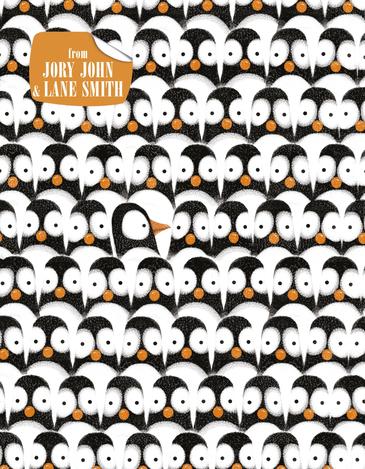
In these circumstances where you have no control, it all comes down to attitude and perspective.  Yes, it's the old adage of looking at that glass as either half full or half empty.  If we journey to the last continent of silence (according to Admiral Richard Byrd), there will be one voice more distinct than others.  In Penguin Problems (Random House, September 27, 2016) written by Jory John with illustrations by Lane Smith, readers can't help but laugh out loud at this bird who most definitely does not have an attitude of gratitude.  

It's way too early.
My beak is cold.

A catalogue of complaints begins this tale of an Antarctica resident. Granted this continent does have the coldest recorded temperature on the entire planet, but certainly there will be a bright spot in this inhabitant's day.  Nope.  Not yet. The chatter of his companions bugs this penguin too.

As luck would have it Mother Nature has the audacity to have it snow the previous night.  Doesn't she know this is the driest place on Earth?  Hunger sends our flippered friend to the sea seeking fish.

A dive into the darkness reveals a whole new set of problems, escalating by the minute.  It seems the penguin is not the only one with a craving for breakfast.  Whew! Back on terra firma physical attributes duly noted simply don't live up to expectations.  No amount of flapping is going to see this guy soaring.  

A final frustration sends our protagonist into a total tizzy.  A wise walrus moves into the scenario and proceeds to point out, in an epic declaration, how the penguin needs to view the world.  This, as you might think, is observed with a heavy dose of annoyance.  Or is it?  As night descends a lone voice can be heard.


Pointed, perfect pacing is a result of Jory John's word choices, sentence structure and keen sense of humor.  By the third sentence, a question, readers recognize this penguin does have a problem and it's only morning!  As the narrative proceeds John increases the tension by moving from the environment to daily rituals and then to very specific physical traits.  In the sequence where the penguin is seeking his parents, readers will roll on the floor laughing if they have not already done so previously. 

With a simple greeting we are aware of the passage of time.  We easily follow the penguin toward the day's end with his continued observations.  And in a final brilliant technique Jory John brings us full circle.  Here is a single passage.

I'm not buoyant enough.
I sink like a dumb rock.


Can you spot our grumbling individual on the front of the matching dust jacket and book case?  He already stands out in the crowd without uttering a single word.  To the left, on the back, the title and Jory John's and Lane Smith's names are listed covering nearly all the space.  The use of color seen here is continued for most of the book with the exception of some of the landscape, the time of day and other inhabitants.  The differences are suitably subtle. 

The opening and closing endpapers are the blackest of black perhaps to indicate the penguin's mood. We get a further inkling of how the book will proceed on the title page. The s in problems has dropped down from the other letters, threatening to fall on the top of the penguin's head.  His eyes are looking up as opposed to straight at the reader like his pals' eyes  do.

The heavier, matte-finished paper enhances the texture seen in the artwork of Lane Smith in this title.  It appears as though the illustrations were created using a blend of traditional mediums and perhaps some digital.  Lane Smith is a master of conveying much with delicate differences.  Perspective plays heavily in his perception of the narrative; a tiny penguin with flippers covering his eyes beneath a large sun in the sky, the gaping mouths of predators in a row as the exhausted penguin climbs from the water, the close-up of the penguin frankly declaring his unfortunate appearance, or the four vertical panels when the penguin seeks his parents. 

One of my many favorite pages in the book is when Smith demonstrates the penguin's waddling.  The page is sectioned into fourths with a black line on a white background. In the first three frames penguin is rocking back and forth, left to right, eyes shifting.  In the final image in the bottom right-hand corner, flippers folded in front of his body, he looks straight at the reader proclaiming

See?


If you want hilarity no matter how many times you read a book, Penguin Problems written by Jory John with illustrations by Lane Smith is a marvelous selection.  This first collaboration by John and Smith is a triumph.  There is not a missed beat in this cadence of comedy.

To discover more about Jory John and Lane Smith and their work please visit their websites by following the links attached to their names.  You can view a few interior images at the publisher's website.  Don't miss this funnier than funny interview of Lane Smith at educator and reader advocate Colby Sharp's blog sharpread.  One of my favorite images is included along with the passage noted above.

Wednesday, October 7, 2015

Hidden In View

As the sun sets on a summer afternoon filled with freedom or on one of those final warm days in autumn, a chill seeping into the air, neighborhood guys and gals gather for a rousing game of hide-and-seek.  Each player searches to find the perfect spot out of sight or blending in with their surroundings and standing as still as stone.  Excitement swirls around the participants, each thrilling at their ability to elude the one hoping to find them.

The enjoyment in this ability to evade discovery is heightened when shared.  In Where's Walrus? (Scholastic Press, February 1, 2011) Stephen Savage introduced readers to a quick-witted walrus and a frustrated zookeeper.  Those two have returned in a companion title, Where's Walrus? And Penguin? (Scholastic Press, August 25, 2015).  This time Walrus has a willing partner in Penguin.  The laughter doubles as these two boldly blend in wherever they go.

If you remember the first story involves a swimming event and the zookeeper's kindness toward Walrus's fondness for diving.  On the title page, executing a perfect swan dive into his pool, Walrus is silently observed by a penguin.  Next Walrus knowingly looks right at the reader.

With rain steadily falling, the zookeeper holds open the gate for patrons and those with children, umbrellas overhead keeping them dry.  As they file out, Walrus and Penguin join them at the end of the line.  A shocked zookeeper scurries to find them, first checking the subway.  Those two clever creatures mirror other occupants.  Readers will burst out in giggles.

A newsstand on the street, a pigeon-feeding bench in the park, a crew team gliding on the river, a busy street in the city center, a night at the opera and a baseball game provide fun and entertainment for the escapees.  These places also act as the ultimate venues for disguises.  Walrus tends to favor a variety of hats.  Penguin usually uses his natural physical attributes.

After a fly ball has Walrus zigging and zagging on the field the game is over for the tricky twosome.  The trio, Walrus, Penguin and the determined zookeeper, find themselves in a location where hiding is not an option.  Love, as they say, will find a way.


Opening the dust jacket, the design on the front is reversed on the back to reveal the zookeeper, net at rest, standing in front of the newsstand, wondering how Walrus and Penguin could have disappeared so quickly.  They are, in fact, in plain sight which begins the first of numerous hilarious episodes.  Exhibiting his first-rate design skills Stephen Savage blends his name and the ISBN into the cityscape.  The primary and secondary colors pop when combined with the gray, black and white.  (As he did in the first title, Savage adds just the right amount of shades of pink exactly where and when they are needed.)

Having Walrus, in a close-up, stare at us, his mouth forming a grin with its natural shape, on the verso and first page, Savage asks us to join the adventure.  A single drop of rain on Walrus's flipper starts the story.  You know even before you turn the page, Walrus has a plan.

In each of the two-page images, drawn and created digitally, readers pause for several reasons. We are looking first and foremost, as is the zookeeper, for Walrus and Penguin.  The exquisite layout and design using geometric shapes and simple but expressive lines hold our attention in appreciation.

One of my favorite illustrations of several is the busy city street.  In front of buildings filled with windows, among the cars and trucks, are three limousines.  Moving to the left of the page is one with Penguin as the chauffeur and Walrus, sporting a top hot, riding in the rear seat.  In the foreground is a yellow taxi cab heading to the right.  The zookeeper looks out the window at us, almost as if he knows we know where those two rascals truly are.


As well-created as the first title, Where's Walrus? And Penguin? written without words and illustrated by Stephen Savage is a fine and playful achievement.  It's a brilliant example of less is more. I can't help but wonder (and hope) if we will see these characters in another lively romp away from the zoo.

To discover more about Stephen Savage and his work please visit his website by following the link attached to his name.  If you haven't read his interview by author, reviewer and blogger, Julie Danielson at Seven Impossible Things Before Breakfast, make sure you stop there now.
Enjoy the book trailer.


Here's Stephen Savage reading this title out loud at KitLit TV.


Update:  March 9, 2016 Stephen Savage appears again on KidLit TV talking about this title and several of his earlier books.

Friday, March 6, 2015

Finders Keepers?

After a storm you walk along a rock-strewn beach and discover a perfectly-shaped heart rock.  You pick it up to add to your collection.  Leaves are falling like rain in the woods as autumn colors surround you.  You bend to find one to press between the pages of an old book, hoping to save even some of its brilliance.  Scurrying to your car after grocery shopping in the winter cold, an out-of-place object catches your eye.  It's a twenty dollar bill.  This decision to keep or not to keep is different.

It could even be argued picking up the rock or leaf is not the right choice. Finding something offers possibilities or opportunities.  Virgil & Owen (Bloomsbury, January 27, 2015) written and illustrated by Paulette Bogan is about the discovery of many things.

"I found a polar bear, Mom," said Virgil,
"and I'm keeping him."

Virgil is a bow-tie wearing penguin.  To say his mom is a bit stunned would be an understatement.  Virgil, secure in his ownership of the found bear, issues his first directive.

He tells the bear he belongs to him.  Without asking he further informs the bear he needs to follow Virgil.  Stopping to enjoy the company of a group of terns in the water is not part of Virgil's plan.  Everyone is happy except for Virgil. 

In no mood to share the bear, Virgil wants to move to another spot.  There's nothing like a romp in the snow with a bunch of seals.  A good time is had by all except for Virgil.  Getting more frustrated by the minute, Virgil urges the bear to leave with him.  

A colony of penguins swirls around on the ice with the polar bear in tow.  Everyone is smiling with joy except for Virgil.  He is stomping mad.  When he issues his repeated commands, he is shocked at the polar bear's reply.  It seems the polar bear has a name and he is not budging.  

Well, that's the last snowflake for this perturbed penguin.  It's time for pouting alone.  Owen, the polar bear, and company have other suggestions.  There are antics in Antarctica for all and much more.


Using a blend of dialogue and narrative, Paulette Bogan presents a story simply told but the implications are more far-reaching.  Younger readers will fully understand Virgil's need for control but in comparison will know he needs to change.  Bogan engages her readers with the repetition of pivotal phrases which I suspect they will be more than willing to say out loud.  Here is a single passage.

The polar bear slipped and slid with
the seals.  Everyone had fun.
Virgil did not have fun.
"You are my polar bear," said Virgil
"Come with me."


On the matching dust jacket and book case, Paulette Bogan hints at the outcome of the story by having Owen and Virgil standing eye to eye, paw to flipper.  On the left, back, the two are walking away from the reader, footprints in the snow under a starry sky.  The opening and closing endpapers tell a tale of their own; two completely unique scenes in shades of blue and white highlighting the South Pole animals (except for Owen) in various activities.  Virgil stands alone eyes lifted upward beneath the title.  It is followed by the verso and dedication pages which offer an explanation as to Owen's appearance.

All of the illustrations, rendered with 

Sakura Micron pens (waterproof) and Winsor Newton Water Colour on Arches cold press watercolor paper, 

span, edge to edge, across two pages.  Bogan's selection of shades of blue and white definitely convey the cold of the region but the contrasting hues of orange, red, yellow and lavender match the warmth of the story's resolution.  Touches of humor are depicted on the seal's faces, in the chattiness of the other penguins and with the green bow tie Virgil wears.  Owen's gentle mouth and the bug-eyes of Virgil are full of expression; happiness, authority, disgust, anger and friendship. Bogan extends the text by picturing why Vigil is not laughing, having fun or feeling the wonderful.  

One of my favorite pictures is when the polar bear, Owen, is floating on a small ice floe splashing with the flock of terns.  One is on his head.  Others are flipping in the air, bouncing in the waves or enjoying the sight from land. Virgil, flippers on his hips, is looking very unhappy drenched in unwanted water.  It's a comic contrast.

Virgil & Owen written and illustrated by Paulette Bogan is not only about the discovery of a polar bear, it's a warmhearted story of finding your true nature and accepting the gift of friendship.  It's one of those books which listeners and readers alike will be eager to share and discuss.  Each time I've read this, I've pictured it as a reader's theater.  I think there's fun to be found within these pages too.

For more information about Paulette Bogan please visit her website by following the link attached to her name.  Paulette Bogan was a visitor at teacher librarian extraordinaire John Schumacher's blog Watch. Connect. Read.  

I used to read a book while riding my bike with no hands.  Now I read lying down.  It's much safer.

I like the touch of humor in what she says here, in her books and in her illustrations.  

Friday, October 17, 2014

Way...Way... Down South

For followers of this blog, readers of my recommendations, you know I place a high value on laughter.  My fondest life memories are generally those spent in laughter, especially shared laughter.  To become acquainted with characters whose escapade-filled lives and corresponding dialogue elicit grins, giggles or guffaws is a gift from an author and an illustrator.

We don't want these stories to end.  When they do, it's our fervent hope a sequel, or even better yet an entire series, is in the making.  On September 30, 2014 wishes were granted when James Burks' Bird & Squirrel On Ice (Graphix, an imprint of Scholastic) was released.

When the fearless and fearful pair were last seen, they were making their way south for the winter.

Somewhere high above the South Pole...

I don't like this!
It's cold!
And I'm pretty sure we're...
...LOST!

It's safe to say Bird's flying abilities have taken them farther south than originally intended.  Squirrel's pessimistic assessment is definitely correct.  Within seconds of this conversation, they crash into an iceberg, cause an avalanche which they ride with hair-raising reckless abandon and meet a warrior penguin named Sakari.  She is quick to assume Bird is The Chosen One fulfilling the elements of a legend told for generations in her village.

When the moon is full in two days, it is said The Chosen One will defeat The Great Whale in battle.  This orca of enormous proportions eats most of the fish the penguin population catches each day in exchange for not placing them on the main course menu.  Of course Bird readily falls into his role as the champion for these South Pole residents but true to form Squirrel sees the worst-case scenario.

Ice sculptures, ceremonial regalia and tales of daring-do occupy Bird's days and nights as Squirrel, nerves on edge, knows beyond a shadow of a doubt that doom is coming and coming fast.  With Bird ignoring all his pleas to get help or formulate any sort of plan other than winging it, Squirrel, in the dead of night, seeks Sakari's counsel.  She in turn leads him underground to visit the local wise man...er, penguin.  In the light of the fire Squirrel sees that his worst fears will be realized.

Still in optimum optimism mode Bird does not believe a single word Squirrel says until it's too late.  A warrior and a worrywart need to hatch a winning plan or our daring flyer will be The Great Whale's next tender treat.  Will the trio be trapped by tradition or will they triumph?


As soon as we open the cover and flip the title page, James Burks does not miss a beat, whooshing us right back into the action.  Dialogue driven, with spare narration, the story moves at breakneck speed with purposeful pauses in all the right places.  The clash of personality traits between Bird and Squirrel generate humor and gentle tension.  Introducing the penguin warrior, who has troubles of her own as the daughter of the chief, and The Great Whale with a matching appetite in this setting of ice and snow heightens the appeal of the already-loved duo.  Here is a continuation of the opening lines to demonstrate the relationship of the two.  Bird is replying to Squirrel.

Don't be ridiculous!
I know exactly where we are.
My bird senses are never wrong!  SLAM
My bird senses are telling me we hit a mountain.  CRACK

What was that?
I think we broke the mountain.
AVALANCHE!!


James Burks' cover, front and back, tells a story.  On the front Squirrel is not even remotely happy to be on the ice.  Bird, true to his happy-go-lucky self, oblivious to the danger, is fishing as The Great Whale gets ready to have them both for dinner.  On the back the enemy is leaping over a terrified Squirrel, the ready fighter, Sakari, with spear unraised and Bird grinning with glee.

In speaking with Matthew C. Winner, elementary teacher librarian, and host of the Let's Get Busy podcast (which is fantastic), James Burks talks about incorporating panels on top of full bleed pages.  I have to say this technique, which he employs masterfully, increases the sense of the action swirling about you.  Each panel, placed precisely and varied in size, on all his pages are absolutely captivating.  It's like watching a movie; seamless motion.

A color palette, bright and lively, highlights the animated features on each character; features conveying the emotion associated with every single thought.  If the first ten pages don't hook you, you might want to check to see if you have a pulse.  They are absolutely hilarious.  Another sequence I enjoyed is down in the cave when Squirrel is looking into the fire to see Bird's future.  All Burks' wordless images like this tell a story as compelling as the text.


Bird & Squirrel On Ice written and illustrated by James Burks is an outstanding companion to his first title, Bird & Squirrel On The Run!  It has all the thrills and chills (literally), laughter and companionable bantering between the unlikely friends we love.  The I-can't-believe-this-is-happening twists and turns via the penguin village, the chief, Sakari and The Great Whale are top notch.

Be sure to follow the links embedded in James Burks' name and Let's Get Busy to discover more about this work.


Thursday, October 9, 2014

Over And Under The Ice

Once the temperatures were consistently below freezing and snow had fallen, all the neighborhood kids knew what would happen.  The caretakers of the nearby park would start to make a skating pond.  I know every single child for blocks around was including Jack Frost in their prayers at night, hoping he would work his magic to make the layers of water freeze faster.

When the rink was ready some would play games of hockey using whatever was available for a puck, others wove over the ice in endless challenges of crack-the-whip or a few dreamed of dancing in swirling figure eights before an admiring crowd.  We loved skating on that pond.   Molly Idle's gregarious gal first acquainted with readers in her 2014 Caldecott Honor winning title, Flora and the Flamingo, has returned.  Donning a pair of skates she glides over the ice in Flora and the Penguin (Chronicle Books, September 30, 2014).

In silence, without words, the story is told; beginning with a single two-page illustration including the title.  Flora is walking across a section of ice, her skates over her shoulder, as she eyes a hole in the ice.  We are able to see the water underneath the frozen landscape.

Putting on her skates, still watching the hole, she is rewarded, as are we, with the sight of a beak tip.  We know it's a penguin.  A few fish are swimming from the page edges toward the center.

As the penguin emerges from the water a greeting is given.  The two join hands, partners in a graceful dance, moving to a melody only they know.  As they change directions so do the two large schools of fish now present.  When we lift the first flap we see the pair in perfect synchronization as they face away from us.

As their bodies leap and stretch, the fish are performing in a figure eight formation.  With laughter on her face, Flora is blissfully unaware of every single fish shifting as a unit toward the opening.  Apparently with some instinctual gift, the penguin knows, diving through the hole in hot pursuit.  On the top of the ice flaps show Flora's disappointment at the loss of her companion.  Beneath the ice, the penguin is not giving up the chase.

Pleased as punch, the penguin pops back up to the surface with a single fish; presenting it to Flora as a token of friendship.  With a flippant fling, she tosses it back through the hole.  The penguin is aghast.  The pair is not pleased with each other but Flora, perhaps from her own experiences in the first book, realizes the need to make amends.  Heart and head working together, her inventive plan gains more than one catch of the day.


When I unfolded the dust jacket Molly Idle's design seen on the front, the wide strip edged in snowflakes, continues to both flap edges.  Flora and her penguin friend are joyously skating to the right on the front.  The reverse is featured on the back.  Beneath the jacket the book case is a frosty white with only two small illustrations.  On the right the penguin is peering out of his hole.  It's bottoms up on the left.  The bright golden yellow hues cover both sets of endpapers.

In this title the white, rather than acting as a canvas as it did to highlight Flora and the flamingo, becomes an element directly influencing the overall atmosphere of ice and snow.  Rendered in colored pencils with the limited color palette, simplicity in design and delicate details create sheer eloquence.  Each flap, carefully placed, heightens the narrative's progression and emotions.

I've turned the pages again and again as well as each flap, finding it hard to select a favorite.  Everything flows flawlessly; so connected as to be one solid whole.  I really enjoy the sequence of illustrations when Flora and the penguin are together again, working to correct her mistake.  It says a lot when the penguin joins her rather quickly.


Like a blade on the ice, Flora and the Penguin conceived and illustrated by Molly Idle will skate its way right into your heart.  Hand this to readers who like participating in stories with the tactile experience of lifting flaps and readers who love penguins, skating and friendships.  You are going to love dancing with Flora and her pal as much as you did the very first time.  It's simply glorious.


If you are interested in learning more about Molly Idle and her work, please follow the link attached to her name taking you to her website and blog.  Here is a recent interview she did at Seven Impossible Things Before Breakfast hosted by Julie Danielson.  A Q & A with Molly Idle about this title and her work in general appeared a little later in Publishers Weekly.  Teacher librarian extraordinaire, John Schumacher, premiered the book trailer (and much more) at his blog, Watch. Connect. Read.  At the publisher's website they have included two illustrations with the flaps for your viewing.  Molly Idle chats with Matthew C. Winner, a special teacher librarian, on his Let's Get Busy podcast.