Quote of the Month

When love and skill work together, expect a miracle. John Ruskin


Showing posts with label Mike Curato. Show all posts

Wednesday, February 9, 2022

Click

Humans are not as quick to receive someone as their canine counterparts.  Dogs, regardless of your physical characteristics, readily give you their unconditional love.  Their loyalty is humbling in its purity.  Whether you are courageous or cautious, or aloof or friendly, or carefree or worried, their understanding of you, your flaws and strengths, is remarkable.  If you are fortunate enough to have a friend who views you in this manner, it is a cherished gift.

As someone who is shy, being among others, especially large groups, professionally or personally, is challenging.  It is not easy to join in small talk, offer comments in discussions, or provide answers to questions, even if you have correct responses.  You prefer to be an observer.  You prefer to blend rather than engage.  In Where Is Bina Bear? (GodwinBooks, Henry Holt and Company, January 11, 2022) written and illustrated by Mike Curato, readers are invited to a party.  One of the guests is most bashful, but has the best kind of friend, a cherished gift.

Tiny was having a big party.
But where was Bina Bear?

Bina Bear was hiding in the dark.  Bina Bear was trying to blend in with the wallpaper.  Bina Bear believed standing still with a lampshade on your head turned you into a lamp.  It was a good plan for concealment. 

When Tiny, a small rabbit and Bina's friend, asked if the object was Bina, a voice replied it was a lamp.  Bina next arranged to be a large table with a bowl of fruit resting on it.  The table graciously allowed Tiny to take a banana.

As Tiny moved outside and then back inside, each encounter with Bina Bear presented a new object which freely spoke with Tiny, but denied being Bina Bear.  Tiny voiced missing Bina Bear.  Wherever Bina Bear went and whatever she became, Tiny was there.

When Tiny asked if Bina Bear was all right, the bear said yes.  Bina Bear was not okay.  Through a compassionate conversation, Tiny realized what Bina Bear needed most.  Two hearts shined as one.


Spare, intentional text with specific word choices by author Mike Curato evoke an emotional response in readers.  Dialogue between Bina Bear and Tiny establishes their affectionate relationship.  The questions and answers further our comprehension of their bond. The decision to use fewer words leaves room for the artwork to elevate the story.  Here is a passage.

Excuse me, have you ---

I AM NOT BINA.  I AM A TREE.

Oh, okay.

Sigh . . . 

"nom nom nom" 

Do you want
some banana,
tree?

Yes.


One of the first things you notice about the open dust jacket is the color palette.  The bright yellow as a background on the front and back sings out hello.  The complementary hues used with the yellow heighten the greeting.  The cones of light above and below Bina Bear draw our eyes to the title text and to Bina Bear and Tiny.  The text, Bina Bear, and Tiny are varnished on the front.

To the left of the spine are three of the forms Bina Bear assumes to hide.  She is a table in the living room, a tree in the yard, and a chair.  The accompanying text contrasts with what readers can see.  Bina Bear and Tiny in these three scenes are varnished.

On either side of a yellow spine, the book case is purple.  It is Bina Bear.  All we can see of her is her eyes and nose enlarged on the front of the case.

The opening and closing endpapers are the same bright yellow.  On the title page is a full-page picture.  It is a party setting.  Balloons from the refreshment table are used to spell out Bina Bear in the title.  Bina Bear is peeking from the outside through an open door in the background.  Tiny is chatting with a squirrel.  Careful readers will notice a familiar character, trunk raised, near a plate of cupcakes.  The dog, Spot, is under the table, tongue out waiting for crumbs.  

These illustrations were rendered using

ink, colored pencil, watercolor, and digital.

The size of the visuals vary in accordance with the narrative. There are single-page images, two-page illustrations, two horizontal panels, top and bottom, across two pages, and two, three, and four images on a single page.  There are several dramatic wordless double-page pictures.  All the artwork is loosely framed.  The perspectives vary with the image sizes.  What artist Mike Curato conveys with his eyes alone is marvelous.

One of my many favorite illustratons spans two pages and is wordless.  We are inside a formal library.  The walls are papered in a fern design.  Ornate white bookcases line the walls on the left.  Between two of those bookcases is a Bina Bear bookcase.  Her arms and legs are arranged like shelves to hold books.  To the right of the gutter, French doors, now closed, open into the party.  On the far right, a plant hangs from the ceiling near a pink and green chair.  On the wood floor, stained pale pink, sits Tiny on a green pillow.  She is reading a book as big as she is.  One of her eyes is watching Bina Bear watch her.


This book, Where Is Bina Bear? written and illustrated by Mike Curato is for all those shy people to know they are seen.  It will build empathy in all those people who are not shy.  Readers will find a special place in their hearts for this bear and her rabbit friend.  I know you will want a copy of this title for all your collections, personal and professional.

For those desiring to learn more about Mike Curato and his other work, please follow the link attached to his name to access his website.  Mike Curato has accounts on Facebook, Instagram, and Twitter.  Mike Curato speaks further about his book on this additional site of his.  Mike Curato, this title and his artwork are featured by author, reviewer, and blogger Julie Danielson on her site, Seven Impossible Things Before Breakfast.  You can view interior images at the publisher's website.

Where Is Bina Bear? by Mike Curato from Let's Talk Picture Books on Vimeo.

Friday, September 25, 2020

Shaping Our Place In Society

From the time we first enter this world, until we exit, we are, by tiny steps or great leaps, a growing part of a glorious whole.  Whether we act alone, or with others, we are striving to not only find our place in society, but to help others find their place.  We protect.  We preserve.

If the last few years, specifically this year, have taught us nothing else, from this collection of days we know to take nothing for granted.  We know deep gratitude.  We know we cannot be silent, except when it is necessary to fuel our determined actions.  

Within the last two months four special books with a common theme have been released.  Each provides us with information, guidance, and inspiration.  They, individually and together, work as a means for discussions.  V Is For Voting (Henry Holt And Company, July 21, 2020) written by Kate Farrell with illustrations by Caitlin Kuhwald is an alphabet book designed to explain how each individual can make a difference.  It's an invitation we cannot refuse.

A is for active participation.
B is for building a more equal nation.

The next two letters focus on citizenship and our diversity.  It is followed by the need for all of us to be involved.  It is important to keep informed by a free press.  Our government is not only about leading the people but offering guidance.  H speaks to the truth of lands lost to occupation.  

Each person has a purpose, beginning in our communities.  As we pass the middle of the alphabet, we are reminded that each vote is important.  We cannot forget those who paved the way for a better life for future generations.

We need to have goals and stick to those goals, even if it means protesting.  We need to seek answers to our questions and hold those who represent us accountable. Education by 

talented teachers

gives us facts, and the ability to gather additional facts.  

Each time we vote, we are gaining ground toward change for the good.  Each time we vote, we exercise our rights.  Each time we vote, our voice is heard.


The strength of each statement for each letter is like a symphony building toward a crescendo.  Kate Farrell increases our participation in her narrative by rhyming the final word in each pair of letters. Sometimes, she will add another short sentence to the first to fashion the rhyme. Each sentence begins with the letter followed by is for.  Here is another couplet for a single letter.

S is for suffrage---the right to vote.
This fight is ongoing, not history's footnote.


When you open the cover (I am working with an F & G.  My copy has not yet arrived.), the colorful, bold images of illustrator Caitlin Kuhwald are an ideal complement to the text. Her focus on using red, white, and blue, and diverse people is a realistic nod to our country.  The girl, front and center, is shown, as are some of the other people, throughout the book. 

To the left, on the back, two other children are featured protesting.  The boy is holding a sign which reads:

V IS FOR
VOTING TO
MAKE YOUR 
VOICE HEARD!

To his right the girl has extended her left arm, fingers holding up the peace sign.

On the opening and closing endpapers are rows and rows of boxes.  In between the black boxes are hearts, stars and peace signs in shades of red.  Many of the boxes have a red x through them to indicate voting.  This design is placed on a cream background.

Throughout the book, the image sizes shift from single-page pictures, edge to edge, to double-page pictures, edge to edge.  For many of them two letters are used in a single illustration.  We see mixed-race families, people of different religious beliefs, and single-parent families.  Historical figures are used as examples with particular statements. In all the people's faces, readers will see calm, but resolve.

One of my favorite illustrations is a full-page image.  It features the neck and chin, torso, and one hand of a distinctive individual.  This beloved person is wearing a black robe with a white lace collar.  Their hand is over their heart.  It interprets these words:

J is for judges.  They're meant to be fair.
To be neutral, unbiased, objective, they swear.


Every collection, personal and professional, will want to have a copy of V Is For Voting written by Kate Farrell with illustrations by Caitlin Kuhwald.  Now, more than ever, all ages need to make educated decisions and exercise their right to vote.  At the close of the book is a short author's note and five discussions about the people highlighted in the letters G, N, S, T and U.  There is also A VOTING RIGHTS TIMELINE.

To learn more about illustrator Caitlin Kuhwald and her other work, please follow the link attached to her name to access her website.  Caitlin Kuhwald has accounts on Instagram and Twitter.  At the publisher's website you can view a series of interior images including the final two pages.


Every day we read or hear about the achievements of a single person.  We are encouraged by the power of their deeds regardless of the size of those deeds or the size or age of the person.  They make us brave.   The POWER of ONE: Every Act of Kindness Counts (Alfred A. Knopf, August 25, 2020) written by Trudy Ludwig with illustrations by Mike Curato is a beautiful portrait of change.

Sometimes One can feel like
a small and lonely number.

But don't let this little number fool you. 

It only takes one person to reach out to another person who needs comfort or support.  Beginnings start with one.  With this one, change is shaped.

One person listens.  One person smiles.  This is the start of connected hearts.

This one being can invite other people to listen and smile, comfort and show support.  Working together heals our souls, those injured and those who caused injury.  Extended warmth and heartfelt ideas make bridges linking more generous hearts.

We need to acknowledge and remember the miracle of a single seed.  Together these single seeds can feed physical and emotional hunger.  This is 

The POWER of ONE.


The words written by Trudy Ludwig in this story read like a poem.  Her spare, truthful text makes profound statements and supplies examples in support of those statements.  They also allow us to think between each page turn, imagining how these apply to our own lives.  Her repetition of the word one, is, like the word, powerful.  Here is another sentence.

One warm hug . . .

can lift our spirits up when
we're feeling down.


The front of the open dust jacket not only signifies the implications of the title, but hints at images to come in the body of the book.  The flower and its seeds are important.  Can you see the outline of other people in the glowing background?  To the left, on the back, is a depiction of the child on the front, seated on the ground, after cruel words hurt her.  The first, one, girl to comfort her is kneeling next to her.  This image is beneath the words:

One is the starting point for change.

Beneath the illustration are two endorsements.

On the book case artist Mike Curato shows us a close-up picture of a lush garden, full of leaves, ferns, pods, and fronds.  They are in shades of blues and greens.  Rising and curling from the right side of the spine is a single stem with a red and open flower on it.  Small sparkles in white come from the center.

The opening and closing endpapers are a cheery yellow.  Prior to the title page a wordless image tells the tale of verbal injury with a single soul watching.  Another two-page picture continues this tale for the title page.

On heavy, matte-finished paper  

using pencil, colored pencil, gouache, watercolor, paper, digital color, and photo collage

Mike Curato makes a mix of colorful elements and those in tones of black and gray.  This brings our attention to the main characters and his visual interpretation of the story.  He alternates between more panoramic views to those close to the people.  Sometimes a single item fills the page or captures our attention because it is alone in a larger context.  

The single flower growing as a symbol of friendship, apology, and forgiveness is wonderful.  The continued growth of the garden shows how one can multiple into many.  Many readers will see themselves in the children, from diverse races, highlighted here.

One of my many, many favorite pictures is for the passage above noted.  It spans two pages.  On the left is an enormous garden filled with blue and green leaves of all varieties.  From this garden a single stem has expanded to include three large red flowers and a smaller red one.  The largest flower blooms from the stem to the right of the gutter.  Inside the girl is being given a hug by the boy who hurt her, and she is hugging him back.  Under and to the right of them, another girl is smelling the tiny flower.


We have a choice to hurt and to heal.  The POWER of ONE: Every Act of Kindness Counts by Trudy Ludwig with illustrations by Mike Curato is a lovely example in words and artwork of the art of healing.  It presents to readers loving possibilities.  At the close of the book is a letter from Trudy Ludwig titled Planting Seeds of Kindness in Your Community.  It is followed by Recommended Books for Young Readers and Recommended Websites.  I highly recommend this title for your professional and personal collections.

To learn more about Trudy Ludwig and Mike Curato and their other work, please follow the link attached to their names to access their respective websites.  Trudy Ludwig has accounts on Facebook, Instagram, Pinterest, and Twitter.  Mike Curato has accounts on Facebook, Instagram, and Twitter.  At the publisher's website you can view interior images.


It happened the day after our forty-fifth president was inaugurated.  It was January 21, 2017.  At this time, it is the largest single day event, a protest, in United States history.  It is called The Women's March 2017. Based upon a true story Love Is Powerful (Candlewick Press, September 8, 2020) written by Heather Dean Brewer with illustrations by LeUyen Pham follows a little girl as she and her mother get ready to show the world how strong love is.

Mari spilled her crayons onto the
table.  They made a messy rainbow.

"What are we coloring, Mama?"
she asked.

Mama smiled.  "A message for the
world."

Mari was concerned how the world would hear their message.  It's a huge place.  Her mother said 

love is powerful.

Mama wrote words on one poster, too small, Mari thought for the world to see.  On her sign, thinking of her family and friends, Mari wrote her message, the words of her mother.  

Wearing coats to warm them in the cold, the duo left their apartment, going down on the elevator to the street below.  There, they joined a crowd of people.  Again, Mari was concerned people could not hear their message in all this noise.

Soon, Mama lifted Mari to her shoulders.  From there Mari saw the sea of people stretching beyond her sight.  They were carrying signs and cheerfully chatting and shouting.  Still wondering if people could hear her message, Mari called it out.

To her surprise a single voice called it back.  She called it out again.  More voices called it back.  This four-letter word released its full potential that day, started by the voice of a child, a child who now knew the truth.


We happily join in this story as we read or listen to the conversation between Mari and her mother at the start of the book.  Author Heather Dean Brewer engages us immediately with this technique.  Mari's mother's reply to each of her questions with the title words increases the connection to the event in which they are participating.  Layer by layer it draws us toward the amazing conclusion.  Here is a passage.

Some held signs like Mari's, all saying different things.
Everyone cheered as they walked together.  Mama joined
them.  Mari bobbed above the crowd like a canary fluttering
over trees.  She felt as tall as one of the buildings. 


You can feel the sense of purpose when you look at the front, right, of the open dust jacket.  People are peaceful and happy to be able to voice their views in protest.  Not only does this scene mirror the title, but it mirrors the mood of the crowd.  The title text, solid red hearts, Mari and her mother are varnished.  It's a wonderful design style to combine bright colors with muted colors.

To the left, on the back, we are shown, on a canvas of pinkish lavender a picture of Mari and Mama.  Within a loose frame done in red crayon they are seated at the table making their posters.  The string of hearts hangs in their window behind them.  

On the book case, back and front, is a collage, in separate but blended squares, of people from the march.  You can tell these images represent all the marches on that day from around the world.  In the center on the right front, in a large square of its own, is the title.

The opening and closing endpapers are a lavender.  A two-page picture of the buildings in hues of gray of Mari's neighborhood, with the occupants standing in lighted windows, is the setting for the title page.  Artist LeUyen Pham rendered these pictures 

in watercolor, gouache, pencil, and ink.

Their size shifts with the text, enhancing its pacing. There are large images crossing the gutter to make a column for text.  There are double-page pictures with double-page smaller horizontal visuals underneath them.  Sometimes there are small vignettes accompanying the text.  There are full-page illustrations.  There is one large double-page vertical picture requiring you to turn the book.  There are three smaller vertical illustrations attached to one huge swirl of humanity on a full page.

Love abounds in every picture.  So does happiness, mirrored on all the faces.  We are always aware of where Mari and Mama are.  Readers will pause to notice the details; the items in Mari's and Mama's home which make it theirs, the words on the protesters' signs, the diversity of the participants in the march, and all the illustrations have hearts in them.

One of my many, many favorite images is for the quote above noted.  It is a close-up view of the marchers.  Buildings are behind those on the right and on the far left.  We see a collection of smiling faces, mouths open in cheers, and many holding signs.  There are adults and children.  Mari on Mama's shoulders is on the left side.  She watches all this in joyful contemplation.


Love Is Powerful written by Heather Dean Brewer with illustrations by LeUyen Pham is as strong as its title.  It presents an intimate portrait of happiness found when words are brought alive by actions.  At the close of the book is a letter from the real Mari along with a picture of her at the march.  This title has my highest recommendation for your personal and professional collections.

To learn more about Heather Dean Brewer and LeUyen Pham and their other work, visit their websites by following the link attached to their name.  Heather Dean Brewer has accounts on Instagram and Twitter.  LeUyen Pham has accounts on Facebook and Instagram.  At Watch. Connect. Read., the site of Scholastic's Ambassador of School Libraries, John Schumacher, Heather Dean Brewer and LeUyen Pham talk about this book.  At Penguin Random House you can view interior images.


In a beautiful continuation of their collaboration, author Susan Verde and artist Peter H. Reynolds, bring to readers another thoughtful title.  This book guides readers in making a difference.  No matter how small you are, you can bring change to yourself and more importantly, to others.  I Am One: A Book of Action (Abrams Books for Young Readers, September 15, 2020) welcomes you to make the first move.

How do I 
make a difference?

It seems like a tall order
for one so small.

The young child is told things of beauty begin with one.  One seed planted in the ground, one stroke of a paintbrush, or one brick removed from a wall can lead to the greater good.  Are not gardens, paintings, and friends better?

When a wall is gone, we can form bonds with those we were previously unaware.  Still using the number one, each gesture increases the bond between the two individuals.  A word, a hug, and a candle pave the path for the duo.

They arrive at a body of water.  A drop of candlewax in the water produces a ripple, growing and growing and growing.  The friends ride on the swells in a boat carrying their special cargo to new shores.

There they are greeted by others. Individuals, working together, to create a transformation.  They take what was, forming a marvelous masterpiece.


From her initial and only question, author Susan Verde weaves a tapestry of story.  Each of her carefully crafted thoughts add color and detail.  The common thread is the word one.  She begins with the first child, but with the mention of a brick and breaking down walls, another character is welcomed.  It is at this point, the color and detail become more vivid and intricate, representing the realm of possibility.  Here are two companion sentences.

I can use my
One soft voice
to start a friendship. 

I can perform
One act of kindness
to start a connection.


The color white is superbly used throughout this title to highlight the characters and their actions.  The spiral of hues of blue on the front of the dust jacket behind the first child symbolizes the ripples from the single drop of wax.  To the left, on the back of the dust jacket is an interior illustration of the first child leaning over the water so the single drop of wax can fall.  The second child is watching the effect.  The color palette selected by Peter H. Reynolds is full of warmth and calm here and on every single page.

On the book case, on a canvas of pure crisp white, a rainbow brush stroke like a wave moves from the left to the right of the opened case.  A tiny bird flies toward the gutter from the upper, left-hand corner.  Riding on the crest of the wave on the right side is a bright pink boat carrying the children, their precious cargo and a rainbow tree.  

The opening and closing endpapers are washed circles of turquoise.  On the title page is a close-up of the boat with the first child, the contents of the boat, the dog of the second child, and the tiny bird on the dog's head.  Rendered

using ink, gouache, watercolor, and tea

these pictures are portraits of endearing characters and their actions.  Each intricate line, element and color uplift and extend the words.

One of my many, many favorite illustrations is for the words:

I can perform
One act of kindness
to start a connection.

It is a single-page picture.  Behind the first child on the left are outlines of bricks in the wall.  Several bricks are on the ground.  This child is bending over to give a treat to the dog.  The second child is seated on the ground near a fire and a candle.  Tiny flowers bloom from grassy mounds.


This fifth book, I Am One: A Book of Action written by Susan Verde with illustrations by Peter H. Reynolds, in this stellar series is important.  It is important to understand each one of us can contribute to making the world better for others.  Each action no matter how small puts us on the right path.  At the close of the book is a two-page author's note including a mindfulness meditation and a self-reflection activity.  This book has my high recommendation to be included in both your personal and professional collections.  The other titles in the series are I Am Yoga, I Am Peace: A Book of Mindfulness, I Am Human: A Book of Empathy, and I Am Love: A Book of Compassion.

To discover more about Susan Verde and Peter H. Reynolds and their other work, please follow the link attached to their name to access their websites.  Susan Verde has accounts on Facebook, Instagram, and Twitter.  Peter H. Reynolds has accounts on Facebook, Instagram, and Twitter.  At the publisher's website are additional resources to use with this book.

Previously I wrote a post about Sometimes People March written and illustrated by Tessa Allen.  You might want to include that title with these for a unit of study, a story time, or to promote discussion.

Friday, December 14, 2018

It's Beginning To Look A Lot Like . . #5

Sometimes we need to explore and discover (or rediscover) the true spirit of Christmas.  This is the commemoration of the birth of a child who became a man asking us, again and again, to love one another.  It is about giving with no thought of receiving. 


One children's literature character who continually shines as a beacon of friendship is Little Elliot.  In each of their stories, Little Elliot, Big City, Little Elliot, Big Family, Little Elliot, Big Fun and Little Elliot, Fall Friends, this white elephant with blue and pink polka-dots and his friend, Mouse, with one notched ear, spread goodwill consistently. Merry Christmas, Little Elliot (Godwin Books, Henry Holt and Company, September 11, 2018) written and illustrated by Mike Curato is about a search for a seasonal feeling.  Sometimes it's already within us but it takes the winds of fate to set it free.

Little Elliot was not excited
about Christmas.

"Let's go see Santa," said Mouse. 

As they waited in line to see the jolly old elf, Elliot knew what he wanted.  When he asked Santa about receiving the Christmas spirit, Santa replied it was not his to give.  Elliot needed to find it himself.

He and Mouse decided to look for it.  It was not at a classic Christmas ballet presentation, at the city center showcasing an enormous decorated tree, or at the park's sledding hill.  When the duo stopped for a hot chocolate break, Elliot told Mouse he could not find the Christmas spirit.

Suddenly a gust of wind delivered a bright red envelope right into Elliot's face.  It was addressed to Santa at the North Pole.  When Elliot and Mouse arrived back at the department store it was closed and St. Nick was gone.  This was indeed a dilemma. 

After deciding to read the letter, Elliot wondered how he could help make this request a reality.  In a few moments he had a plan. He and Mouse took a trip driving hours at night.  At their destination a greeting of great joy announced their presence.  A gift is given and received.


When Mike Curato begins with our pachyderm pal having a problem, we are ready to read and listen.  We, like Elliot's friend Mouse, want to help.  Through a concise, deliberate combination of narrative and conversations the story unfolds with marvelous pacing and pleasing surprises. Here is a passage.

"How do I find the 
Christmas spirit?" asked Elliot.

"I don't know," said Mouse, "but I will help you look!"


It is said not to judge a book by its cover but looking at this opened dust jacket is going to send everyone's holiday spirit into high gear.  There is much to love about the merriment seen on the face of Elliot.  Look at Mouse riding in his Santa's hat!  The sack full of Christmas goodies on the back of the sled and the small ribboned wreath on the front add to the overall happiness.  The bright red canvas with the elegant green ribbon script and child-like writing is pure perfection. 

On the spine Christmas lights bookend the title text.  To the left, on the back, Little Elliot and Mouse are calling out a greeting as Elliot holds the letter.  The characters and text are varnished.  The book case is also red with darker outlines to distinguish the portions of an envelope.  On the front is the return address of the sender which is a delightful play on words.  On the back we can see it's addressed to Santa.  The stamp is a one cent stamp in green featuring a historic United States figure.

Mike Curato uses his opening and closing endpapers to wordlessly begin and conclude the story.  On the former a girl bundled in winter clothing is carrying the red envelope in one hand and opening the rural mailbox in her right hand.  With a page turn on the verso and title pages a single image shows a gust of wind carrying the letter away.  It swirls through white title text on darkened blue and purple sky among snowflakes.  Standing by the mailbox the child has her hands outstretched in probable dismay. 

Through a series of utterly charming double-page and full page, with and without borders, illustrations, rendered with pencil on paper and digital color in Adobe Photoshop, Mike Curato lifts and enhances his text.  Many of the pictures are wordless but as with all beautifully created images, they speak volumes.  In all the scenes Mike's use of light and shadow is wonderful!

One of my many, many favorite illustrations is when Elliot and Mouse are leaving the city (New York City of a bygone era).  They are riding in a large yellow car.  Elliot is leaning out the rear window having donned the Santa cap borrowed from the Macy's snowman.  He is grinning with glee.  Mouse is carefully peering out the front window, hanging on to the edge.  His tail and ears are perked up.  Behind the car and through the car windows lighted windows in buildings and Christmas lights shine.  It's as if Elliot and Mouse are going to drive right into our space; they are that close to us.


It simply wouldn't be a complete collection of Christmas titles without a copy of Merry Christmas, Little Elliot written and illustrated by Mike Curato.  Exquisite care has been taken with the entire creation of every portion of this book.  It's guaranteed you will smile and sigh when you view the closing endpapers.  I highly recommend this title.  Giving is the spirit of Christmas which lasts forever.

To learn more about Mike Curato and his other work, please follow the links attached to his name to access his website and blog.  On his website he has a link to activities for this title. On his blog he talks about the making of this book and the Easter eggs hidden in his illustrations.  At Mike's website and the publisher's website you can view interior images.  Little Elliot has a website dedicated to all things Little Elliot.  Mike Curato has an account on Twitter and Instagram.

Monday, April 2, 2018

Mind Magic

Our minds are pulsing with power.  A multitude of ideas, potential in every single one, are waiting to be released.  Every minute of our lives our sensory perceptions are connecting to those possibilities.  From those links beauty emerges.

As soon as we take our first breath, our lives as makers begin.  If we choose to give our minds the freedom they need, our making of miracles will continue until our final breath.  What If . . . (Little, Brown and Company, April 10, 2018) written by Samantha Berger with illustrations by Mike Curato raises up and reveals the power found in the mind of a child.  The beauty will leave you breathless.

With pencil and paper, I write and draw art to create many stories that come from my heart.

If that pencil vanishes, does the making of stories stop?  Indeed it does not.  Tales are waiting to be told from the shapes formed from the paper.  What if the paper is no longer there?  Eyes and a heart full of art know what to do with a chair.

As each item is removed from this inventive girl's presence, she looks outward.  She observes her surroundings noting what can be used to begin or continue her creations.  With walls and floors gone, the land provides opportunities.  What can be made of leaves, snow or sand?  What can grow from the earth?

In the absence of land, there is light.  Like a true creator she knows what can be shaped in shadows.  Finally she, alone, without benefit of other elements becomes a vehicle for her stories.  She lifts her voice and moves her body. 

She knows she will continue to go.  She knows she will continue to grow.  She knows.


The enthusiasm exhibited by her protagonist, a whirlwind of discover, design, wonder making and shaping, bursts forth in the words penned by Samantha Berger.  The repetition of the two title words, what if, initially supplies a rhythm which is sustained through the use of similar phrases.  Readers will feel a joyous tension building until the final two proclamations which are like fireworks shooting forth from the child's soul and straight into your creative heart.  Here is a passage.

If there was no light,
I would still use my voice
to sing out my stories---
to chant and rejoice!


When you first glance at the opened dust jacket (I'm reading an F & G generously given by the publisher.) you feel something ignite inside you.  It's like the sound of a matching striking and new flame sending out light.  The girl's face, a warm soft brown with her purple hair like a halo, crosses over the spine with a marvelous symmetry.  The elements in the purple are later found within the pages of the book.  This dust jacket is also a hint of a breathtaking illustrative event inside the book.

On the opening and closing endpapers illustrator Mike Curato shows a row of windows with arches set in a brick wall.  In the first set it's daylight.  In the fourth of five windows the child is seated at the table working.  In the arch of her window a crescent moon is placed.  Nighttime has fallen in the second set.  Our view of the windows has shifted.  We see four and one half windows, all darkened.  In the second window, the child's window, story dust glows and sparkles from the place where she was sitting.  On the right side the publication information is included.

For the dedication and title pages we see the child working on her creation (on the left) as if we are watching above her.  Yellow lined paper contains the title text written in a variety of colored crayons.  What follows is an extravaganza of double-page illustrations done in

pencil, paper, collage, ink, acrylic, colored pencil, linocut, and digital techniques.

With each page turn we are privy to the playful, inspired talent of Mike Curato as he interprets the imaginative creations of the girl.  To name a few, there is origami, a paper airplane made of wood, a sunburst where there was wallpaper and a dragon made of colored leaves.  Some of the illustrations are reminiscent of colorful scratchboard art. These all lead us toward a stunning gatefold certain to leave all readers gasping and smiling.

One of my many favorite illustrations uses a black canvas.  On the left in thick purple outline is the side of the face of the girl, eyes closed and mouth open.  Lines indicating song in teal and then shifting to purple as they cross the gutter spread from her mouth.  These lines end in an opened birdcage set among the brilliant-hued image of a bird in flight which spans off the edges of the right side.  The mouth of the bird is open, too, in song.  Set among the wing span and body of the bird are elements of story in black.  There are other birds, musical notes, a piano keyboard, a sea shell, Saturn, a cloud with rain drops, a glowing light bulb and much more.  This makes you want to sing your own story.


We all have the ability to create; some of us being more compelled than others.  In What If . . . written by Samantha Berger with illustrations by Mike Curato the imagination of a child leading her to create her own kind of stories is celebrated with supreme eloquence.  You need to have multiple copies of this title available in your professional and personal collections.  At the close of the book Samantha and Mike talk about the process for bringing this book to readers.  I can't wait to hold a finished copy in my hands.  I can't wait to read this aloud to a group of children.  I know they will want to touch all the pages.

To learn more about Samantha Berger and Mike Curato and their other work, please visit their websites by following the link attached to their names.  Mike highlights interior images from the book.  Mike has a blog here with updates about this book.  Mike is featured at Andrea Skyberg's site and Samantha is featured at Inkygirl, the site of author illustrator Debbie Ridpath Ohi.  To showcase the publication of this title a book tour was held last week.  Be sure to visit the Nerdy Book Club, What If. . .We Told You The Story Behind The Story?, Seven Impossible Things Before Breakfast, the blog of author, reviewer and blogger Julie Danielson to read What If. . .Mike Curato Used Mixed-Media to Make a Book?, What If. . .We Used Our Creativity To Overcome Obstacles? hosted at Mia Wenjen's Pragmatic Mom, Kid Lit Frenzy, the blog of educator Alyson Beecher to read What If. . .Two Best Friends Made a Book and for the book trailer premiere followed by his classic sentence starters visit Scholastic's Ambassador of School Libraries John Schumacher's blog, Watch. Connect. Read.  On March 30, 2018 teacher librarian Matthew Winner chatted with Samantha Berger and Mike Curato on The Children's Book Podcast #431.

Tuesday, September 12, 2017

A Ride and a Memory

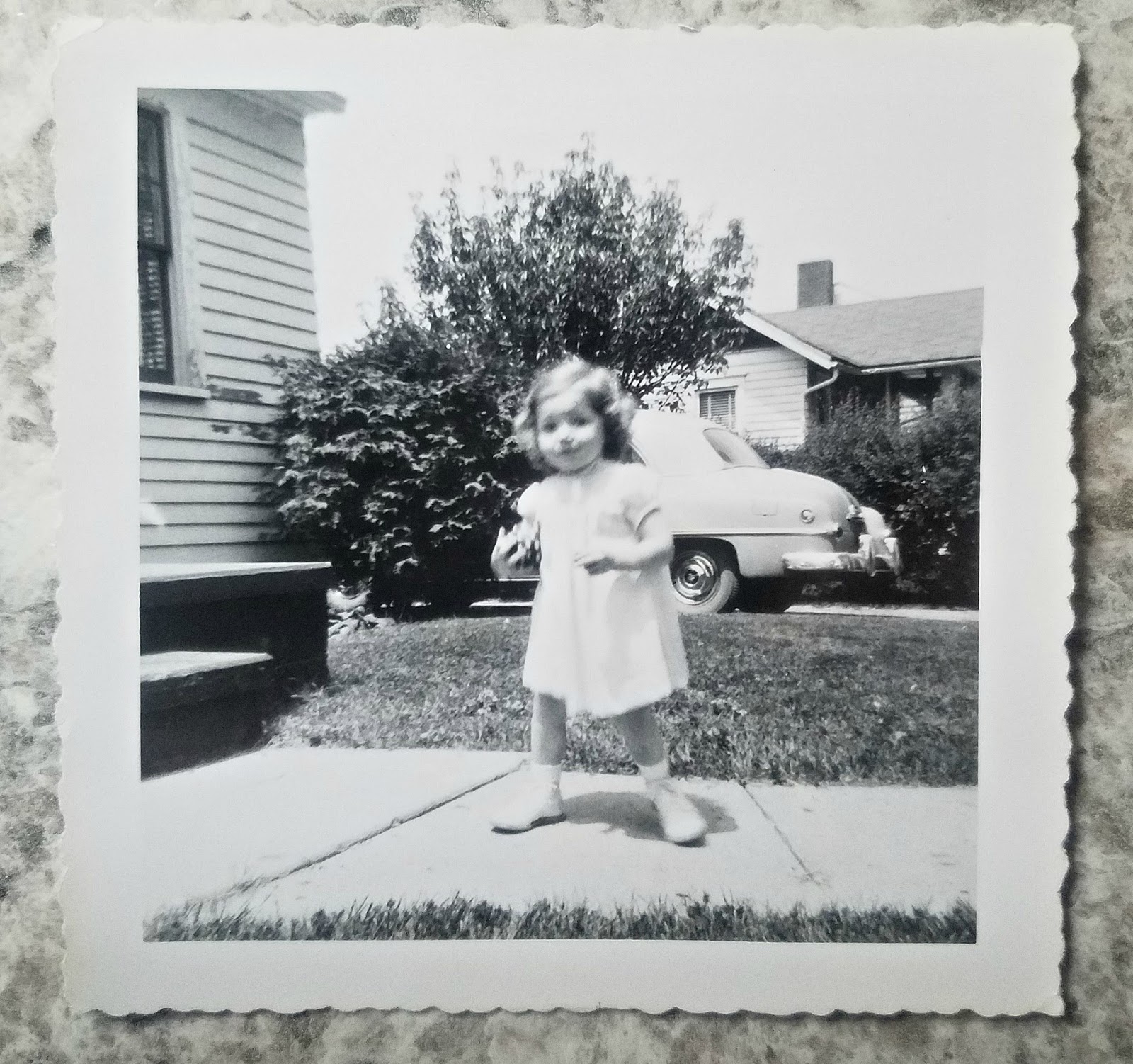
This is me at two year's old in front of our house.
And there's that car, I think.  Or it might be my uncle's car.
Two things immediately sprang to mind when I first held this book in my hands.  (I had no preconceptions about the story.)  The car on the cover reminded me of the one my parents had when I was a little girl.  The car was with us for a very long time because my parents did not believe in loans or mortgages.  If you didn't have the money for something, you did not get it or you started saving until you could afford it.  If something went wrong on the car, my dad could make it right.  (I learned more than I ever wanted to know about what was under the hood of a car.)

When I read All The Way To Havana (Godwin Books, Henry Holt and Company, August 29, 2017) written by Margarita Engle with illustrations by Mike Curato, it resonated with me for the reasons above but especially for the portrait of life in Cuba.  Affection for this family filled my heart.  Their inventiveness is truly inspirational.

We have a gift, and we have a cake, and today we're going to drive all the way to the big city to see my new baby cousin on his zero-year birthday. 

The boy goes on to tell us about the old cars on the island comparing the purrs of some to the little chick sound their car makes.  He and his father need to work on the car if they are to arrive in Havana.  He can see once the hood is lifted how repair after repair has been made using

wire, tape, and mixed-up scraps of dented metal.

The two of them adjust and tinker and adjust some more trying to get Cara Cara (the name of the car) to sound differently.  Nothing they do seems to fix it until...the little chick sound grows up.  It's a hen and she's ready to travel.  Friends who need a lift to their destination fill the seats.  It's a bouncy ride but the car keeps making her mechanical music.

Soon the scenery changes into the buildings across the skyline.  There are old cars of every color running down the street.  Their condition and the sounds they make fill the child's eyes and ears.  The steady honking is a city symphony.

At his aunt's house the gift is opened and the cake is eaten.  After much laughter and fun, the boy takes a siesta.  When he wakes the sky is dark and they leave in Cara Cara for home.  The next morning the boy and his father talk and again tend to their car.  Its heritage is a testament to hope.


In choosing to write this narrative from the point of view of the boy, Young People's Poet Laureate Margarita Engle speaks directly to the heart of child readers but also through his voice all who read this book will have a greater understanding of the people of Cuba.  The insertion of sounds supplies a lyrical rhythm which invites listeners (and readers) into the story with the boy.  Her concise sentences followed by longer ones also contribute to the cadence.  They read like a child thinks and talks.  Here is a sample passage.

So we purr cara cara

and we glide taka taka

and we zoom zoom---

zoom

cluck
cluck
cluck

beside farms, forests, beaches, and forts.


When stopping and savoring the opened dust jacket for the second time, I marveled at the use of light and shadow, design and layout and the details on both the front and the back.  The lines on the elements draw our eyes to the boy leaning against Cara Cara on the front.  To the left on the back, the hue used to provide a background for Margarita's and Mike's names is the canvas.  Set in an oval of a cream color is the car with the boy looking out the back window.  Two hens and chicks are busily pecking and walking around the bottom of the oval.  (Cara Cara and the boy are varnished.)

I gasped when I took off the jacket to see the book case.  Nearly covering the entire area is Cara Cara front to back, right to left on the case.  We are looking at the car from above.  It crosses the spine perfectly.  And then I saw the endpapers.

On the opening and closing endpapers, Mike Curato, on a background of dark yellow-orange, has drawn in detail, in black, twenty-four cars, most dated in the 1950s. (He labels the make, model and year.)  A colorful wash is brushed over each one.  With a page turn we have the verso page on the left and the title page on the right.  The text is set in the front window of Cara Cara which spans both pages.  It's as if we are in the front seat.


used pencil acrylic, paper, photo overlay, digital color in Adobe Photoshop, and other mixed-media 

to create these stunning illustrations.  His perspectives from inside the car looking outside and panoramic views along with zooming in close bring us willingly into the story.  There is animation in every picture, even when the boy is sleeping in his mother's arms. 

The details of the countryside and then in the city are nearly photographic but there is a quality of softness to them which works well with the matte-finished paper.  A full color palette greets us throughout the title.  A genuineness and warmth fill each visual.

One of my many favorite illustrations is when the boy is helping his dad repair the car before they leave for the city.  In the bottom corner sits the opened, heavy toolbox.  As our eyes travel upward we see a hen and two curious chicks.  They are moving to the right middle of the page.  Here the barefoot boy is standing on a wooden box on his tip-toes next to the car.  Another little chick is on the box.  All we can see is the child's feet, legs and the bottom portion of his shorts.  We can only see the lower half of Cara Cara.


With every reading of All The Way To Havana written by Margarita Engle with illustrations by Mike Curato my admiration and respect for this boy, his family and the people of Cuba grows.  The text and art blend but enhance one another elevating this book to something deeply meaningful; to something extraordinary.  I am grateful to Margarita Engle and Mike Curato for giving us All The Way To Havana.  An Author's Note and Illustrator's Note conclude the book.  I highly recommend this title for your personal and professional bookshelves. 

To learn more about Margarita Engle and Mike Curato and their other work please follow the links attached to their names to access their websites.  Mike Curato also maintains a blog.  On his website you can view interior images from this book.  On his blog he talks about his process and the trip to Cuba.  The book trailer premiere can be seen at All The Wonders.  You will enjoy the short Q & A.  Author, reviewer and blogger, Julie Danielson features artwork on her blog, Seven Impossible Things Before Breakfast after talking with Margarita and Mike the previous week at Kirkus.   

Monday, September 4, 2017

A Change of Pace

An early morning walk this week heralded the difference.  The sky was a bit bluer.  The air was crisp and much cooler.  The humidity prevalent in this Great Lakes state was thankfully lower. In less than three weeks the advent of autumn is official.  This season awakens treasured memories of family vacations taken annually in the fall.  The normal routine of school and work left behind for an entire week to explore and enjoy the wonders of this time of year in northern Michigan.

Readers fell in love with a very special blue-and-pink-polka-dotted elephant and his equally small friend with one notched ear introduced in Little Elliot, Big City (Henry Holt and Company, August 26, 2014).  When they returned in Little Elliot, Big Family (Henry Holt and Company, October 6, 2015) our affection for the pals grew.  Little Elliot, Big Fun (Henry Holt and Company, August 30, 2016) strengthened the duo's friendship, making us lifelong followers of whatever adventure they chose to take.  Like my family fall getaway the charming companions are taking a break from life in the city with Little Elliot, Fall Friends (Godwin Books, Henry Holt and Company, August 29, 2017) written and illustrated by Mike Curato.

Little Elliot and his best friend, Mouse, loved living in the big city.

Despite this love, the city could be too much of everything sometimes.  Mouse's declaration of them needing a vacation found them on a bus to the country as soon as possible.  As they left the hustle and bustle and noise behind, they were welcomed with the colorful array of fall foliage.

The views as far as their eyes could see left them nearly speechless.  It was so wide.  It was so open.  Before too long Elliot's need for food had them heading down a hillside toward some apple trees.  With full stomachs and play in piles of leaves, Elliot and Mouse were having the time of their lives.

At Mouse's suggestion of a rousing game of hide-and-seek, Little Elliot was hiding and Mouse was seeking.  They discovered nooks and crannies in the nearby forest and on the farm.  When Elliot hid among the rows of corn stalks, he was sure Mouse would never discover this spot.  Mouse did not find him.

Sunshine turned to sunset.  There was no Mouse.  As Elliot wondered about this situation, his nose for sweet treats caught a whiff of something scrumptious.  He followed the scent to an open farmhouse window.  A freshly-baked pie sat on the sill.  There was more, much more, waiting for the elephant than pastry.  A friend knows a friend's nose.


In this fourth title through conversations, thoughts and the narrative, Little Elliot and Mouse find a forever place in readers' hearts. Simple sentences with meticulously chosen words by Mike Curato ask us to enjoy the vacation with the two friends.  We experience their exuberance at discovering what the season and location have to offer.  The wisdom presented to us through this friendship is lasting and profound.  Here is a sample passage.

Elliot and Mouse got off the bus
and smelled the fresh air.

"Wow," said Elliot.  "This country
is even bigger than the city!"

"I'll race you up that hill!" said Mouse.


The design and elements on the front of the dust jacket are reminiscent of driving down a country lane to your favorite farm and enjoying the fruits of a fall harvest.  The autumn leaves along the top, the sign holding the title text, the rolling hills, the colored trees, the pumpkin and basket of apples are all part of a best-day-ever scenario.  Clearly Elliot and Mouse are enjoying themselves.

To the left on the back amid a burnt orange background Elliot and Mouse are having a romp in a pile of leaves.  A yellow oval, like a spotlight, draws our attention to them.  The ISBN is framed in wood.  Significant items on the front and back are varnished.

On the book case, done in two shades of a textured orange, with a wider, darker shade along the spine, Elliot and Mouse are featured.  On the front they are gobbling up apples.  Elliot is tossing an apple in the air to the left, on the back. In both images grass provides an area for them to sit and stand.  The opening and closing endpapers are patterned in apples in various positions, with and without leaves attached.  One is a core.  The colors used are nearly the same as Elliot's hues.

The verso and title pages is a single scene of a barn on a hill in the country in the background with a signpost and arrows in the foreground on the right containing the title text. The dedication on the left reads:

For city sunrises and country sunsets.

Rendered in pencil on paper and digital color in Adobe Photoshop Mike Curato brings all the charm of this relationship and life in the country in the autumn to his illustrations.  He alternates between breathtaking double-page spreads to single page pictures framed and other single page pictures edge to edge.  Sometimes more than one visual will be on a single page.  Each of these choices contributes to the pacing; asking us to pause and notice. (One particular picture using silhouettes reminds me of a famous fairy tale.)

It's interesting how Mike shifts his color palette between his city scenes and the country life.  In the first illustration we understand why Elliott and Mouse love their life in the city but we also understand why they need a break through the following pictures.  Perspective, bringing us close to the characters and then shifting to a panoramic vista, is used to marvelous effect as is white space in one sequence.  (I love the snail.)

I have many, many favorite pictures.  One is a wordless scene on a single page.  On either side of a grassy lane are apple orchards. At the end of the lane sits a farmhouse. In the foreground Mouse is sitting on a branch among apples throwing one down to the waiting Elliot with outstretched hands.  Once again a friend is helping a friend.  In this illustration, as in all of them, the choice of shades and the use of light and shadow are stunning.


I know readers familiar with these characters are going to ask for this book to be read repeatedly.  For those not yet introduced to Elliot and Mouse, Little Elliot, Fall Friends written and illustrated by Mike Curato is a wonderful choice, perfect for this time of year.  There is something extraordinarily special about these two friends and each book in which we find them.  I highly recommend this title for your professional and personal bookshelves.

To discover more about Mike Curator and his other work please follow the links attached to his name to access his website and blog.  He has several images from this book on his website.  The publisher's website also contains interior illustrations from this title.  There is a special website dedicated to the Little Elliot (and Mouse) books.  Mike Curato is featured at All The Wonders, Episode 379.  Make sure to check the previous posts to learn more about Mike Curator, his art and his process.

Monday, September 19, 2016

A New View

No one understands us better than our friends.  They stick with us through the proverbial thick and thin not because they have to but because they want to be there for and with us.  They are another kind of family.

Friends share common interests like loving cupcakes.  Friends introduce us to new individuals, sometimes numbering in the hundreds.  A little more than two years ago an author illustrator presented to readers an unlikely but lovable pair of pals in his debut title, Little Elliot, Big City (Henry Holt and Company, August 26, 2014). His second book, Little Elliot, Big Family (Henry Holt and Company, October 6, 2015) featuring the pastel pink and blue polka-dotted small elephant, Elliot, and his friend Mouse touched readers with its focus on feeling alone in the midst of many but then realizing with a true-blue companion you will always have a family.  Little Elliot, Big Fun (Henry Holt and Company, August 30, 2016) written and illustrated by Mike Curato follows the duo as they spend a day at an amusement park.

Little Elliot and his best friend, Mouse, were heading to the far edge of the big city.

As Mouse talks of the boardwalk, shows, games and lots of rides, Elliot, champion lover of cupcakes, is questioning the presence of treats.  (You will hardly be able to restrain from smiling when Mouse cautions Elliot to stay close as they enter the park.)  Mouse, eager to begin enjoying the rides, asks Elliot if he wants to ride the water chute.  The elephant does not want to take a chance on getting wet or, even worse, falling overboard.  He can't swim.

When Mouse asks about three more rides, especially his favorite one, the roller coaster, Elliot offers up one excuse after another until there's only one thing on his mind, a treat.  Before he even has a chance to enjoy one big lick on his ice cream cone, two incidents have Elliot on the run.  He's too scared to stop when Mouse shouts.  The more he runs, the more frightened he becomes. How could Mouse think this excursion is fun?

Mouse finally finds a decidedly shaken Elliot down by the beach.  A little sun, sand and another ice cream cone do wonders for the panicked pachyderm.  Back at the park Mouse thinks he can make Elliot's wishes come true but he'll need to trust Mouse.

When our elephant friend finally uncovers his eyes, he (and readers) gasps.  A change in perspective can alter moments and moods.  That's what friends do for friends.


When Mike Curato writes about Elliot and Mouse we savor every minute of the story.  His flawless blend of narrative and conversation brings us directly into a scene while enlarging our comprehension of and compassion for his characters.  There isn't one of us who hasn't wanted to share something we enjoy with someone we love.  There isn't one of us who hasn't been frightened to try something beyond our comfort level.  Curato closes the story with a powerful thought, a thought which resolves these two issues with a whole bunch of heart.  Here is a passage from the book.

"Feeling better?" asked Mouse.
"Much better!" said Elliot.
"But I wish there was a ride that
wasn't fast or dizzy or wet."
"I have an idea," said Mouse.
Elliot was nervous but Mouse patted his head.


In this title Mike Curato expands his color choices, presenting us with an array of hues not seen in the previous two books.  There is a larger use of red, yellow, pinks, purples and blues. On the front of the dust jacket, with portions varnished, is a hint of the splendor to come and the shared joy between Elliot and Mouse. To the left, on the back, on a background of deep purple a portion of an interior image has been placed.  As in the two previous books, an ornate antique frame is around the ISBN.  The book case replicates the purple on the left side of the jacket.  On the front a small picture of Elliot and Mouse chatting on the sandy beach has been placed in the center. On the back a cheery character from the book, holding a bunch of balloons, is waving and looking at readers.

The opening and closing endpapers in red, yellow, white, black, brown, light teal, green and a tiny bit of pastel pink and blue are a splendid display of amusement park posters, fifteen in total.  Readers will undoubtedly pause to look at each one.  The verso and title pages feature a speeding train on the left leaving the city headed toward the sign Big Fun with Little Elliot in cursive above it.  Another sign, with Mike Curato's and the publisher's names along with a red arrow pointing right, is under Big Fun.

Placing these titles in the late 1930s gives us a sense of nostalgia but more importantly comfort.  Curato's illustrations are spectacular in historical accuracy, layout and design.  Rendered in pencil on paper and digital color in Adobe Photoshop many of the illustrations extend from page edge to page edge.  To accentuate pacing and a particular emotional state in the story Curato has elected to frame some of the pictures in wide white spaces.  There are several wordless visuals which are truly stellar; a series of nine small images on a white background visualize the prelude to Elliot's frightened run, a ring toss scene, a delightful two-page beach setting and a breathtaking double gatefold.

Readers will find themselves stopping at every page turn to appreciate all the details in lines, light and shadow, facial expressions and body positions.  Easter eggs, nods to family, friends and other kidlit authors and illustrators, are found throughout the book.  Everything about these illustrations invites you to read this book repeatedly.

One of my favorite illustrations is the wordless beach scene.  In the foreground a contented Elliot is seated beneath a blue and purple striped umbrella licking what has to be a chocolate-chip mint ice cream cone.  To his right is an elaborate sand castle with a draw bridge and turrets.  Mouse is at the tip top holding a small yellow banner.  Behind them is an array of people, of all ages and nationalities, enjoying the sun and sand.  Primary colors plus green are used in their attire.  In the background is a bit of a hint of things to come.


In the middle of a day hoping for fun, best buddies are struggling but friendship finds a way. Written and illustrated by Mike Curato Little Elliot, Big Fun is an endearing exploration of what matters the most in our life adventures. This title is going to be requested over and over and over again.

To learn more about Mike Curato and his other titles please visit his website and blog by following the links attached to his name.  At his website you can view numerous images from this title. On his blog several posts reveal his process and the origin of his Easter eggs.  There are also illustrations at the publisher's website.  At Scholastic's Ambassador of School Libraries John Schumacher's blog, Watch. Connect. Read., the cover reveal and earlier interview are included.  The must watch book trailer is premiered at BookPage.  Please be sure to visit the website dedicated to the Little Elliot books.  You are really going to enjoy this StoryMakers video chat at KidLit TV. Mike Curato is interviewed at Miss Marple's Musings and at the Illinois Library Association website.

Monday, August 4, 2014

In Small Packages

By the time I got to high school, it was abundantly clear my growth spurt was over.  My short stature even earned me the nickname "Stub" given to me by one of the tallest guys in our graduating class.  Difficulties continued in college especially waiting in crowds to enter the auditorium on campus for concerts.  Even today, after large sporting events, I fight the panic of not being able to see in the crush of people moving toward the exits.

Being a smaller person allows you to have a tried and true empathy for all the students who pass through your classroom at the elementary school level.  In your heart of hearts you understand how a taller person can glance around a room or scene missing someone as if they are invisible, not necessarily because of age but because of height.  Debut author illustrator Mike Curato gives us a peek into the world of a big-hearted being in Little Elliot, Big City (Henry Holt and Company, August 26, 2014).  

Little Elliot was an elephant.

Looking at Elliot it's easy to see how he would stand out in a herd of elephants gathered around a watering hole.  He happens to be white with pastel polka dots.  He is also rather small in size.

Place this little guy in a big city where he lives and he just about disappears among the throngs of people, cars and buses and tall buildings.  Things others find easy are downright challenging for him.  You try catching a cab when your dimensions are similar to a fire hydrant.

Even though the easiest of tasks at home takes extra effort, Elliot is one positive pachyderm looking for the smallest gifts life offers.  He does not miss what others might.  There is one other thing too.  Elliot loves cupcakes.

His quest for this delicious delectable bit of confection is not without its own trials.  But...even down in the dumps, this little elephant takes notices.  A trunk can reach new heights especially with the help of a friend.


Spare text, single explanatory sentences or a meaningful phrase, penned by Mike Curato tell Elliot's story of life in the big city.  Each choice made by the narrator is careful; opening the way for pictorial interpretation.  By the second sentence readers feel a compassion growing for this little elephant.  There is not one among us who has not felt different than others on at least one occasion.


Rendered in pencil, then scanned and colored in Photoshop (thank you for answering my questions Mike Curato), the soft warmth of the illustrations begins on the dust jacket.  Two things stand out on the front; the joy of Elliot and the depiction of the words big city as if they are lighted buildings in the cityscape.  The back asks a question and gives an answer while picturing a turn of events.  The opening and closing endpapers are patterned in pale blue and pink dots acting as frames for images of cupcakes, Elliot and his quirky-eared pal.

Beginning with a rich two-page spread, Mike Curato introduces us to Elliot as he walks down the steps of his row house in the city.  With a turn of page we are inside, noting the decor from decades earlier as well as the framed pictures of desserts on the wall.  As Elliot emerges from the subway (and next, below, as he waits for a train) we become fully aware of his size amid the vehicles, people and buildings of the busy street.

Providing interest to engage his readers Curato alters his image sizes; two-page and single page to accentuate a thought or a series of smaller visuals to define a statement. His shading, the play of light and shadows, is marvelous.  This coupled with the color palette assists in creating a feeling of nostalgia, a comfort associated with home.

I love every single illustration in this book!  Elliot sitting in the sink to wash his dishes, the little girl on the wordless two pages noticing him standing off alone in the crowd, and the picture of the cupcakes, Elliot's trunk peeping just above the counter with his friend perched on the end, a monetary bill waving in his extended hands are three of my favorites.  I think I actually sighed when I saw the last two pages of the night skyline, the outline of the lighted bridge and my eyes drawn to the happy setting looking through the window in Elliot's home.


I predict a HUGE gathering of readers of all ages (and sizes) falling in love with Little Elliot, Big City, a heartwarming tale of friendship found, written and illustrated by Mike Curato.


Please follow the link embedded in Mike Curato's name to access his website.  A blog tour will be beginning soon.  All the information is on this page.  Follow this link to the publisher's website for an Activity Kit.  UPDATE: Here is an interview of Mike Curato at Seven Impossible Things Before Breakfast.  Here is the link to a blog post released on August 26, 2014 by Mike Curato.  Follow this link to Matthew C. Winner Let's Get Busy podcast with Mike Curato.


I received an ARC of this title from my favorite independent book store, McLean & Eakin Booksellers of Petoskey, Michigan.  I have a copy on order with them.  I hope you, too, can obtain your copy of Little Elliot, Big City from your favorite independent book store.  Be sure to check your nearest public library also.