Quote of the Month

When love and skill work together, expect a miracle. John Ruskin


Showing posts with label Building-Fiction. Show all posts

Monday, April 5, 2021

Hearts, Minds, And Hands

Prior to employment in what would be his last position, he worked in construction.  After that, every working hour for forty-one years, this man labored in the same factory.  He was a welder, a pipefitter, and a machinist.  If something did not work as efficiently as it should, he would build a better one.  He, like so many, was a thinker and a doer.

In a wonderfully poetic and slice-of-life artwork portrait, this man and countless other women and men are honored.  Written by Lisa Wheeler with illustrations by Loren Long, Someone Builds The Dream (Dial Books for Young Readers, an imprint of Penguin Random House LLC, March 23, 2021) is a journey through the creative process.  It shows how doers elevate the ideas of thinkers.  The skills of many form finished beauty.

All across this great big world
jobs are getting done

by many hands in many lands.
It takes much more than one.

On a board with pencil, T-square, three-sided ruler, compass, and tracing paper or with a digital program, architects design and draw places for others to reside, roam, or pursue their own futures.  From board or computer, others take trees, shaping them into lumber. and securing them into the architect's dream.  A common purpose units this crew.

Bridges spanning from one point to another point are developed through academic adeptness by engineers.  Sturdy steel holds them steady.  This steel is made by the hands of those who dig, heat, melt, pour, and fuse.  From the imagination of a sculptor comes forms.  Those forms are fashioned from miniature to majestic into a fountain.  Excavators, concrete specialists, plumbers, and welders are the company of achievers.  

From the studies of scientists serving our planet comes the three-armed wind turbines.  They are erected by those puzzle finishers who fasten pieces together to generate clean energy.  The next time you visit an area of thrill rides and fascinating sights, remember the efforts of someone who dared to visualize and devise.  Remember those who took those visualizations and plans and made them a reality.

Now, pause for a few minutes.  What do you hold in your hands? It comes from the minds of creators, one working with words and the other working with paints and pencils.  From there it travels to a group who take the text and art and place it on paper.

Each building, each bridge, each sculpture, each giant wind gatherer, each park and each book you see, enter and use comes from thinkers and doers.  Each thing made by hearts, minds, and hands is a sign of hope.  Hope in humans who gather and work together.


You are caught in the rhythm of words written by Lisa Wheeler as soon as you read the first two sentences.  The rhyming cadence is enhanced with each featured dreamer's description followed by the word . . . But.  It continues with the same sentence ending the actions taken by those who make the dream a reality.  This repetition of specific words is a welcome refrain.  It is captivating, bringing readers into this song for all workers.  Here is a passage.

Someone works to dig the trench,
lay the drains, solder seams.

Someone needs to plumb the pipes.
Someone has to build the dream. 


Strength is what you see on the front, right, of the open dust jacket.  It shines in the steel of the bridge and in the stance of the worker.  The angles and lines on both are similar.  Each one is fortified for endurance in order to accomplish their goals.  We are presented here, and throughout the book, with a full-color palette rooted in realism.  The light in the clouds indicates both a beginning and an ending.  The text is varnished.

On the left, back, is a panoramic view of the placement and construction of wind turbines.  We are up and away from the work.  The transporter trucks and heavy-duty machinery are tiny, as are the people.

On the book case is an image spanning from the far left, over the spine, and ending on the far right.  It's a closeup of the bridge being built.  We see a crane operator, a foreman, a welder, and three other construction people directing the placement of a beam.  The clouds, sky and mountainous landscape in the background are breathtaking.  Loren Long shifts the perspective from left to right.  As our eyes move, he brings us closer and closer to the activity centered on the right. 

The opening and closing endpapers are a steel blue.  Readers are greeted with a row of construction vehicles, from left to right, extending from the center left to the far right, on the verso and title pages.  Each image in this book was rendered

by hand on illustration board using acrylics, colored pencils, and whatever dust and dog hair happened to be floating around the studio.

The alternating double-page pictures, full-page pictures, and pictures crossing the gutter pair perfectly with the narrative.  Each one appearing more powerful than the next.  The details are incredible, as is the animation in certain scenes.  Careful readers will see how a pictorial story begins and concludes with the first and final illustrations.

What is fabulous is the blend of people shown in each visual.  Women and men working alongside each other are inspirational.  Readers will be happy to see the inclusion of people from all walks of life.  They will also love seeing cat and dog companions in many of the images.  

One of my many, many favorite illustrations is a double-page picture.  In the background numerous workers stand in buckets lifted by cranes to complete wiring and lighting.  Construction vehicles chug from position to position.  Metal workers attach sheets to a frame. (A dinosaur-themed amusement park is being constructed.)  A man in the foreground on the right pulls cable from a large spool resting on a metal scaffold.  As if we are standing in front of them, a worker nearly fills the frame on the left.  Dressed in a t-shirt, hooded sweatshirt and a yellow safety vest, a crew member holds, with both hands, a coil of cord over their right shoulder.  A bandana is visible under their silver hardhat.  The look on their face is one of quiet determination and dedication.  The upper portion of their face is in shadow from the brim of the hat.

For every dreamer and builder, for every thinker and doer, this title is for you.  Someone Builds The Dream written by Lisa Wheeler with illustrations by Loren Long is a magnificent depiction of how things rise from ideas to become visible to all.  I highly recommend this title for your personal and professional collections.  Gift it to a builder you know.

To learn more about Lisa Wheeler and Loren Long and their other work, please follow the link attached to their names to access their websites.  Lisa Wheeler has accounts on Facebook, Instagram, and Twitter.  Loren Long has accounts on Facebook, Instagram, and Twitter.  At the publisher's website you can view the verso and title pages.  I know you will enjoy this conversation between Lisa Wheeler and Loren Long about this book highlighted in Publishers Weekly.

Friday, October 16, 2020

For The Girls

For centuries, for generations, women have struggled for equality.  For them to construct the best possible lives for their families, friends, and themselves, certain elements are valuable for success.  A solid, basic education with appropriate materials, qualified educators, and the opportunity to pursue a desired goal or dream gives all women, regardless of their age, a firm footing on a good future.  The support of a parent, guardian, or trusted mentor can be priceless in helping to form a foundation of beliefs or in supplying strength in the face of adversity.

Earlier this month, two children's literature publications address both elements.  The first, One Girl (Abrams Books for Young Readers, October 6, 2020) written by Andrea Beaty with illustrations by Dow Phumiruk, vividly portrays the power of a single young girl acquiring a single book.  Through lilting, rhyming words and luminous images, we see the power of both. 

One Girl.

One spark.

Faint and fading in the dark.

This spark is a book which cascades from the sky to appear glowing at the girl's feet as she sits on the steps of her front porch.  When she opens the book, the spark though faint continues to glow.  It burns without going out.  It is fire!

It grows brighter and brighter, inspiring her to follow a dream, a dream of being educated.  The more she knows, the more she grows.  She shares what she knows so others can grow.

The brightness spreads from girl to girl, girl to boy, and boy to boy, and boy to girl.  Each child is learning.  With their increase in knowledge, they can embrace the wonder our world holds for them.  What they read and what they write spreads farther and farther, up and out into all corners of the planet.

With this accomplishment sparks are traveling where they are most needed.  They, like falling stars, make wishes come true.  They land one book at a time at the feet of one girl.


Beginning this narrative with these two words has readers asking many questions.  Andrea Beaty immediately kindles our interest.  Her simple but profound word choices fashion a flawless flow, almost a melody, with repetition of specific words inviting reader participation.  Here are two more word combinations.

Flicker . . .
     Flicker . . .
          Flicker . . .

Glow.

Tiny ember.
Burning low.


When you look at the little girl on the front of the dust jacket, you feel the hope and awe shown in her face.  She has discovered the endless possibilities found in a book.  They grow up and out, blooming and flying.  The warm background of rich red, orange, and yellow hues extends over the spine to a home on a hill with the girl seated on the steps of her porch.  The book glimmering with potential is on the ground in front of her.  Words from the narrative invite us to open the book.

On the book case is a large interior image.  It shows the girl, now in school.  A star barrette holds part of her hair in place.  She is on the left, her hands crossing the gutter to rest on her desk.  One hand holds a pencil as she writes.  Stary sparks drift upward from her paper in a pale rainbow of color.  The canvas for this illustration is a shade of cream.

On the opening and closing endpapers on a variegated purple background is a pattern of delicate white flowers, vines, books, pencils, pieces of paper, rockets, stars, crescent moons, and white birds.  Some of the leaves are in several colors of green and blue.  With a page turn we are treated to a double-page picture of a community on a hill at night.  Some of the windows in the homes glow with lamplight.  A sliver of moon sits in the upper, right-hand corner.  A comet like object arcs over the title text.

These illustrations by Dow Phumiruk are rendered using 

pencil and Photoshop.

Some of the illustrations span two pages, single pages, or others are smaller with loose framing.  They are atmospheric, displaying not only the time of day, but the mood of the little girl and the other children.  The use of light and shadow are beautiful to see.  When the words of the book are released as wonder, the delicate designs are intricate, portraying a world of potential.  Just looking at the little girl and the other children will fill your heart with joy.  

One of my many, many favorite illustrations is a two-page image.  The background from bottom to top begins as cream moving to a muted orange.  There are eight children spanning both pages, wearing their uniforms in white and navy.  They represent a diverse group of children.  They are gazing upward.  The main little girl, to the left of the gutter, has her right arm up and holding a pencil.  From this pencil scrolls of white lines and stars move above the children and around to the lower, right-hand corner.  Within this design are elements representing hopes and dreams.  The words read:

Shares her song.


The collaboration between author Andrea Beaty and artist Dow Phumiruk on One Girl gifts readers with a book to treasure.  It's a pleasure to read aloud, in fact it would make a marvelous reader's theater.  I highly recommend this book for your personal and professional collections to promote the true power of a book and education.  An author's note offers further explanation about books, knowledge, education, and the lack of education for too many girls globally.

To discover more about Andrea Beaty and Dow Phumiruk and their other work, please access their respective websites by following the link attached to their names.  Andrea Beaty has accounts on Instagram, Pinterest, and Twitter.  In addition to her website Dow Phumiruk has another site here, as well as accounts on Facebook, Instagram, and Twitter.  At the publisher's website you can view multiple interior images.


The second book is a promise from a father to his daughter, a love letter explaining how they can shape their world, her world.  What We'll Build: Plans For Our Together Future (Philomel Books, an imprint of Penguin Random House LLC, October 6, 2020) written and illustrated by Oliver Jeffers is a journey of discovery and of finding one's capabilities, and a guide to accomplish what is true and good in our lives.  It shows readers how an adult can be one who endeavors to be an enduring bedrock or fortress if needed.

What shall we build, you

and I?

Let's gather all our tools for a start

In a row, all the tools represent a father and his daughter, a green crayon near a paintbrush, and a toy pig next to a wrench.  This is how they will make things, and if necessary, restart.  Perhaps they should build a door and a house around it.

They will work together building each other's future.  They will create love for when it is needed most.  They know a hole might be necessary so they can hide.  Sometimes it will be necessary to construct a mighty abode with a wall around it, but also a gate to allow entrance of former enemies.

From that fortress, together they will raise a tower from which to gaze upward at the world beyond ours.  No mountain will hinder their progress.  They will build a tunnel.  Whatever is necessary for them to build to enjoy endless opportunities, they will use their tools to make it.

They will rest.  They will travel in a seaworthy vessel.  And then when a low is reached, they will recover in a special place where loved objects reside.  Those with the earlier-made affection will remain until the lowest of the lows calls to them.  This father and his daughter have been busy planning, so as the narrative concludes they are warm and asleep by one of the oldest forms of comfort which they build together.


There is a childlike quality to the rhyming narrative written by Oliver Jeffers.  He moves freely from one thought to the other, like children do when their imaginations are set free, unhindered.  The narrative changes from building a tunnel through a mountain to constructing a road to the moon or from resting cozily in a hammock to a wild ride at sea.  The words let's, we'll, and I'll precede build multiple times to supply a soothing and comforting cadence.  Here is a single sentence which I could read over and over.

We'll put these favorite things beside

the earlier love we set aside.


When you open the dust jacket you see that the background on the front spans over the spine, flap edge to flap edge.  The stary sky and mountain range continue.  I love the complementary colors of purple, yellow and orange with the spot of red in the toolbox.  What a wonderful choice to have the title text be a sign built by the duo.  To the left of them, on the back, sitting alone is a fox.  This fox appears later in the narrative.  Words there, from the book, welcome you to the plans.

The book case is a pale lavender.  There are five tools in a row on the front.  They are embossed in red and silver foil, as is the text on the spine.  The tools shown, left to right, are a screwdriver, a saw, a hammer, a pencil, and a lightning bolt.

On a dark purple canvas elements from the story, looking like they were drawn in crayon, appear in hot pink on the opening and closing endpapers.  You have to smile when seeing these pages.  Father and daughter, hand in hand, are placed beneath the dedication on the verso. (Remember to read this wonderful dedication and a short note from Oliver and Mari, his daughter, also on this page.)  On the title page is the red toolbox, opened.

These illustrations by Oliver Jeffers are a blend of realism and whimsy with his signature style prevalent throughout the title.  They shift from double-page pictures to single-page images and in point of view for emphasis.  Several times careful readers will notice how one illustration connects to the other.  

One of my many favorite illustrations spans two pages.  Father and daughter are stretched feet to feet on a hammock they built between two small trees with pink leaves.  The trees are growing from what appears to be the surface of our moon, sandy in color.  Both are wearing glass helmets.  The father, arms behind his head, is sleeping.  The daughter with one arm raised is speaking.  Her toy pig rests on her stomach.  Her other arm is behind her head.  Two birds, wearing clear helmets are present.  In the distance in a pink and purple sky with stars is planet Earth.  This picture is one of contented and affectionate happiness, pure perfection.


This book, What We'll Build: Plans For Our Together Future written and illustrated by Oliver Jeffers, is a joyful, truthful exploration of what fathers and daughters can accomplish.  It resonated with this daughter, who to this day is far better for having a father who taught her to build and who she sorely misses every single day.  Hand this book to daughters, fathers, or anyone who is looking to form relationships founded in love.

To learn more about Oliver Jeffers and his other work, please follow the link attached to his name to access his website.  You can see a few interior images from this book there.  Oliver Jeffers has another website titled Oliver Jeffers' World.  Oliver Jeffers has accounts on Facebook, Instagram, and Twitter.  I hope you enjoy these videos and are able to follow the VancouverWritersFest coming in a few days.


Monday, August 21, 2017

Constructing A Tree-ific Collaboration

It was decades ago.  There were four of us working; three had their own chainsaws.  We cleared more than twenty-five mature trees in order to build a home in the middle of the woods.  The use of a chainsaw is no easy task.

The weight of the saw and speed of the chain can cause injury in a matter of seconds, but when handled with care and skill it is much faster and more efficient than an axe.  It's handy to have so additional wood can be cut to fuel a stove in the middle of a bitter cold winter.  There is a certain sense of confidence in being able to use a tool to help you build a home and then heat that home.  I know this to be true.

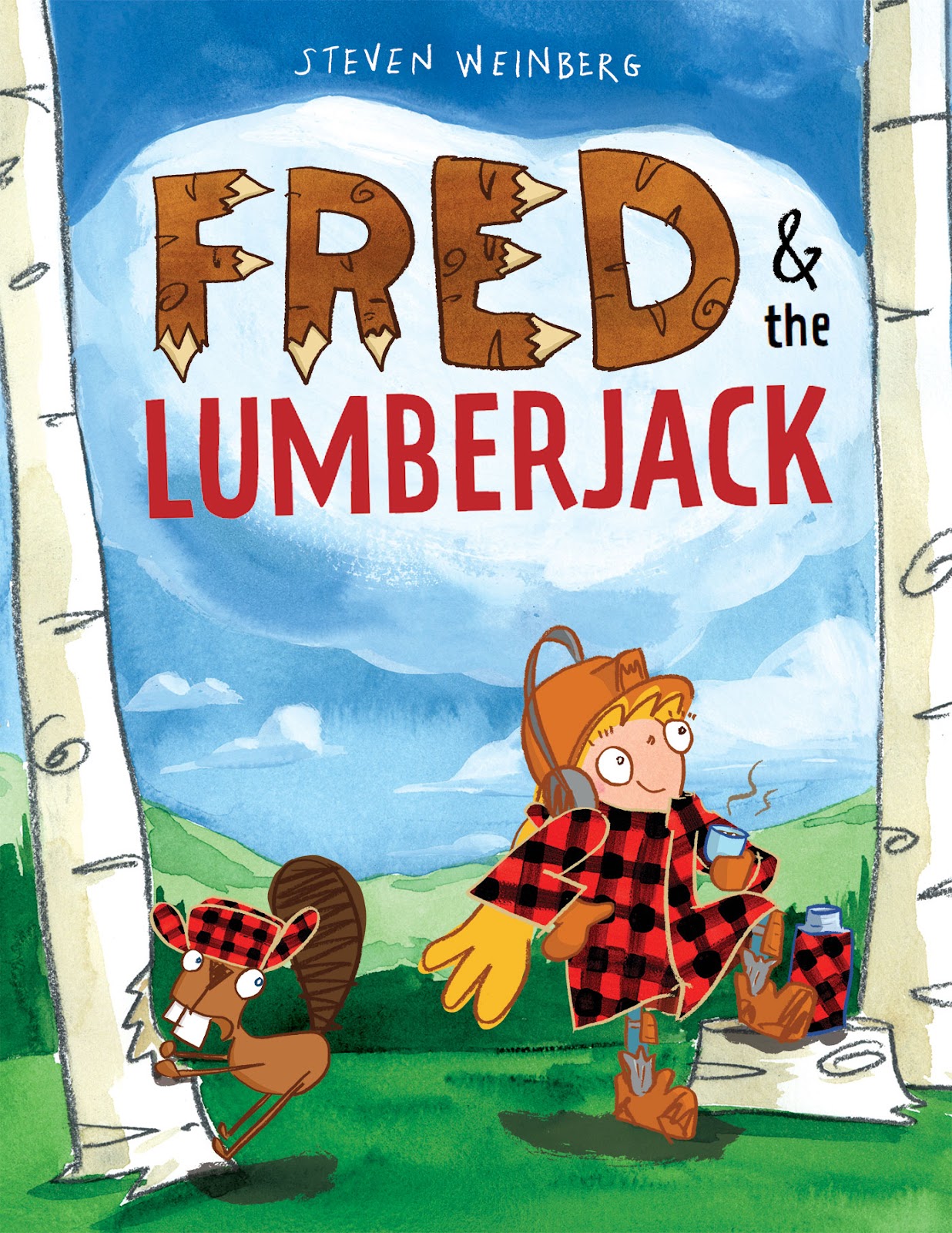
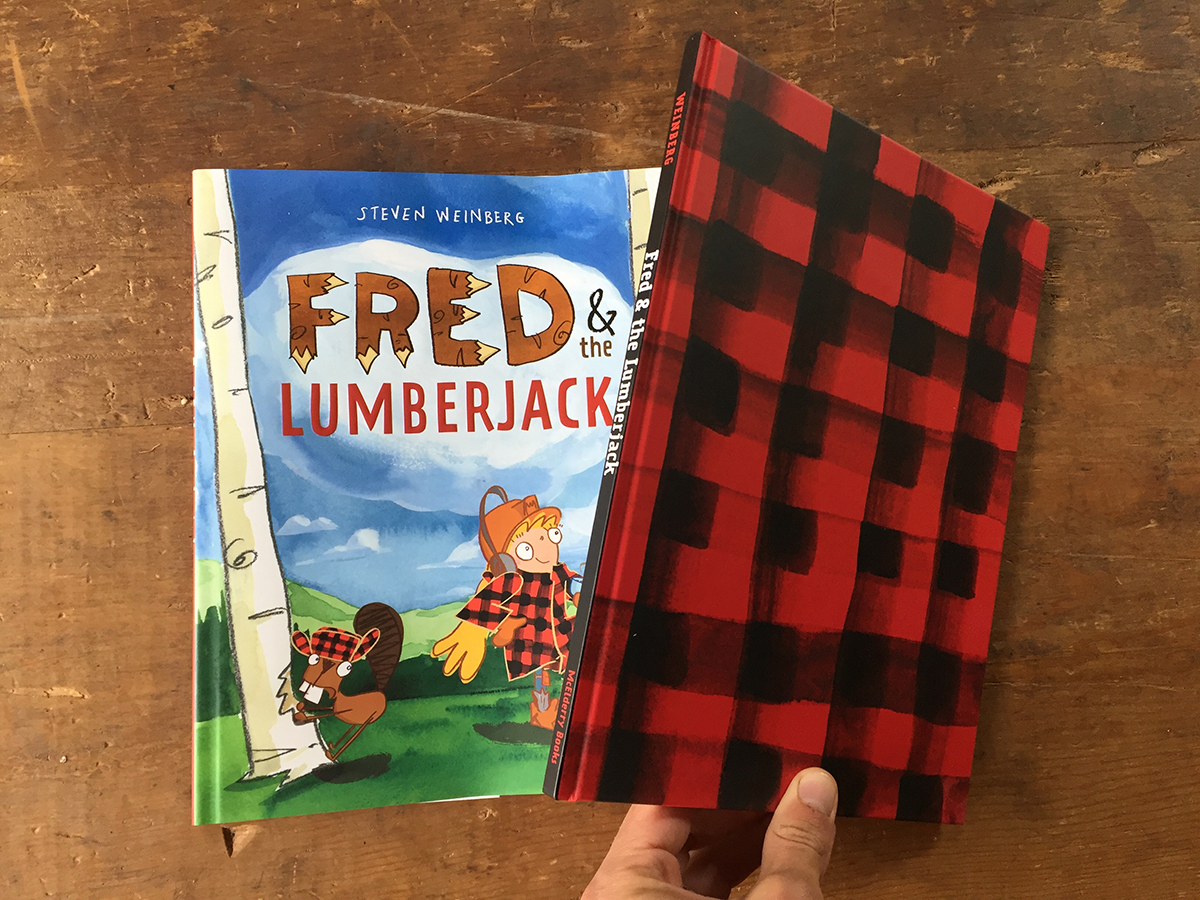
Recently I was reminded of the dexterity necessary to fell trees.  The purchase of a new house required the removal of sixteen, one nearly fifty feet tall.  Watching the lumberman climb and cut and climb and cut and lower limbs down by rope generates respect for these people and their accomplishments.  Mother Nature has her version of adept loggers, too.  In Fred & the Lumberjack (Margaret K. McElderry Books, an imprint of Simon & Schuster Children's Publishing Division, September 12, 2017) written and illustrated by Steven Weinberg (Rex Finds an Egg! Egg! Egg! and You Must Be This Tall) we are introduced to a beaver who is assuredly the Frank Lloyd Wright of streams and forests.

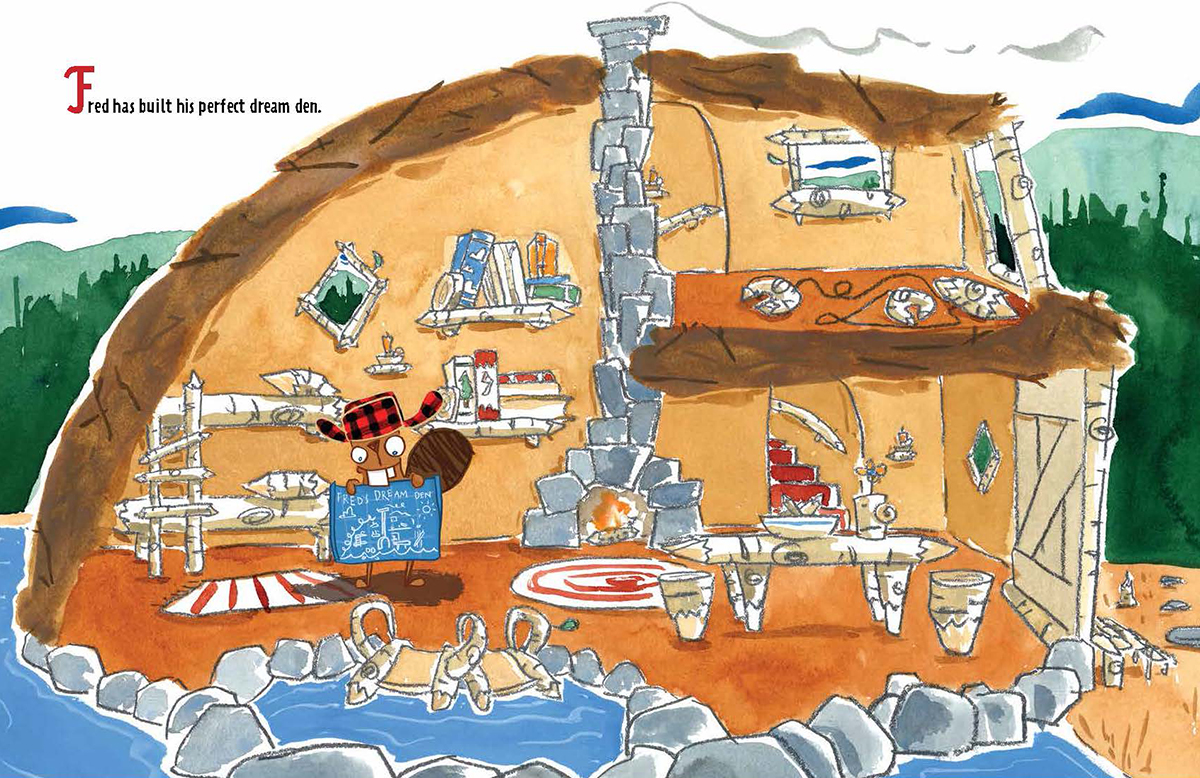
Fred has built his perfect dream den.

It has two stories with a staircase leading to a loft, hand-crafted furniture, a stone fireplace and an indoor swimming pool.  Every square inch is built according to the blueprint he designed, but something is missing.  Fred goes through his den, checking and re-checking everything.

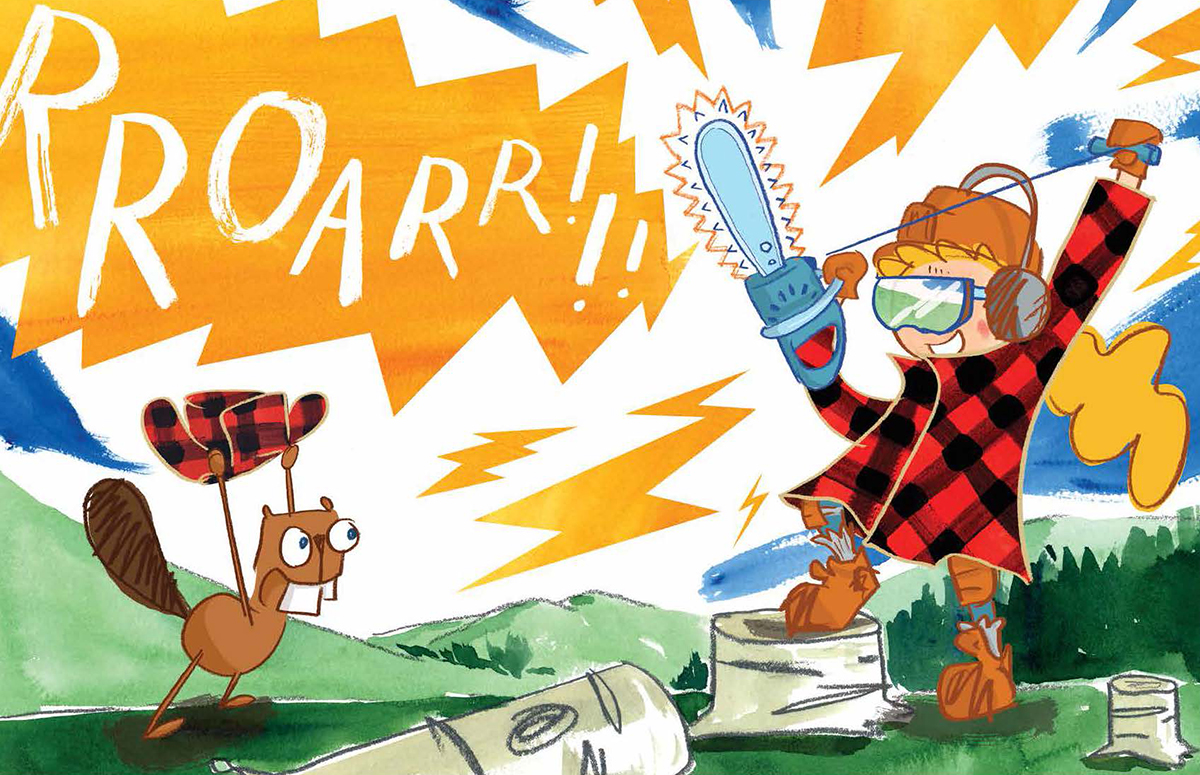
RRRRRRRRROOAARRRRR 

His musings are interrupted by a mighty loud noise in the woods.  Fred has to discover what is causing all this ruckus.  He finds multiple trees cut with smooth edges and stacked in piles.  There are even large carvings and sculptures.

Another resounding roar rips through the air.  Fred finds himself staring at a lumberjack dressed in plaid, carrying a chainsaw and building Sophia's Dream Den.  Yes, readers Fred is totally and overwhelmingly smitten with this gal and her notable abilities.

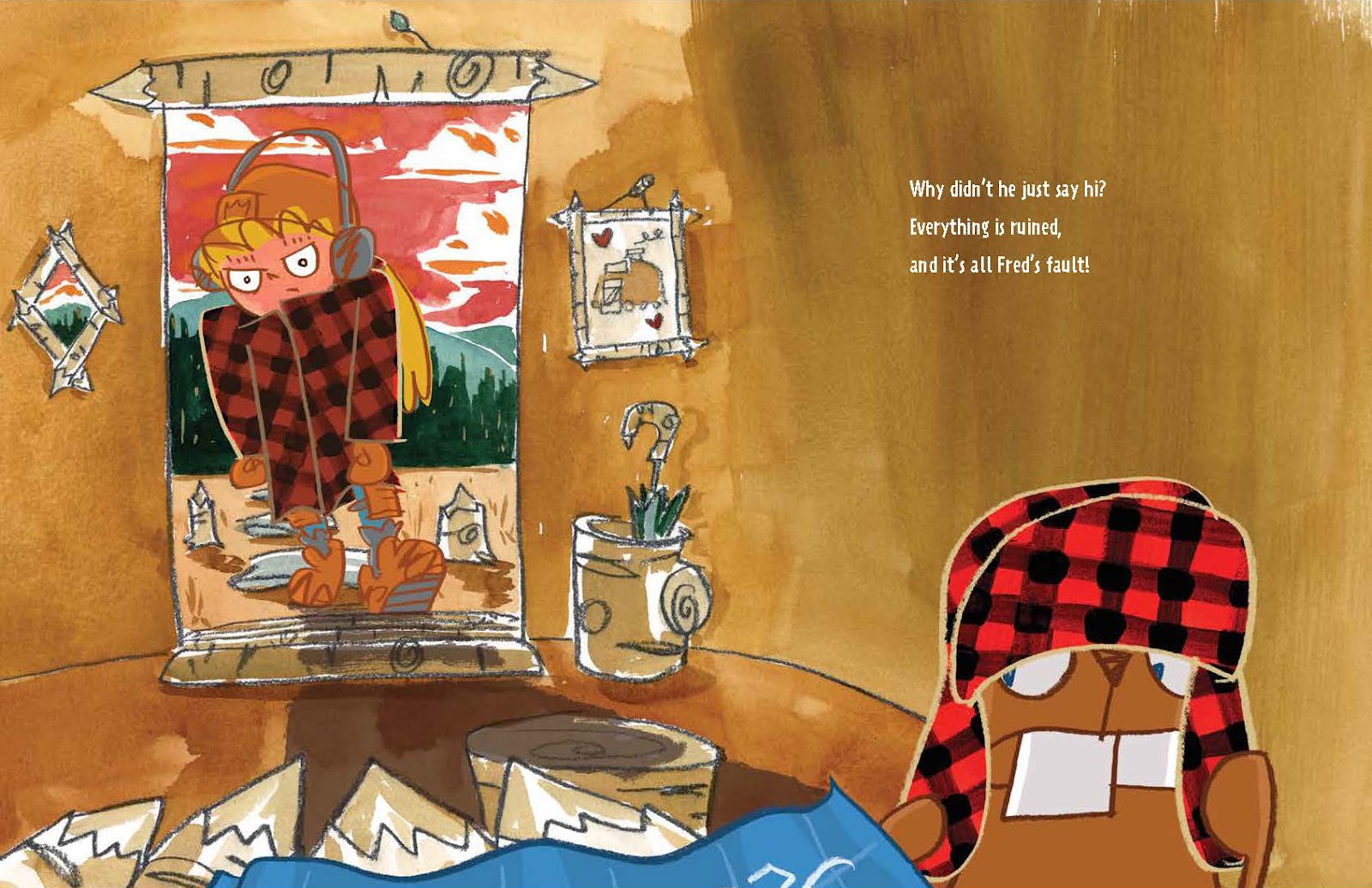
There is only one thing to do.  Fred has to get her attention using his equally excellent gifts.  OH! NO!  That's a major fail for Fred.  He runs in humiliation (and a little fear) back to his den knowing he literally made a mess of everything.  She is too furious to be his friend.

Now she's standing in his doorway.  She stops and stares.  Hope surges in an apologetic heart. It is a blueprint for dynamic duo dreams.


With his first sentence, a declaration, Steven Weinberg sets the stage for his exuberant tale with one word, perfect.  This opens the storytelling door for how things might not be quite perfect.  It's fascinating how Steven spins the narrative so in Fred's search for one thing he discovers what (who) he needs most.  The humorous touch with his play on words,

sink his teeth into,

the rhythm supplied with Fred's hunting at home, what he finds in the woods and what Sophie notices in his den along with the strategic use of the word roar all contribute to this spirited story.  Here is another sample passage.

What creature did this?
It's so precise,
so powerful
so talented!


As soon as readers see the opened dust jacket they have to grin.  The buck-toothed beaver looking with adoration at the lumberjack pausing in her daily efforts and both of them attired in traditional red and black plaid is classic.  Still looking at the front, on the right, it's in keeping with Fred's skills to have his name depicted in chewed logs.  To the left, on the back, the beautiful blue sky with clouds, the mountains, forest and birch trees continue.  One of the trees is close to the reader, making us feel as though we are stepping into the story.

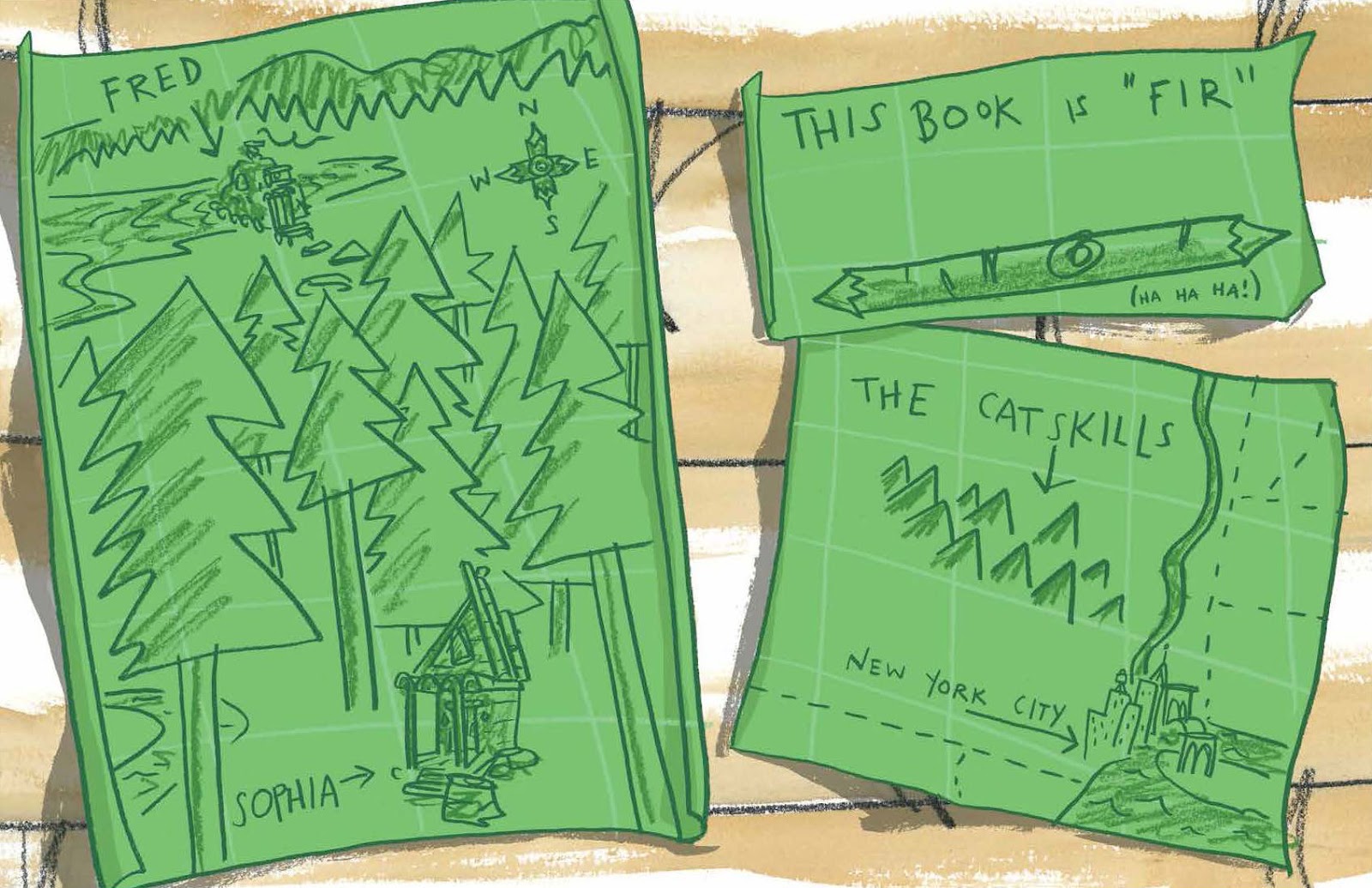
On the opening endpapers are three map images on log walls.  One is from Fred's den to Sophie's den, the other is from New York City to The Catskills and the third invites readers to write down their name,

This Book is "Fir".
     (HA HA HA!)

The closing endpapers continue the tale of Fred and Sophie.  They give readers a peek at their future endeavors....blueprint style.

Rendered using a collage of watercolor, pencil, and digital elements most of the illustrations in this title span two pages.  This mixture of styles creates a pleasing texture and contrast between the background, other items on the pages and the characters and their clothing. Multiple smaller images are grouped together to designate pacing.  A shift in perspective and font size generates a dramatic effect several times.  Readers will find themselves smiling at the wide-eyed looks on the characters, their facial expressions (although please note the color of Sophie's plaid after Fred makes his mistake), the details in Fred's den's furnishings, and the items used by Sophie.

One of my many favorite illustrations is when Fred first sees Sophie.  It spans two pages.  On the left Fred is standing with his legs spread.  Both his arms are raised as he lifts his hat off his head.  His eyes look like they are ready to pop out of his head.  His mouth is wide open.  On the right Sophie has one boot on a stump with the other behind her for support.  Her plaid coat is closed.  She is wearing her gloves, ear muffs and protective goggles.  Her pony-tail is waving behind her.  In her right hand she holds the chainsaw as the left hand grips and pulls the power chord.  There is a gigantic roar.  Sophie is grinning in total joy.


Fred & the Lumberjack written and illustrated by Steven Weinberg is pure fun from beginning to end.  When you think about it, a beaver and a lumberjack have quite a bit in common with their adept and creative use of wood.  In this title, their tools are different but their love of plaid, blueprints and dreams coming true is the perfect foundation on which to construct a lasting friendship.  You will want copies of this on your professional and personal bookshelves.

To learn more about Steven Weinberg and his other work, please follow the link attached to his name to access his website.  To view interior illustrations please follow this link to the publisher's website.  I am absolutely thrilled that Steven agreed to answer some of my questions.  I know you will love his answers as much as I do.


Was there a single incident or a series of events which helped to form the story of Fred & the Lumberjack?  Are the characters based upon real life individuals?


A little over three years ago my wife Casey Scieszka and I moved from Brooklyn to the Catskills to open a boutique hotel and bar called the Spruceton Inn. So, I mean, that basically threw me deep into the woods, changed my life forever, and has delightfully inspired a whole new way of working. (The opening endpapers include a detailed map to my house.)


But specifically, the beaver in the story is my immediate neighbor across a field from my house. In the scope of time my wife and I have renovated our spot, this beaver has been just as busy. Den, pond, landscaping, etc. It’s really amazing living this close to nature. Keeping tabs on it reminded me of how much I loved to just build with blocks or legos as a kid. So I wanted to find a story about a beaver that BUILDS.


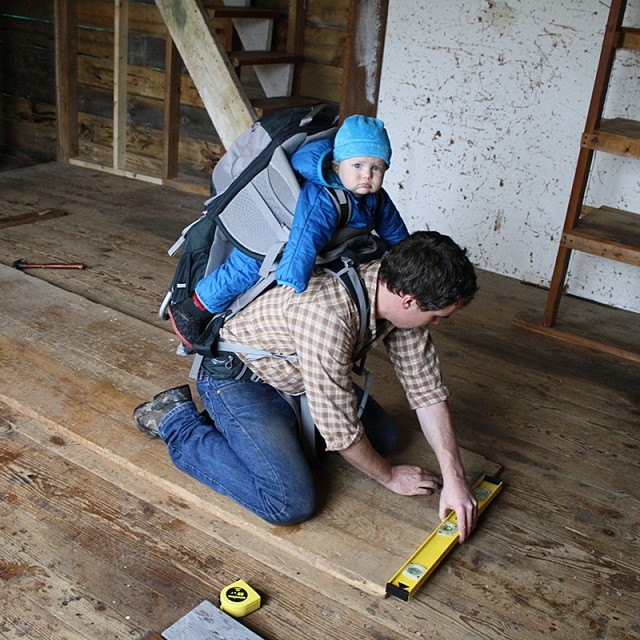
But that’s only half of it. The other half comes from our friends who have two little girls (now ages 4 and 3) who have been coming to visit since we moved. We’ve put them work! The elder Sophia especially. I’ve seen the girl play with a hammer nearly as much as her favorite stuffed owl. I mean here she is three years ago with her dad helping us with the early renovations:


Now I wish I could say one day I saw little Sophia pick up a chainsaw and was like EUREKA! But it’s probably more accurate to say she slowly built the character in my head in between grabbing piles of kindling and screaming in terror that she couldn’t have another s’more.


I read in another interview Steven you have been drawing, originally with crayons, for most of your life.  Do you have any formal art training?  If so, is there something special from one of your teachers (a favorite saying, technique or style) which still serves to inspire you?


I studied oil painting at Colby College in Maine under a professor who had me working harder (and taking art more seriously) than I had ever thought possible. She was a very intense disciple of the Josef Albers and Bauhaus color schools. Which, to maybe a non-art-nerd, means she had us painting color wheels, and color squares, and color fields, and NOTHING BUT COLOR!


It was infuriating at first, but now I realize it was an amazing education. Because everything starts with knowing how color works. So when I’m doing things like painting an insanely pink sunset I can still hear her whispering over my shoulder and asking questions like “have you really truly thought about that color choice?” And in my head I can tell her: “YES. The sunsets really are that crazy here!”


In this third title you have authored and illustrated you used a collage of watercolor, pencil and digital elements to create the images.  Is watercolor your favorite medium?  Why do you favor one medium (or not) over another?


I had been using watercolor for some elements in my work for years, but saw a show of John Singer Sargent’s watercolors at the Brooklyn Museum right before moving upstate. I’ve always been a huge fan of Sargent’s, but never got the time to really study those paintings. They’re so physical! So bold! So unpredictable! It made me take a fresh look at the medium. I haven’t really looked back since.


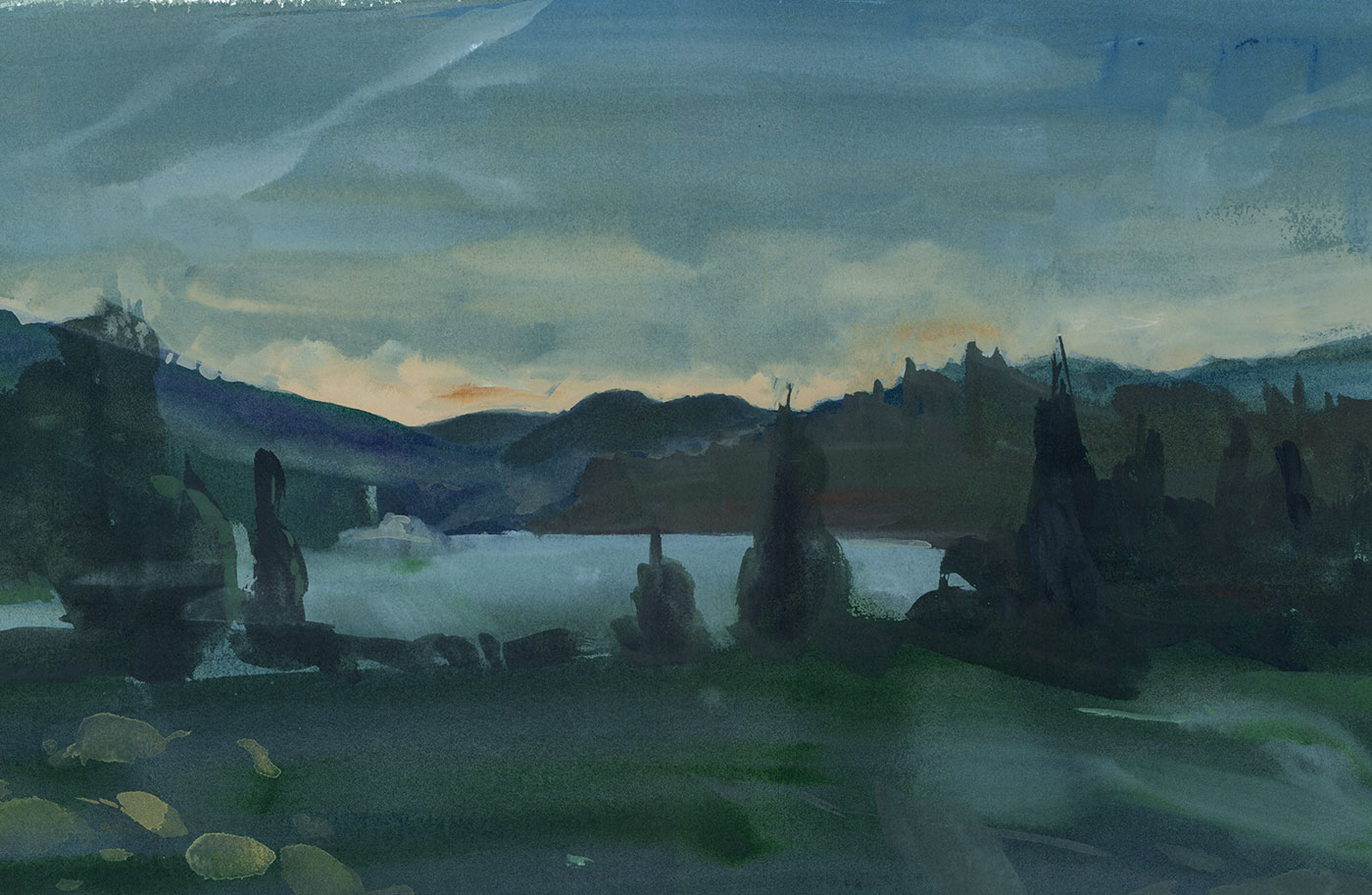
I’m basically painting watercolors landscapes constantly up here. This is a sunrise view of the mountains seen a lot in the book I painted thinking it could be an endpaper. But art’s funny. I love it, and it sits now above the bar at the Inn, but it seemed maybe too spooky for this story.


You, your wife and your dog Waldo live in the Catskills.  How is it you moved there from Brooklyn?  Did you always live in Brooklyn before moving upstate?  


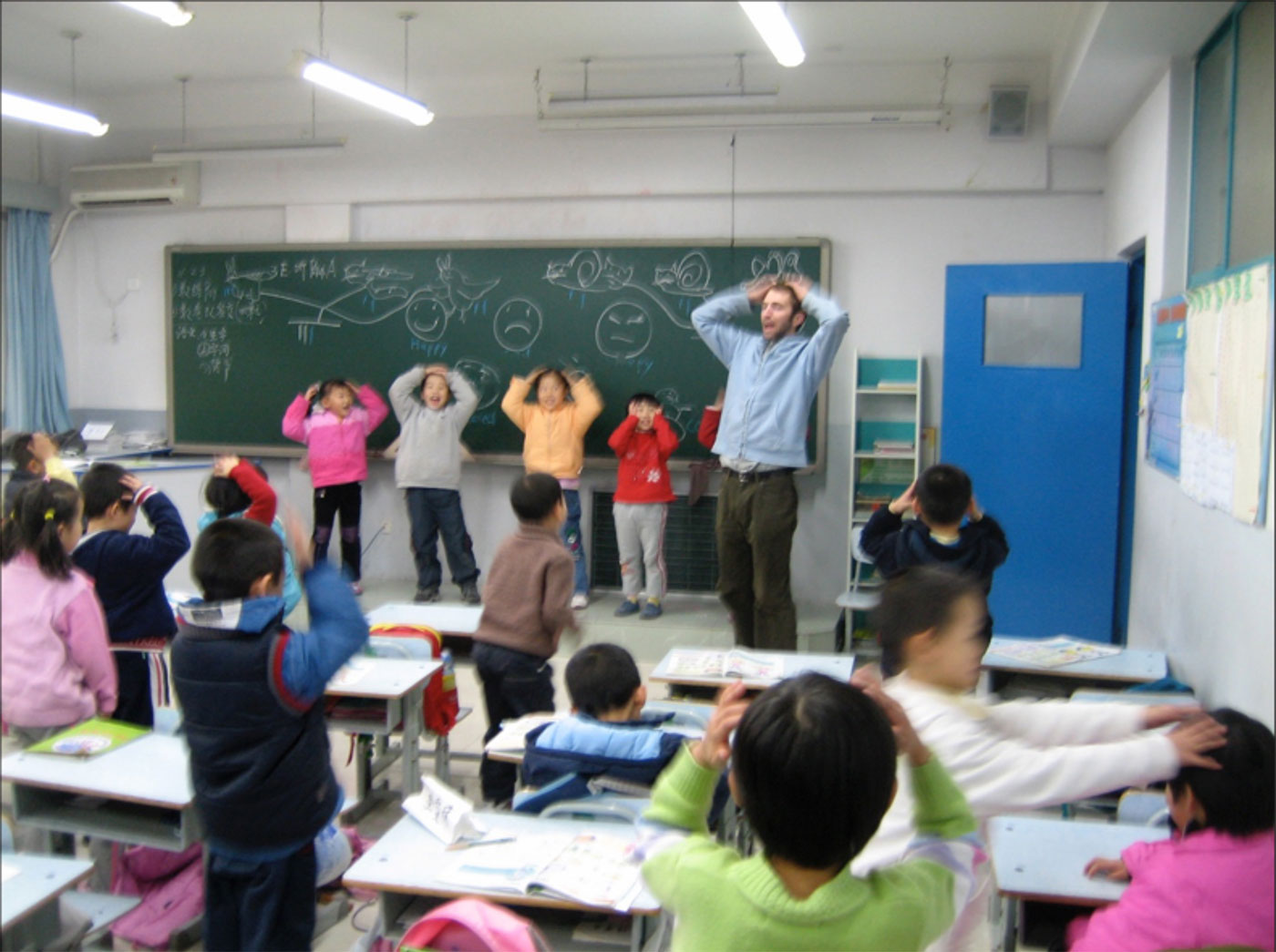
I’ve been quite a vagabond. I grew up in Bethesda, MD and after college in Maine my wife Casey and I lived all over the world: Beijing, Morocco, Timbuktu, then San Francisco for awhile. Living abroad was amazing for a ton of reasons, but probably most because when I taught English in China and Mali, I realized I wanted to make books for kids. Because no one is a crazy as kids. Especially 1st graders. Here’s a blurry photo of me singing Heads, Shoulders, Knees, and Toes with students in Beijing:


All that said, I’ve loved settling into the Catskills for LUMBERJACK. It’s where this book takes place and I can’t really describe how cool it is to see a sunset one night and paint it into your book the next morning.


I remembering reading your Mom is a youth librarian.  Do you have a favorite book she would read to you or another favorite childhood book?


Alexander and the Terrible, Horrible, No Good, Very Bad Day. Because I’m the younger brother and was basically Alexander all of the time. It just perfectly encapsulates the complete lack of agency kids have. So I felt for Alexander. And maybe with each reading I hoped the book would change and he would get to move to Australia where apparently nothing bad ever happens.


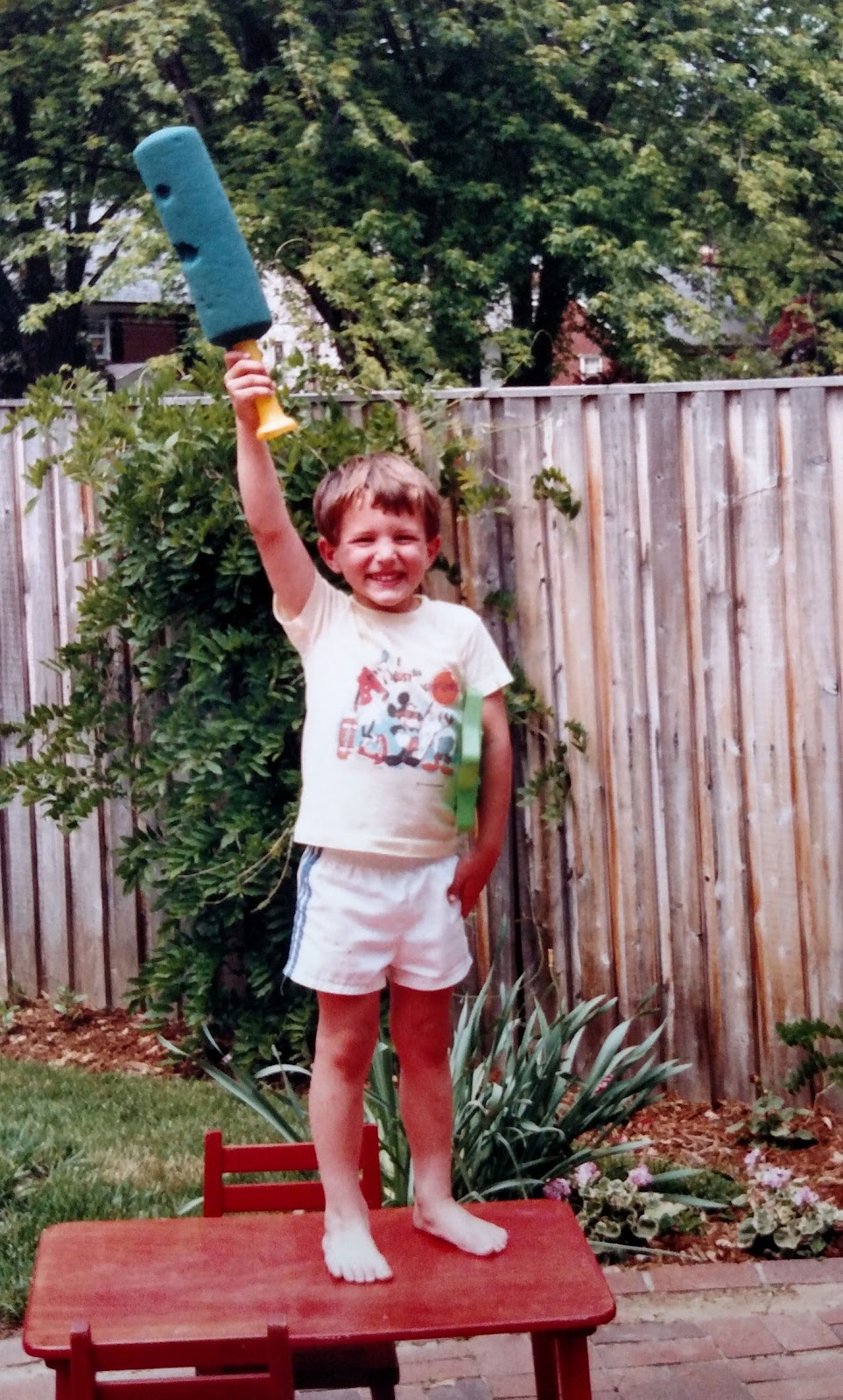
Now that I know I’ll be a dad soon (my wife is due at the end of August!!) it dawns on me how much of a terror I was. So maybe my mom just loved shoving Alexander back in my face to say: get with it! I mean, why was I standing on this table? In bare feet?


You post wonderful paintings of Waldo (dogs) on your Instagram account.  My canine companion Mulan is wondering if there are any plans in your future to write and illustrate a book featuring a dog?


Waldo is named after one of my other favorite characters growing up, the Waldo in the red and white striped shirt. This seemed like a great idea and homage, until we discovered he loves to run away. Yep, just classic. Here’s him where he seems most calm, in my studio:


So I really want to make a book called... “Where’s Waldo?”


But instead of having to find a dog or tall dude in some incredibly complicated jampacked scene, you’d see my Waldo at first running away from me. Then he’s just out in nature doing his thing, heeding the call of the wild, and having a total ball. On every spread the only words would be WHERE’S WALDO? I’d like to think it’d irritate kids just the right amount because they’d be like HE’S RIGHT THERE! Again, and again and again. I also imagine this book would really irritate Martin Hanford. But considering Hanford is one of my favorite kids’ book people ever, I’d be pretty honored to just have him mad at me at all.


If there is anything else you would like readers to know Steven?


Here’s some more images from the book!


AND I’m really excited about the case. It’s just plaid. So fun and simple.


And last last - here’s a new author photo my friend a photographer just took.
In case it wasn’t clear I was living deep in the woods...


Thank you so much for taking the time to answer my questions Steven and for including the images.  I simply can't wait for readers to enjoy your newest book.  I think we will be hearing more laughter. 

Tuesday, June 9, 2015

Build It Or Bust

Yesterday was the last official day of school for students.  It's a welcome shift for households everywhere.  It's a time to focus more on doing what you enjoy rather than doing what is required, even if you like those required activities.  Friends and family will gather to make the most of every single minute.

It's not unusual to see visible results of imaginations set free in the form of forts or tree houses around neighborhoods in yards or vacant lots.  What About Moose? (Atheneum Books for Young Readers, an imprint of Simon & Schuster Children's Publishing Division, June 9, 2015) written by Corey Rosen Schwartz and Rebecca J. Gomez with illustrations by Keika Yamaguchi is about a do-it-yourself project with a know-it-all taking control.  When you think you have the inside edge on your pals, you might find yourself suddenly alone.

Fox met her friends, with her toolbox in hand.  "Time to start building!  Now, here's what I've planned."  

Fox's job assignments for her friends are promptly ignored by Moose racing to the site full of too much energy and too much advice.  Moose has no intention of being a member of this construction team.  He wants to take charge of the work done by Bear, Toad, Skunk, Porcupine and Fox.

Megaphone in hand Moose shouts out orders to each of the animals.  Each time one of the companions asks

"But what about you, Moose?"

he puffs himself up full of importance and continues to criticize the efforts of those working together.  He knows what to do but does nothing except strut and shout.

A bit of frustration and disgust is creeping into the animals' attitudes. Who can blame them?  Moose proclaims their workmanship poor and prods them to a faster finish.

Moose is too focused on the tree house's completion.  You might say he has lost sight of the whole picture.  When the final large piece is plunked into place, Moose finds himself in a peculiar position.  Ingenuity wins the day.


Stories with a distinctive rhythm create words readers remember, the beat reinforcing the narrative.  The collaboration of Corey Rosen Schwartz and Rebecca J. Gomez has fashioned an afternoon of teamwork gone hilariously wrong.  Two line combinations ending in rhyming words supply a pace depending on the page placement.  When the tale reaches a peak, an extra sentence provides an added punch to Moose's problem.  Readers will pause in shock much like Moose.  Here is a sample passage.

"Bear, crank the handle 
to tighten that brace."

"Toad, keep on sanding,
but pick up the pace."

"But what about you, Moose?"
Toad asked with concern. (page turn)

"I'm overseeing," said
Moose, looking stern.


Opening the dust jacket (working with a F & G) readers are treated to a double page illustration with smaller characters, a yellow bird, a mouse and a tiny white rabbit, near Moose's Caution painted box on the left.  To the right we can see Moose in all his bossy glory bellowing through the megaphone as his friends look on with varying degrees of concern and disgust.  The opening and closing endpapers are done in two hues of brown, the lighter outlining an assortment of items used in the construction of the tree house, a hard hat, goggles, a toolbox and a blueprint.   On the title page a startled rabbit jumps in the air after Moose races past.  A mouse watches from a pile of wood, a ladder, a pail and Fox's toolbox.  A hard hat is hanging on the M for Moose.

Rendered digitally the illustrations by Keika Yamaguchi, varying in size from double page images, to groups of smaller pictures on one or two pages and single page visuals, are lively, colorful and filled with emotion.  Humor is depicted in the facial expressions in response to Moose's outrageous demands.  Yamaguchi shifts her perspective, zooming in and out, to match and enhance the cadence of the text.

One of my favorite illustrations covers two pages.  The group, Fox, Skunk, Toad, Porcupine, Bear and Moose have moved the action to the floor of the tree house.  The clothing worn by the animals is enough to make you grin but Toad wearing a hard hat and goggles and operating the drill will have you laughing out loud.  When Bear concentrates it appears he chews on his tongue.


For loads of giggles and grins, a gentle lesson in teamwork and the value of true-blue friends What About Moose? written by Corey Rosen Schwartz and Rebecca J. Gomez with illustrations by Keika Yamaguchi is a fun-tastic choice for story time.  It introduces steps in simple construction, new vocabulary, and forest animals.  You might want to try it as a reader's theater.

To learn more about Corey Rosen Schwartz, Rebecca J. Gomez and Keika Yamaguchi please follow the links attached to their names to access their websites.  This page at Corey Rosen Schwartz's site explains the reason she wanted to write this book.  Here is a link to several pages of activities which can be printed.  At the publisher's website you can view several illustrations.  Enjoy the book trailer.

Monday, August 12, 2013

Dwelling In Friendship

Four months ago, to my surprise, a package was laid on my doorstep by my wonderful mailman.  Inside were two books a friend knew I would love.  The one, A Hen for Izzy Pippik by Aubrey Davis with illustrations by Marie Lafrance was read and reviewed the very next day.  To say the other was not read immediately would not be true.  It was read then and many times since its arrival.

One of the basic needs to survive is shelter.  To me there has always been a huge difference though between a house and a home.  No matter the size or location, the inhabitants and their visitors need to feel an extra warmth, a sense of welcome and comfort, a place they would be glad to call home.  A House in the Woods (Candlewick Press, November 8, 2011) written and illustrated by British author illustrator, Inga Moore, is a tale of mishaps made into a miracle by a friendly foursome and a bunch of busy beavers.

A Little Pig had made a den for herself in the woods.  Next door, another Little Pig had made himself a hut.

When exploring in the forest one morning the two find a special feather and a zigzaggedty stick but when they each return home, other surprises await them.  Bear has decided to take up residence in Little Pig's den and Moose is living in Little Pig's hut.  The Little Pigs really like Bear and Moose but not what happens to their homes.  With a whoosh and loud snapping their dwellings lay in ruins.

Sitting on a nearby park bench the four ponder this dilemma.  None of them likes the idea of being without a roof over their heads.  Quite suddenly Moose pops up with a marvelous idea; they could construct a house large enough for all of them.  Moose knows they need the very best to help them build a real home, one with walls, a roof, windows and doors.  A phone call later the Beaver Builders are on the job.

With payment negotiated, peanut butter sandwiches, work begins.  Accomplishments are assessed at mealtimes over the next few days.  Builder Beavers, Moose, Bear and the Little Pigs each contribute according to their strengths.  A trip to the junkyard, grocery store and to the lodge at the lake signal an end and a new beginning; a house, a home and four friends dwelling therein.


There is something calm and understated about the way Inga Moore has this narrative unfold; almost as if readers are gathered together listening to a storyteller.  There is an air of collective cooperation in all things said and done.  And yes, humor, makes an appearance at the right moment each and every time.  Here is a sample passage.

...and by dinnertime the roof
was on.  (The lunch and dinner
times were on different 
days, of course.  Beavers are
fast, but not that fast.)


What draws the reader into the story though are her illustrations rendered in pencil, pastel and wash using an earth tone palette.  The matching jacket and cover allude to a time in the future, of pastoral peace and pleasantries among friends.  Each of the endpapers, opening and closing, extend the story.  In the beginning we readers wonder why a bear and two pigs crossing a meadow are bringing stacks of sandwiches on plates to a group of happy beavers.  At the end you can almost hear a collective sigh at the sight of a moon rising over the railed walkway leading to the beaver's lodge on the pond; the surrounding trees reflected in the still waters.

Astonishing details are prevalent is all the realistic delicate pictures.  Moore alters between a double page spread, one crossing the gutter to create a panel for the text, to a single page framed in white or extending to the edges or insets framed by text.  Her close-up of Moose making the phone call on an old style phone, which just happens to be hanging from a tree trunk, is delightful.  The beavers clad in hard hats arriving in pickup trucks with slatted wooden sides will bring on the giggles.  There is so much to enjoy in each and every illustration.


I will be singing praises for A House in the Woods by Inga Moore loud and strong as many times as I can.  It would work well with Building Our House by Jonathan Bean or If I Built a House by Chris Van Dusen.  I invite you to read Bringing Words to Life and Inga Moore, illustrator of the Wind in the Willows to further appreciate the process behind her work.

And to my happy-go-lucky friend, I send thanks for bringing this wonderful book into my reading life.