Quote of the Month

When love and skill work together, expect a miracle. John Ruskin


Showing posts with label Margarita Engle. Show all posts

Saturday, February 25, 2023

Returning Home

Wherever we go or whether our absence is planned or unforeseen, we feel the same.  Regardless if hours or weeks pass, when we enter a feeling of welcome washes over us.  It is as if everything is as it should be.  As the now famous words were spoken in the summer of 1939, 

There's no place like home.  There's no place like home. There's no place like home.

It seems that many of the living beings who share this planet with us, either through instinct or natural progression, prefer to reside in a familiar habitat.  When they are displaced, they seek to return if they are able.  Destiny Finds Her Way: How a Rescued Baby Sloth Learned to Be Wild (National Geographic, February 07, 2023) written by Margarita Engle with photographs by Sam Trull is a true story filled with heart and hope.

The tropical rainforest of Costa Rica
echoed with music from colorful birds,
the eee, eee, eee of darting squirrel monkeys,
boom, boom, boom from howler monkeys,
chirps and clicks of cicadas, and a whispering
rustle from the wandering breeze
in green treetops.

Injured and alone, a baby sloth cries for help. These cries alert would-be predators.  Fortunately, humans find the sloth, taking her to a scientist.  The scientist is one of two who founded a sloth rescue center.

The tiny sloth is taken home each night to be fed as often as necessary.  All rescued sloths are named.  Destiny's injured eye does not heal but her appetite is healthy.  Eating guarumo leaves and hibiscus flowers makes her grow.

Climbing is difficult for a sloth with one eye, but Destiny is determined.  She even assists other rescue sloths in their eating to build their strength.  Soon Destiny graduates from 

sloth preschool.

She is taken outside to study life in the wild.  She learns to relieve herself by doing the

poop dance.

She becomes acquainted with the rainforest animals, their sounds, and the smells.  Due to the loss of one eye, her other senses are stronger.  She slowly moves and climbs from tree to tree.  One day, a year later, her weight is heavy enough for her to be released into the wild.  She wears a tracking collar, so the rescue people and the volunteers can monitor her and keep her safe.  To the top she climbs, toward a life she is meant to live.


Take a moment.  Go back and read the first sentence in this title, quoted above and written by Margarita Engle.  This author has mastered the ability to take readers into her narrative with her sensory descriptions.  We experience the assistance received by Destiny.  We experience her growth, her adaptations, and the exhilaration of her delivery into the wild.  Through her personal research at The Sloth Institute, Margarita Engle expertly adds facts to this nonfiction story.  Here is a passage.

Smells were fascinating, too.
Hot, moist air rich with savory leaves
and fragrant flowers.
The stink of a tamandua
and the stench of a porcupine.


With the exception of only a few photographs as noted at the close of the book, all visuals for this title are the work of photographer and cofounder of The Sloth Institute, Sam Trull.  On the front, right side, of the open and matching dust jacket and book case is Destiny in her natural habitat in Costa Rica.  To the left of the spine on the back, the left side, we see her again in two other circular visuals.  Here, too, other books in the Baby Animal Tales are shown.

A muted red orange covers the opening and closing endpapers.  Prior to the formal title page, we are brought close to Destiny peeking between two tree branches.  A gorgeous double-page image brings Destiny into focus with a blurred leafy background for the title page.

Throughout the book there are large pictures crossing the gutter.  They create a sizable column on the opposite page in which other circular pictures are placed along with text.  Any not featuring sloths are labeled with the name of the animal.  The borders and background textures mirror the rain forests of Costa Rica and its people.

There are also informative and beautiful full-page pictures.  If Destiny is not the showcased sloth, the sloths shown are captioned with their names.  There are also half-page horizontal images with decorative borders.  These photographs not only document the sloths, their recovery and release into the rain forest, but take us into the rainforest by showing us other flora and fauna.

One of my many favorite photographs covers three-quarters of a page.  Destiny is embracing another sloth at the rescue center.  They are nose to nose, gazing at each other.  It is a close-up horizontal visual.  This is one of numerous images that highlights the photographic skills of Sam Trull.


This nonfiction picture book, Destiny Finds Her Way: How a Rescued Baby Sloth Learned to Be Wild written by Margarita Engle with photographs by Sam Trull, is one to be enjoyed by readers of all ages.  I guarantee everyone will learn something.  At the close of the book is a full-page author's note and a full-page photographer's note.  This is followed by a map showing where sloths reside.  There is another page with information about The Sloth Institute, sloth books and a video to watch, and Facts About Sloths.  I know you will want to place a copy of this book in all your collections.

To discover more about Margarita Engle and Sam Trull, access their websites by following the link attached to their names.  Margarita Engle has accounts on Facebook, Instagram, and Twitter.  Sam Trull has accounts on Facebook, Instagram, and Twitter.  Here is the link to The Sloth Institute.

Sunday, October 10, 2021

Three Days Of Reading

On Friday, very early in the morning, life delivered an unexpected break in my daily routines.  It lasted for several days.  So, I read and read and read.  And I am still reading.


The first book I finished I started on Thursday night.  Your Heart My Sky: Love in a Time of Hunger (Atheneum Books for Young Readers, March 23, 2021) written by Margarita Engle is an exquisite portrait of living on the island of Cuba in the summer of 1991.  It is told in three voices of two teenagers, Liana and Amado, and a wise singing dog.  In this novel in verse, each poem, no more than three pages in length, is breathtaking.  You pause after reading each one.  I am still thinking about how Margarita Engle could embed such heartbreak, longing, and beauty into these poems.  Each poem is titled.


Although the government of Cuba is calling this el periodo especial en tiempos de paz, the special period in times of peace, for the majority of people it is a painful, frightening time of starvation.  Liana and Amando, have decided to forgo the government summer camp of farm labor.  It puts them both at a future disadvantage and on the radar of a government in total control of its people.


A chance encounter (or not if you believe the dog and I do) finds the duo working together in their desperate search for food for themselves and their families.  Their relationship gives them courage to do things like trading on the black market, helping those who shelter in caves before trying to make it off the island, and growing their own food in their family’s patios.  They do all this under the threat of discovery.


As their love grows, feeding their bravery, a tension enters their story.  Decisions need to be made.  Which comes first, hope or love?  Does one invite the other?  Or do they arrive together? 


Here is one of the poems.


Ode of Paz

Amado and Liana


Roaming

nomad

unpredictable

visitor

exhaling

aromas

of 

love’s

hunger

and hunger’s

love.  


There is a two-page author’s note at the conclusion of the book.  At the publisher’s website is a curriculum guide.  There is a short conversation with Margarita Engle and additional poems at The Book Page for the cover reveal.


On September 28, 2021, The Beatryce Prophecy (Candlewick Press) written by Kate DiCamillo with artwork by Sophie Blackall was released.  One of several reasons I was eager to read this was after watching a video on Instagram posted by Sophie Blackall. (https://www.instagram.com/p/CUXUk2cAZxC/)  Sophie Blackall was right.  Once I started the book, I did nothing else until I finished it.  Hours passed as the stories of a goat, a monk, a girl, and a boy unfolded and intertwined.


The goat, Answelica, is believed to be a demon by the monks of the Chronicles of Sorrowing.  Brother Edik dreads being anywhere near the beast who thrives on butting and biting the monks.  One morning his fear spikes as he enters the barn.  He finds a feverish young girl sleeping next to the goat, holding one of the goat’s ears.


The girl cannot remember anything about herself except her name.  Her name is Beatryce.  There are others who know exactly how she came to be alone with bloody and muddy clothing.  It has to do with a prophecy.


There will one day come a girl child who will unseat a king and bring about a great change.


The boy, Jack Dory, lost his parents in the dark woods by the hand of a wicked robber.  He lived with an older woman, Granny Bibspeak, until she died when he was twelve.  He remains in her home in a village that admires and respects the boy.  Jack Dory has the gifts of speed, remembrance, and mimicry.


Kate DiCamillo with this tale of mystery, intrigue, betrayal, haunting pasts, revenge, love and stories casts a spell that lingers long after the last word is read.  She reminds us how profoundly some things have changed, and others have not.  Sophie Blackall with her luminous endpapers, gorgeous first letters of each chapter, and full- and partial-page images breathes life into the characters and their circumstances.  Here is a passage.  


They were three:  Jack Dory, Beatryce, and a goat.

Jack Dory did cartwheels as he walked down the road.

He followed the cartwheels with several handsprings.

“You cannot do this, can you?” he said, calling back to Beatryce.

“I cannot do it because I must walk along and pretend to be a monk,” said Beatryce.

The satchel was slung across her chest.  It bumped against her hip as she walked.  Her heart felt heavy.

But the goat did not seem worried.  Answelica ran to Jack Dory, kicking up her heels and shaking her head, and then she ran back again and walked at a sedate pace beside Beatryce.

Jack Dory started to whistle a jaunty song.

Beatryce looked down at the goat.  She said, “I think he pretends to be happy.  I think that deep inside he is sad.  Those he loves are dead.  He is alone in the world.”

Answelica looked up at her, listening.

“I am not afraid,” Beatryce said to the goat. “I will not be afraid.”

Answelica nodded.

She bumped her head against Beatryce’s leg.  Beatryce took hold of her ear.

“I am not afraid at all,” said Beatryce again.


At the publisher’s website you can download a teacher’s guide, a curriculum guide, and a sample chapter.  You can also view an interior illustration. The cover reveal and a conversation between Kate DiCamillo, Sophie Blackall, and John Schumacher, librarian, guest lecturer at Rutgers, and writer, on his site, Watch. Connect. Read., is enlightening.


A graphic novel, an ARC, kept me turning pages faster than the lightning flashing during a weekend afternoon storm.  City of Dragons #1: The Awakening Storm (Graphix, an imprint of Scholastic) written by Jaimal Yogis with illustrations by Vivian Truong follows Grace as she absorbs the death of her father, the move to Hong Kong with her mother and new stepfather, starting classes at a private school, meeting three new distinctive friends, and the hatching of a dragon egg in her bathroom.  It seems the tales of an emperor and nine dragons she remembers her father telling her are not myth but reality.


Ramesh, her first-day friend, and Grace, through Ramesh’s tech skills, sneak away from a class field trip.  An old woman in the market speaks one word repeatedly to Grace as she holds her hand.  Then she gives her an egg.  The hatched egg, now concealed in Grace’s backpack the next day at school, brings two more students, Jing and James, into the group.  


That evening as the foursome try to figure out what the creature (Nate, named after Grace’s father) is, their only conclusion is that it is a dragon, a water dragon.  Very quickly they are pursued by unsavory characters who are part of a cult seeking to bring an enemy of the ancient Yellow Emperor back to power.  Unable to find the original old woman, they ask an elderly fishman known as the Southern Prophet for help.


Non-stop action heightened by realistic and witty dialogue by Jaimal Yogis amid detailed, expressive, and highly animated panels by Vivian Truong are certain to keep readers on the edge of their seats.  Hank, Grace’s stepfather, is not as he appears.  His boss, Dr. Kim has secrets of her own.  The Southern Prophet mourns the loss of his one true love, Mazu, a woman of the sea.  A trip to an island, a kidnapping, a wicked storm, and a series of earthquakes that might not be earthquakes elevate the tension.


This title is the first in a series.  The final page builds anticipation for the next book.  At the publisher’s website you can view eight interior pages.  Jaimal Yogis and Vivian Truong are interviewed about this title at The Beat.

Wednesday, August 25, 2021

Melodies With Meaning

When we reach out to the world, human and natural, music is everywhere.  Some of the tunes are without words, but still speak volumes to us.  For those seeking to communicate with language, it might not be one we comprehend.  We know understanding what is said can have a greater impact on some individuals more than on other people. 

In this newest offering, author Jamie A. Swenson and artist Scott Magoon in collaboration present an interesting dilemma.  Chirp! Chipmunk Sings For A Friend (A Paula Wiseman Book, Simon & Schuster Books for Young Readers, July 13, 2021) follows this creature yearning for someone to sing with her.  This is a story of her search and the outstanding outcome.

Chipmunk lived on a rock.

From the first light of day until the stars scattered across the darkened sky, Chipmunk chirped.  Her songs mirrored a range of emotions.  Rock could listen, but Rock could not sing.  Chipmunk decided to find someone to accompany her.

Pinecone agreed to meet Rock.  Pinecone was a perfect match for Rock, but not for Chipmunk.  She left again.  

Log was willing to meet Rock and Pinecone, but Chipmunk could not move Log.  She started to sing out her feelings.  Raccoon heard Chipmunk and asked her to keep singing.  Together they attempted to move Log.  Nothing worked. 

The duo sang out their feelings and were heard.  Moose came to listen.  After they were done, Moose agreed to help them move Log.  It did not go as expected.  No, it did not.  There are listeners and there are singers.  Sometimes, they find each other.


In this gentle, musical tale penned by Jamie A. Swenson, readers encounter a willingness to step into Chipmunk's journey.  Jamie A. Swenson uses the technique of three to great advantage creating a pattern and rhythm, inviting reader participation.  It is used in reference to songs, listening friends, moving, and singing friends.  Her combination of narrative and dialogue elevates the pacing.  Here is a passage.

"That is a sad song," said Raccoon.
"It is the song of my heart," said Chipmunk.
"It is beautiful," said Raccoon.  "Keep singing."

Chipmunk smiled and sang a bit more.
Raccoon swayed and tapped her paw.


One of the first things you realize upon opening the matching dust jacket and book case is the flow of the images rendered by Scott Magoon.  The illustration on the front, right, moves over the spine on the left and over the crease of the flap on the front.  The picture on the back continues to the edge of the back flap.  Chipmunk on the front is hopeful, ready to find a companion to share in her singing.  Her gaze asks us to join her.  The main title is in green foil.  Chipmunk is varnished.

To the left, on the back, Chipmunk is upright on her back legs.  She is swaying to her song.  It moves in double loops above her.  Do you hear this song of longing?

A bright spring green covers the opening and closing endpapers.  On the title page, Chipmunk is peeking from behind Rock.  What will she find?  These digital images by Scott Magoon are atmospheric.

They bring us close to Chipmunk and the other characters, but also give us expansive views of Chipmunk's world.  The facial traits on the characters are animated and textured.  Even Rock, Pinecone, and Log urge us to touch them.  The matte-finished paper adds to the softness of the narrative and the visuals.  Many of the pictures are placed on a crisp white background.  Most of them are single-page images except for several double-page illustrations to accentuate significant moments.  And sometimes the single page visuals cross the gutter just a bit.

One of my many favorite illustrations is a single-page picture.  Chipmunk is speaking to Pinecone.  Pinecone agrees to meet Rock.  It is a close-up of the twosome.  Chipmunk is so hopeful with one paw holding Pinecone and the other raised for emphasis.  Pinecone is tilted with needles attached to the tiny tip.


Readers will identify with the characters in this charming story, Chirp! Chipmunk Sings For A Friend written by Jamie A. Swenson with art by Scott Magoon, of hope and joy fulfilled.  Who among us, at one time or another, have not wished for someone to share what makes us the happiest?  This is a book to keep close as the conclusion is worth singing about loud and clear.  You will want to have copies on both your professional and personal bookshelves.

To learn more about Jamie A. Swenson and Scott Magoon and their other work, please access their respective websites by following the link attached to their name.  Jamie A. Swenson has accounts on Facebook, Instagram, and Twitter.  Scott Magoon has accounts on FacebookInstagram and Twitter.  At the publisher's website you can view interior illustrations and the dust jacket.


Each week in our community, the area farmers come to market.  Their stalls and tents dot the space between the main street and the harbor on Round Lake.  The air is charged with people hoping to find fresh fruits, fresh vegetables, freshly cut flowers and other home-grown products.  Sellers are equally enthusiastic people will find their offerings enticing enough to select and buy.  A Song of Frutas (Atheneum Books For Young Readers, an imprint of Simon & Schuster Children's Publishing Division, August 13, 2021) written by Margarita Engle with illustrations by Sara Palacios is a generational tale of supreme happiness and memories to hold in your heart.  It is written in a blend of Spanish and English. 

When we visit Abuelo, I help him sell frutas.
We sing the names of each fruit
as we walk, out footsteps like drumbeats,
our hands like maracas, shaking
bright food shapes
while we chant
with a rhythm:

As granddaughter and grandfather stroll through a town in Cuba singing, people in their homes listen and buy the fruit.  On the streets, other pregoneros sing.  Grandfather sings even louder, his song rising above the rest.

It is the only way for him to compete with the man selling tamales or the woman holding up her fresh herbs.  There is also a woman with a heavenly song persuading people to purchase her delicious treats.  This child's best memories are of New Year's Eve.

On this day people gather to buy grapes from her grandfather.  Twelve grapes are needed per person.  Do you know why?  Think of wishes and a better future for everyone.

Soon the granddaughter leaves for home.  She no longer sings with her grandfather in his town.  The two have discovered another way to sing.  It is a different kind of music, a symphony of one soul embracing a beloved soul.


This book, this poem, by Margarita Engle is uplifting from the first words we read.  Her presentation of Spanish and English supplies its own special kind of song.  Her similes ring radiantly across the pages.  Her descriptive words, her adjectives, take us deeply into this narrative.  Here is a passage.

Best of all is la dulcera,
a woman with the voice
of an angel, who croons so sweetly
in praise of los caramelos---
chocolates and other delicious candies.
Sabroso!
Tasty!


Looking at the front, right, of the open and matching dust jacket and book case, you can't help but feel your spirit soaring.  The beaming faces of el abuelo and his granddaughter, singing about his fruit, are the essence of happiness.  Artist Sara Palacios infuses her images with cheer through her bright color choices.  To the left, on the back, we are fortunate to view an interior visual.  Here a basket loaded with fruit is being pulled up to a balcony by a mother.  Her daughter watches.  Below grandfather and granddaughter lift and wave in gratitude at the exchange.  On the dust jacket front, the title text, grandfather, granddaughter and the dog are varnished.

Sunshine yellow covers the opening and closing endpapers.  On the title page the duo is putting fruit in containers.  The grandfather holds a bunch of grapes.  On the dedication page, they and their two dogs are making their way to the town, a cart loaded with their fruit.

Each digitally rendered illustration, two-page pictures, single-page images, and groups of smaller visuals, heightens the energy found in the text.  The blue of the sky shown in many of the pictures is like a reflection of the sea surrounding the island.  The buildings are as varied in their hues as the fruit.

The facial expressions on the granddaughter and her grandfather as well as most of the other people in the community are brimming with joy.  They have, through Sara Palacios, chosen to receive their days with hope.  (I am more than happy to see the two canine companions which add to that joy.)

One of my many favorite pictures is the second double-page image.  We move close to the grandfather and his granddaughter as they hold out their fruit singing.  They are near their cart with buildings and that brilliant blue sky behind them.  Their two dogs are close, contentedly listening to the singing.  The boxes of fruit are labeled with their names in Spanish.  A woman and another man curiously watch.  Will they buy these splendid fruits?


A Song of Frutas written by Margarita Engle with illustrations by Sara Palacios will have you wishing you could join this girl and her grandfather.  This book honors the traditions of los pregoneros, the New Year's Eve wishes on each of twelve grapes, the music of the spoken and written word, and the love between a grandparent and child.  At the close of the book in an author's note, Margarita Engle addresses Spanglish, Travel Restrictions, Los Pregoneros, and New Year's Eve.  I highly recommend this title for your professional and personal collections. (Please note this title is also released in Spanish.)

To discover more about Margarita Engle and Sara Palacios, please follow the link attached to their names to access their websites.  Margarita Engle has accounts on Facebook, Instagram, and Twitter.  Sara Palacios has an account on Tumblr.  To showcase this title Margarita Engle is interviewed at A Fuse #8 Production, School Library Journal and We Need Diverse Books.  At the publisher's website you can view interior images.  Here is a link to an activity page.

Thursday, September 5, 2019

She Gave Him Joy

A lot of people have playlists of music they prefer.  Some will have multiple playlists; one for exercise, one for creativity, one for concentration or relaxation.  Different music speaks to different people at different times.  Conversely a certain song or musician can connect and has connected with thousands of people during human history.

In the United States of America, for four years (and truthfully for some time before and after), this nation was torn by the Civil War from April 12, 1861 to April 9, 1865.  In December of 1853, on a different continent, a baby girl was born.  Dancing Hands: How Teresa Carreno Played The Piano For President Lincoln (Atheneum Books for Young Readers, August 27, 2019) written by Margarita Engle with illustrations by Rafael Lopez is the story of this musically gifted child who helped heal a grieving parent and national leader and his family.  One person can and will continue to make a difference. 

WHEN TERESA was a little girl
in Venezuela, Mama sang lullabies
while Papa showed Teresita how
to let her happy hands dance
across all the beautiful
dark and light keys
of a piano.

In making melodies on the piano, Teresa learned several things.  She was able to make sounds which imitated those inhabitants in the natural world.  Playing the piano was hard and took a lot of work but it was a way to soften her sadness and share her joy with others.  By the time she was six she could write her own songs.  A year later she performed in a small space within a cathedral.  Isn't this amazing?

At eight years old her life changed drastically.  She and her parents had to flee their country due to war, leaving everything she knew and loved behind her.  Their ship after sailing on stormy seas landed in New York.  The people and the language they spoke did little to make her feel welcome plus the United States was engaged in the Civil War.

Playing on a new piano saved this child.  She practiced and practiced.  Music of all kinds filled the air in her home.  She was soon given a new nickname, the Piano Girl.  Something wonderful happened to Teresa.  People loved her music and she was soon performing on stage with other musicians.

Perhaps she was wondering if her life could get any better than playing piano music for people and traveling to other cities.  It did get better.  She received a request to play for President Abraham Lincoln and his family at the White House!  She was ten years old.

What could she do during a war with streets in Washington DC lined with soldiers and exhausted nurses?  What could she do to lift the sadness filling the Lincoln family's hearts? An accomplished artist and statesman found their way to common ground.


With a mind and heart focused on poetic expression, Margarita Engle pens a biography both captivating and factual.  She supplies us with exquisite imagery of the land and wildlife in Venezuela, the travels aboard the ship to the United States, a scene from the Civil War and the memorable event of playing for the Lincoln family.  A repetition of a descriptive phrase for the piano keys creates a flawless flow from one section of the story to the next portion.  Here are two passages from a three-passage page.

Without a new piano,
Teresa would have felt even more lonely,
but soon she discovered that wherever one is,
some people are friendly, drawn together
by songs.

Musicians came to her home,
playing along while they listened
to the dazzling notes
of her dancing hands.


The image seen on the front of the matching dust jacket and book case is a stunning portrait of Teresa's ability to part the darkness of war and death with her remarkable piano music.  The flowers and birds reflect not only the particular piece she is playing but her ability to bring the cheer and charm of her native land with her wherever she goes.  The scene on the front extends to the left edge of the jacket flap.  The dark cloud blooms for most of the back, parts for a small space and continues.  White tents for soldiers dot the hillside outside of a small community shown on the far-left bottom.

Certain elements of the front and back of the jacket and case are replicated on the opening and closing endpapers.  The first offers a countryside at war with a single tiny bird flying in the sky.  On the second a historical note occupies a large portion on the left, then Teresa's piano has sheets of music taking wing mixed in with flowers and a brightly colored bird. (This bird appears several times throughout the book.) The dark clouds are moving away on the right and on the left.

The illustrations for this book were rendered in mixed media (acrylic on wood board, using sticks and other tools to paint; watercolor; construction paper; pen; and ink), and then assembled digitally

by Rafael Lopez.  Apart from two full-page pictures, all the images are double-page visuals.  Each one not only depicts a specific moment but conveys strong emotions.  Color choices supply us with joy, fright, sadness, and worry.  We are wrapped in Teresa's world.

Details reflect place and historical context.  All the people are fully animated according to the scene.  These illustrations are guaranteed to invite discussions and further research.

One of my many, many favorite pictures is of the family fleeing their home in Venezuela.  It captures these moments with sincere clarity.  Dark clouds scallop across the top of two pages.  Rain beats down diagonally on the right, across the gutter and on a portion of the left.  On the hills on the left, buildings are on fire and smoking.  In the foreground barrels drift in the ocean on the left due to the storm.  On the right a schooner is trying to ride out the horrific weather.  Beneath the ship and filling the lower half of the right side is a portrait of Teresa.  Her head is bowed, and her eyes are closed.  It's a breathtaking representation.  We see a side of her face, as she is facing right.


This book, Dancing Hands: How Teresa Carreno Played The Piano For President Lincoln written by Margarita Engle with illustrations by Rafael Lopez, is the kind of nonfiction sure to excite and encourage readers.  If one ten-year-old child can bring contentment to a grieving family with her music, think what you or I or everyone else can do with our combined talents.  I highly recommend this title for your personal and professional collections.

To learn more about Margarita Engle and Rafael Lopez and their other work, please follow the links attached to their names to access their websites.  Margarita Engle has accounts on Facebook, Instagram and Twitter.  Rafael Lopez has accounts on Facebook, Instagram and Twitter.  At the publisher's website you can view interior images.


Please be sure to visit Kid Lit Frenzy hosted by educator Alyson Beecher to view the other titles selected this week by participants in the 2019 Nonfiction Picture Book Challenge.


Tuesday, September 12, 2017

A Ride and a Memory

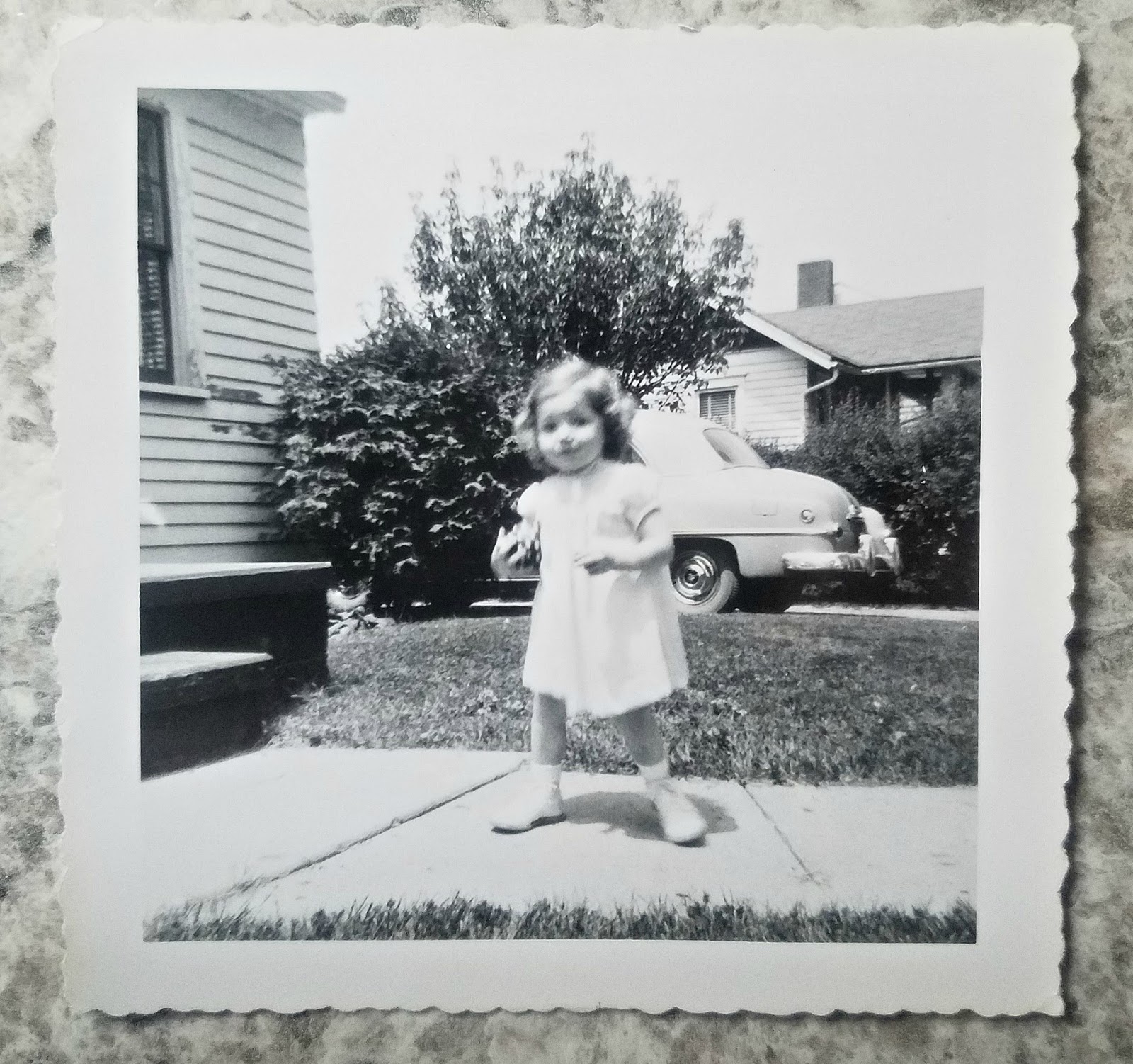
This is me at two year's old in front of our house.
And there's that car, I think.  Or it might be my uncle's car.
Two things immediately sprang to mind when I first held this book in my hands.  (I had no preconceptions about the story.)  The car on the cover reminded me of the one my parents had when I was a little girl.  The car was with us for a very long time because my parents did not believe in loans or mortgages.  If you didn't have the money for something, you did not get it or you started saving until you could afford it.  If something went wrong on the car, my dad could make it right.  (I learned more than I ever wanted to know about what was under the hood of a car.)

When I read All The Way To Havana (Godwin Books, Henry Holt and Company, August 29, 2017) written by Margarita Engle with illustrations by Mike Curato, it resonated with me for the reasons above but especially for the portrait of life in Cuba.  Affection for this family filled my heart.  Their inventiveness is truly inspirational.

We have a gift, and we have a cake, and today we're going to drive all the way to the big city to see my new baby cousin on his zero-year birthday. 

The boy goes on to tell us about the old cars on the island comparing the purrs of some to the little chick sound their car makes.  He and his father need to work on the car if they are to arrive in Havana.  He can see once the hood is lifted how repair after repair has been made using

wire, tape, and mixed-up scraps of dented metal.

The two of them adjust and tinker and adjust some more trying to get Cara Cara (the name of the car) to sound differently.  Nothing they do seems to fix it until...the little chick sound grows up.  It's a hen and she's ready to travel.  Friends who need a lift to their destination fill the seats.  It's a bouncy ride but the car keeps making her mechanical music.

Soon the scenery changes into the buildings across the skyline.  There are old cars of every color running down the street.  Their condition and the sounds they make fill the child's eyes and ears.  The steady honking is a city symphony.

At his aunt's house the gift is opened and the cake is eaten.  After much laughter and fun, the boy takes a siesta.  When he wakes the sky is dark and they leave in Cara Cara for home.  The next morning the boy and his father talk and again tend to their car.  Its heritage is a testament to hope.


In choosing to write this narrative from the point of view of the boyYoung People's Poet Laureate Margarita Engle speaks directly to the heart of child readers but also through his voice all who read this book will have a greater understanding of the people of Cuba.  The insertion of sounds supplies a lyrical rhythm which invites listeners (and readers) into the story with the boy.  Her concise sentences followed by longer ones also contribute to the cadence.  They read like a child thinks and talks.  Here is a sample passage.

So we purr cara cara

and we glide taka taka

and we zoom zoom---

zoom

cluck
cluck
cluck

beside farms, forests, beaches, and forts.


When stopping and savoring the opened dust jacket for the second time, I marveled at the use of light and shadow, design and layout and the details on both the front and the back.  The lines on the elements draw our eyes to the boy leaning against Cara Cara on the front.  To the left on the back, the hue used to provide a background for Margarita's and Mike's names is the canvas.  Set in an oval of a cream color is the car with the boy looking out the back window.  Two hens and chicks are busily pecking and walking around the bottom of the oval.  (Cara Cara and the boy are varnished.)

I gasped when I took off the jacket to see the book case.  Nearly covering the entire area is Cara Cara front to back, right to left on the case.  We are looking at the car from above.  It crosses the spine perfectly.  And then I saw the endpapers.

On the opening and closing endpapers, Mike Curato, on a background of dark yellow-orange, has drawn in detail, in black, twenty-four cars, most dated in the 1950s. (He labels the make, model and year.)  A colorful wash is brushed over each one.  With a page turn we have the verso page on the left and the title page on the right.  The text is set in the front window of Cara Cara which spans both pages.  It's as if we are in the front seat.


used pencil acrylic, paper, photo overlay, digital color in Adobe Photoshop, and other mixed-media 

to create these stunning illustrations.  His perspectives from inside the car looking outside and panoramic views along with zooming in close bring us willingly into the story.  There is animation in every picture, even when the boy is sleeping in his mother's arms. 

The details of the countryside and then in the city are nearly photographic but there is a quality of softness to them which works well with the matte-finished paper.  A full color palette greets us throughout the title.  A genuineness and warmth fill each visual.

One of my many favorite illustrations is when the boy is helping his dad repair the car before they leave for the city.  In the bottom corner sits the opened, heavy toolbox.  As our eyes travel upward we see a hen and two curious chicks.  They are moving to the right middle of the page.  Here the barefoot boy is standing on a wooden box on his tip-toes next to the car.  Another little chick is on the box.  All we can see is the child's feet, legs and the bottom portion of his shorts.  We can only see the lower half of Cara Cara.


With every reading of All The Way To Havana written by Margarita Engle with illustrations by Mike Curato my admiration and respect for this boy, his family and the people of Cuba grows.  The text and art blend but enhance one another elevating this book to something deeply meaningful; to something extraordinary.  I am grateful to Margarita Engle and Mike Curato for giving us All The Way To Havana.  An Author's Note and Illustrator's Note conclude the book.  I highly recommend this title for your personal and professional bookshelves. 

To learn more about Margarita Engle and Mike Curato and their other work please follow the links attached to their names to access their websites.  Mike Curato also maintains a blog.  On his website you can view interior images from this book.  On his blog he talks about his process and the trip to Cuba.  The book trailer premiere can be seen at All The Wonders.  You will enjoy the short Q & A.  Author, reviewer and blogger, Julie Danielson features artwork on her blog, Seven Impossible Things Before Breakfast after talking with Margarita and Mike the previous week at Kirkus.   

Friday, April 7, 2017

Gracias A Todos

When we meet people from the past, people who lived and died during our lifetimes and those still living among us today, our world becomes larger, more colorful and fascinating.  Their example elevates our thinking; these people who made this place we share better, raise us up.  If they can do it, we can do it.

Author Margarita Engle continues to enlighten readers in her most recent title Bravo! Poems About Amazing Hispanics (Godwin Books, Henry Holt and Company, March 14, 2017) with illustrations by Rafael Lopez.  Highly respected individuals for their contributions find a place in the pages of this book.  Some of them will be familiar to readers, others will be new and welcome acquaintances.

The first of eighteen poems is:

JUAN DE MIRALLES 
1713-1780
Cuba

I believe in the good cause
of American independence from England.
Thousands of soldiers from Spain
and all regions of Latin America
are fighting side by side
with George Washington's men,
as we struggle to defeat the British. ... 

As a close friend of George Washington, he helped the troops to combat scurvy by sending ships to Cuba to bring back fresh fruit.  Born a few years after Juan De Miralles dies, Felix Varela leaves Cuba in fear of his life.  Kindness saves him and the Irish immigrants settling in New York after the potato famine who he assists.  The medicinal skills and courage of Juana Briones, a rancher in California earned her the name of the Founding Mother of San Francisco.

Her home in Florida was a refuge for poets. His poems voicing freedom caused him to be imprisoned at sixteen.  They were friends united in their beliefs, both born and died in Cuba.

Sometimes our path is not known until we are older.  Ynes Mexia, a botanist, shows us how determination can create opportunities.  His method of painting birds and the results show us how to love Nature's creatures.  Perhaps this woman, the first to fly an airship (even before Wilbur and Orville Wright), soared with those very birds captured on canvas.  Her teaching methods focused on the use of English, Spanish, Tewa and Tiwa and her cookbooks blended the old with the new.

A storyteller and a cowboy, Arnold Rojas, kept his culture alive.  Pura Belpre was the first Puerto Rican hired in the New York Public Library System.  Her name is attached to the prestigious award given to Latino authors and illustrators each year by the American Library Association.  Another first was held by George Melendez Wright, chief of the Wildlife Division for America's national parks; protecting and preserving animals under his care.

A woman rises up to champion for women's rights and care for children in poverty.  A man, stricken with asthma, looks for cures through research.  Another man takes his "noise" and makes music.  Remembered for his tireless peaceful protests to better the life of farmworkers, his name is synonymous with labor and civil rights.

His life was lost in a tragic airplane accident flying to assist those in need but his baseball records cannot ever be changed.  Roberto Clemente was the first Latino to reach 3,000 hits.  He was a mentor to many; reading and writing whatever he could find as his family moved with the crops.  He was the first Latino leader of a University of California campus.  Tomas Rivera.


Imagine this.  You and others are seated in a small, comfortable theater in the round.  In the center is a stage; also seated are persons born as early as 1713 and who died as recently as 2011.  A hush falls over the room.  It remains as each one of these eighteen people read the poems, in their own voice, as written by Margarita Engle.  As the final sentence

Sometimes the best way to teach is by example.

is read the silence stays for several heartbeats until as one the entire audience stands and delivers their applause.

This is exactly how you feel when reading this title.  You are drawn into the lives of these individuals by the words chosen by Margarita Engle.  For each person she gives us their name, their birth and death dates and their country of origin.  As they talk to us those sterling moments of their lives are revealed as is the journey they took to accomplish their achievements.  Here is the portion of another poem.

JULIA DE BURGOS
1914-1953
Puerto Rico

Six of my twelve brothers and sisters
died of hunger, but my gentle mother
took me for long walks
beside a river
of beautiful dreams.

I learned to love nature and the island,
even though we were so poor that I
had to climb into classrooms
through a window, because we
could not afford school tuition. ...


Opening the dust jacket you can see the black background for the title text extended to the spine and the left two-thirds of the back.  Four more geometric portions of portraits are displayed to the left of the spine vertically.  Each face, on the right and the left of the jacket, conveys the full emotional intensity of the person, capturing them at their best.  On a turquoise background on the front and a purple background on the back of the book case, Rafael Lopez features a girl first and then a boy benefiting, like all who read this volume, from the variety of lives depicted.  The girl is lying on her back holding an open book over her face.  Drops of water, a rainbow of colors, fall from the pages.  The boy is seated, knees up with a book held in his hands.  His head and neck are rainbow striped with a strip in the middle black with stars.

Each of the people are given an entire page for their portrait.  The backgrounds reflect the time period and their successes.  A portion of the background appears next to their name on the opposite page along with a small image acting as a symbol of their remarkable deeds; a fruit with leaves formed of American flags for Juan De Miralles, a stylized bird standing on a paint brush sprouting leaves for Louis Agassiz Fuertes and a fashionably dressed smaller version of Aida De Acosta with wings.  These illustrations rendered in 

a combination of acrylic on wood, pen and ink, watercolor, construction paper, and Adobe Photoshop

belong on the walls of an art gallery or museum.  They are stunning!

One of my favorites of many is Juana Briones.  Behind her is a golden canvas with a symbolic sun, rays extended, over her right shoulder.  She is standing tall facing us, part of her long hair back and up.  In her right hand she holds a basket filled with herbs, balanced on her hip.  In her left hand she holds a small decorated pot.  To the left and right of her are two large floral herbs.  A small layer of purple extends along the bottom.  She is wearing a striped black and gray skirt, white, round-necked blouse and a shawl knotted in front.  Her face is full of quiet strength.


I have read these poems over and over, the warmth and greatness of these people filling my soul.  Bravo! Poems About Amazing Hispanics written by Margarita Engle with illustrations by Rafael Lopez is a book needed on all professional and personal bookshelves.  This book will inspire you to research more about each person. At the close of the book Margarita Engle lists more influential Latinos on two pages.  Four more pages expand on the information about the eighteen notable Latinos in this book.

To learn more about Margarita Engle and Rafael Lopez please visit their websites by following the links attached to their names.  Rafael Lopez has several pages from this book showcased on his site.  He also maintains another website here.  At the publisher's website you can see some pages not shown at Lopez's website.  Margarita Engle wrote a post for the Nerdy Book Club, January 20, 2017.

Wednesday, June 17, 2015

In Flight

Early Monday morning as Xena and I strolled down the neighborhood street, birdsong surrounding us like a symphony, I caught a flash of blue out of the corner of my eye.  It's a rarity to see this particular shade of blue.  It was all I could do not to gasp out loud.

Moving slowly is our preferred pace these days; Xena sniffing the new smells as she ambles along. Quietly I tried to get my camera ready hopeful for a picture of the allusive bluebird.  Every time we got close enough, he flew farther ahead until finally vanishing into the woods.

Those glimpses were like small miracles.  To know someone devoted their life to painting birds alive in their natural setting seems amazing.  The Sky Painter:  Louis Fuertes, Bird Artist (Two Lions, April 28, 2015) written by Margarita Engle with illustrations by Aliona Bereghici chronicles the life of such a man.

Helping Birds
I love the bright wings of birds
as they fly, wild and free,
high above me.
When I watch birds in flight,
I dream of soaring too!

It began when Louis Fuertes was a young boy fascinated with birds, taking the time to care for those injured despite the lack of parental support.  He even rescued a small owl.  The owl in turn allowed one leg to be tied to a table so it could be sketched.

A visit to the local library opened up more possibilities in the form of a large book with bird art.  By the time he was fourteen picturing birds using pen and watercolor was a passion needing practice and more practice no matter where he was.  In college drawing birds was like breathing; professors might find themselves caricatured as birds.

Rather than follow in the footsteps of previous bird artists, Fuertes taught himself to paint quickly as the birds moved about him.  He desired to preserve them, not hunt them.  He even swam underwater to see how tails and feet functioned.

His work was noticed by others who invited him to travel from his home in New York to the northern realm of Alaska, the islands of the Caribbean, the jungles of South America and Africa painting local birds in their native habitats.  He, his wife and children even entertained a loon in their bathtub so Fuertes could depict the proper details.  Known to be shy, Louis Fuertes nevertheless enjoyed speaking with children encouraging them to notice and draw their own versions of birds.

The caring personality of a young child nurtured a lifelong passion.  This dedication in turn ignited a national pastime of bird-watching as people looked for and used his collectible cards.  He noticed so we would notice.


In a collection of fifteen poems Margarita Engle selects specific memories from the life of Louis Fuertes which characterize him.  Each of these singular truths are retold through her beautiful use of words; words replicating the essence of birds.  She brings us into each of these defining moments with vivid description and the voice of Louis Fuertes.  Here is the last sentence from one of the poems.

Alaska
...
The beauty
of flight
like a dance
in the clouds,
a graceful ballet
of wild swans.


When you open the matching dust jacket and book case the blue-green flora and blend of cloud-filled sky showcased on the front continues to the back.  Young Louis featured beneath the title on the front is an adult on the back, encased in a smaller oval frame, painting birds along a shoreline.  The opening and closing endpapers are in the soft golden yellow found in Louis's shirt from the jacket and case.  The introductory title text sits among birds nesting in tree tops.

With a page turn the formal title page and verso are placed in a gorgeous display of Louis Fuertes among birds across the two pages.  All of the interior illustrations rendered in watercolor and ink by Aliona Bereghici span edge to edge across both pages.  Soft brush strokes, fine line details and a natural color palette heighten each poem with exquisite pictures.

The use of light in all the paintings particularly on Louis's face and the realistic movements of the birds give a sense of everything bursting into life on the page at any minute.  I can't imagine the hours of study it took to depict the bird images with such meticulous care.   Bereghici shifts her perspective from showing us a hand holding a pencil above a sketch as the subject sits nearby to an aerial view of swans gliding across an Arctic shoreline as Louis watches from a boat.

One of my favorite visuals is of Louis Fuertes in a small boat on a river in South America.  We are looking at him from above as he paints a macaw.  Around him among the trees are featured parrots, macaws and a toucan. Each of these birds (all of the birds in the book) is labeled in cursive lettering on what appears to be folded ribbon.  With little imagination you can hear their chatter.


How fortunate are readers to learn about this man in The Sky Painter:  Louis Fuertes, Bird Artist written by Margarita Engle with illustrations by Aliona Bereghici.  The words sing off the pages and the pictures take wing.  Readers of all ages will be inspired to appreciate our feathered friends or draw or paint them.  One person truly made a difference. We can too.  I believe readers will enjoy reading the dedications and acknowledges found on the verso.  At the close of the book a Historical Note provides more information about Louis Fuertes.


To discover more about Margarita Engle and Aliona Bereghici please access their websites by following the links attached to their names.  You can see more of the artwork of Aliona Bereghici at her blog.  Many images from this book can been seen here.  An activity kit has been created.  Enjoy the book trailer.


I am thrilled to be participating in the 2015 Nonfiction Picture Book Challenge at Kid Lit Frenzy hosted by Alyson Beecher each week.  Please take a few moments to view the choices of the other participating bloggers.